

Whole-home monitoring shows electricity use across the measured home supply. Circuit-level monitoring adds detail for selected measured circuits. The right starting point is the question you want to answer—not the largest number of channels on a product listing.
If you want an overall view of household use, start with whole-home visibility. If you need to compare particular circuits, ask which of those circuits will actually be included in the installation. An unmeasured circuit does not become individually visible just because the monitor supports additional channels.
The header is an illustrative planning scene, not a photograph of a Grus installation or a record of a customer’s results.
If a higher bill is your starting point
Before choosing more monitoring detail, compare the two billing periods. A higher total can cover more days; it does not necessarily mean higher electricity use per day. The electric bill comparison guide lets you compare the total, kWh and billing days, then review the daily differences.
That comparison cannot identify an appliance or certify an electrical fault. If utility usage data and safe, non-invasive checks leave a measurement gap, use the questions below to decide whether whole-home totals or selected circuit detail would help. A high bill alone is not a reason to buy a circuit monitor.
Choose the view that answers your question
| Your question | Useful monitoring scope | What to confirm |
|---|---|---|
| How does use across my home change over time? | Whole-home totals | Which supply is being measured and what the displayed total represents |
| How does a selected circuit’s use compare over time? | That circuit’s measured detail | Whether it is included in the agreed installation scope |
| Do I need a reading for every circuit? | A clearly specified set of circuit measurements | Channel capacity, the selected package and the installed coverage—not capacity alone |
Whole-home and circuit-level views are complementary. A monitor can provide both; they are not necessarily two different product categories. The choice is about how much detail you need and what has been measured.
Whole-home visibility: begin with the overall picture
Whole-home totals help you follow overall use within the measured scope. They do not, by themselves, identify every appliance behind that total.
Choose this view when your immediate question is about the household’s overall pattern. Before ordering, make sure the product’s intended measurement scope matches your electrical system. A whole-home label is not a substitute for a compatibility check.
For help interpreting the displayed units and readings, see how to read home energy monitor data. This comparison focuses on choosing measurement scope, rather than repeating that reading guide.
Circuit-level detail: name the circuits you want to understand
Selected circuit measurements can give a more specific view, but only for the circuits that are actually measured. Do not interpret a missing circuit reading as evidence that the circuit used no electricity.
Make a short list of the questions you want answered and discuss the associated circuit coverage with your installer. Agree what will be measured, how the measurements will be identified, and which areas will remain outside the scope. More available channels do not automatically mean more complete installed coverage.
If a reading is missing, use the separate home energy monitor data gaps guide. Missing-data troubleshooting is a different question from deciding which circuits to monitor.
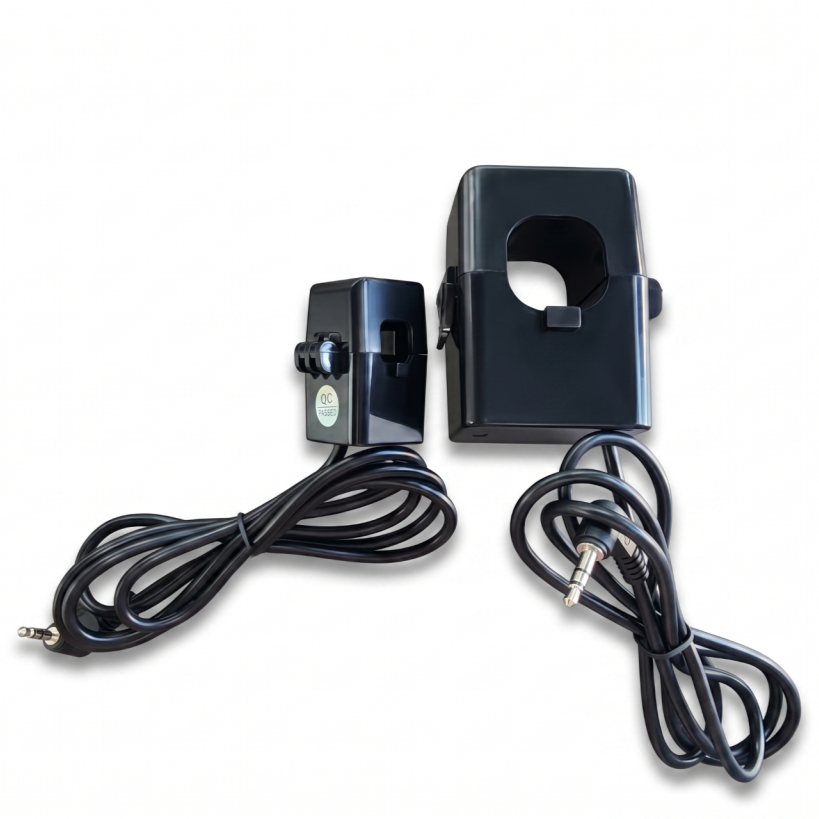
These are product reference images. They do not show what is included in a particular package or where a CT should be installed.
What WattPanel capacity tells you—and what it does not
The verified Main CT count is two for WattPanel-2X and three for WattPanel-3X. Both models support whole-home monitoring and up to 16 individual circuit measurements with 50A Sub CTs.
“Up to 16 circuits” describes supported circuit-monitoring capacity. It does not confirm that every package contains 16 Sub CTs, or that every circuit in your home will be measured. Confirm the selected package contents and intended installation coverage before buying.
The Main CT counts also do not make the two models interchangeable. The appropriate model and installation scope must be checked for your system; do not select a model from CT count alone.
For the separate sensor-count question, see how many CT clamps a home energy monitor needs.
Confirm the scope before buying
Ask for clear answers to these questions:
- Do I need whole-home totals, selected circuit detail, or both?
- Which circuits will be individually measured?
- What does the selected package actually include?
- Which model is suitable for my electrical system?
- Who will confirm the installation requirements and explain the resulting measurements?
WattPanel must be installed and serviced only by qualified electrical personnel. This article is a buying-scope comparison, not an installation guide. It provides no panel-opening, wiring, clamp-placement or live-testing instructions.
Compare the Grus energy monitoring options
Start with the Grus home energy monitoring solution to compare the available monitors and request compatibility guidance. Bring your scope questions to that discussion so the selected product and package match the information you want to see.
No monitoring configuration should be treated as a promise of savings, appliance identification or utility-billing replacement.
Product references
The model-specific facts above are limited to the published WattPanel-2X product information, WattPanel-3X product information and WattPanel-2X quick start guide. Refer to the exact model and selected package; this comparison does not replace professional installation review.