
A home energy monitor’s price is not the same thing as the cost of a working installation. Before comparing two quotes, ask each provider to name the hardware, the readings you will receive, the site work included and the records handed over afterwards. Leave unresolved work visible. An inexpensive quote with important exclusions is not directly comparable with one that includes those items.
This is a guide to the written scope, not a price list or an installation tutorial. It does not estimate local labor charges, confirm that a monitor fits your home or tell you to open an electrical panel. The useful result is a quote you can understand before you order equipment or arrange work.
The header is an illustrative discussion beside a closed panel, not a customer case, an actual quote or proof of an installation.
Start with the readings you are buying
Write one sentence describing the decision you want the monitor to help with. For example: “I want a household total and separate readings for the circuits serving my EV charger and water heater.” That is a request for a defined measurement scope, not a promise that a particular package can provide it.
Ask the provider to translate that request into named measurement points and explain any gaps. “Up to sixteen channels” and “sixteen useful appliance readings in this home” are different statements. A circuit can serve more than one device, and a package’s maximum capacity does not establish what the proposed installation will actually cover.
If the distinction is unclear, start with whole-home versus circuit-level monitoring. Then return to the quote with a shorter list of must-have readings. Do not pay for a larger sensor count simply because it is larger.
Put the exact hardware on the quote
A line that says “energy monitor supplied” leaves too much unresolved. Ask for the manufacturer, model and package option. The document should distinguish included sensors and accessories from separately priced items, and say who supplies each part.
Where the proposed scope depends on an additional sensor, a second device or another accessory, ask whether it is included, optional or still subject to review. Do not assume that an accessory is compatible because its connector looks similar or because another model uses it.
Keep the current product documentation with the quote. For example, Emporia’s pre-installation guidance asks buyers hiring an electrician to provide the installation guide and decide which branch circuits they want monitored. That is a useful documentation practice for that product; it does not establish Grus compatibility or turn another manufacturer’s installation procedure into instructions for your home.
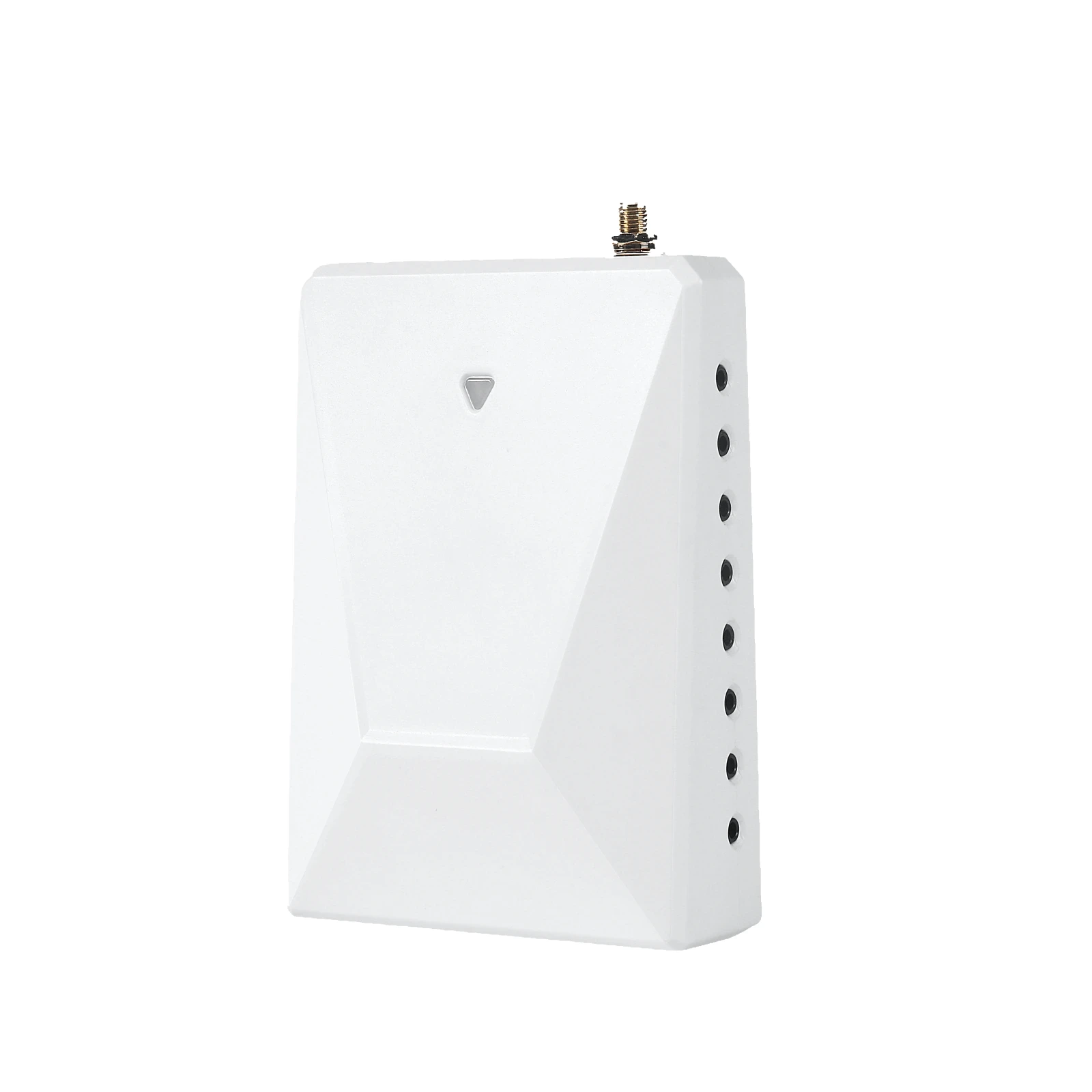
Device identification only. This photograph does not establish package contents, site compatibility or an installed price.
Separate known site work from an allowance
Ask whether the price is based on a completed site assessment, existing records or assumptions that have not been checked. If access, physical space or the intended monitoring location remains uncertain, the quote should say what is unresolved and who will assess it.
“Additional work may be required” is not a usable budget by itself. Ask which conditions could change the scope, whether assessment is charged separately and how a revised price would be approved before work proceeds. An allowance is money reserved for uncertain work; it is not proof that the work has been assessed or included at a fixed price.
You can gather purchase records, product manuals, an existing circuit schedule and external labels that are safely readable. Do not remove covers, measure inside a panel or move conductors to make the quote more precise. Site-dependent electrical questions belong with a qualified professional using the exact product documentation and applicable local requirements.
Use the same comparison sheet for every provider
The sheet below deliberately has no sample prices. Ask providers to fill it in using the same currency and the same requested readings. Mark an unanswered item “unknown,” not zero.
| Item | What the written quote should say |
|---|---|
| Hardware | Exact model, selected package and who supplies it |
| Measurement scope | Named totals or circuits, plus what will not be measured |
| Sensors and accessories | Included items, optional items and compatibility still to be verified |
| Assessment and installation | Work included, assumptions, access arrangements and exclusions |
| Additional work | What could trigger a change and how the change will be priced and approved |
| App setup and handover | Who completes supported setup, explains labels and gives you the records |
| Ongoing charges | Any required service, optional subscription or other charge, if applicable |
| Taxes and other charges | Whether these are included, excluded or not yet determined |
Add the quoted amounts only when the provider has actually supplied them. Keep optional work separate from required work and keep unknowns beside the total. This prevents a blank installation line from making one offer appear cheaper than it really is.
An optional future expansion also belongs on a separate line. If you later add an EV charger or another panel, the additional measurement and installation requirements need their own review. Do not treat unused channels as a guarantee that a future project will need no extra work.
Agree on what you receive at handover
Ask what the provider will demonstrate and document before the job is considered complete. A useful handover identifies the installed model and package, the measurement points, the channel labels and any unresolved limitations. It should also distinguish the installer’s responsibilities from the manufacturer’s product support.
For example, if a channel is labeled “water heater,” ask what that label represents in this installation. Is it a confirmed dedicated measurement point, or a broader circuit serving other loads too? The label is helpful only when its meaning is recorded. It is not evidence that the app automatically recognized the appliance.
Also ask who handles an unexpected reading after installation and what information they will need. Keep account passwords and recovery codes out of a public quote request or shared screenshot. Do not assume that app setup includes ongoing monitoring, onsite visits or a response-time commitment unless the provider states that separately.
Decide on scope before deciding on price
Two quotes are ready to compare when they describe substantially the same outcome and make the remaining uncertainty visible. If one excludes a necessary sensor, site assessment or handover task, ask for clarification rather than comparing only the bottom lines.
If extra work makes the project unattractive, it is reasonable to narrow the measurement goal or postpone the purchase. A whole-home total, selected-circuit data and a compatible plug-load measurement answer different questions. A lower-cost approach is useful only if it still answers yours.
For a Grus product-document question, contact Grus support with the proposed model, requested readings and the unresolved line from the quote. Ask a qualified local provider about site work and its price; this article does not offer local installation services. A clear quote helps you make a purchasing decision, but neither the quote nor the monitor promises a lower electricity bill.