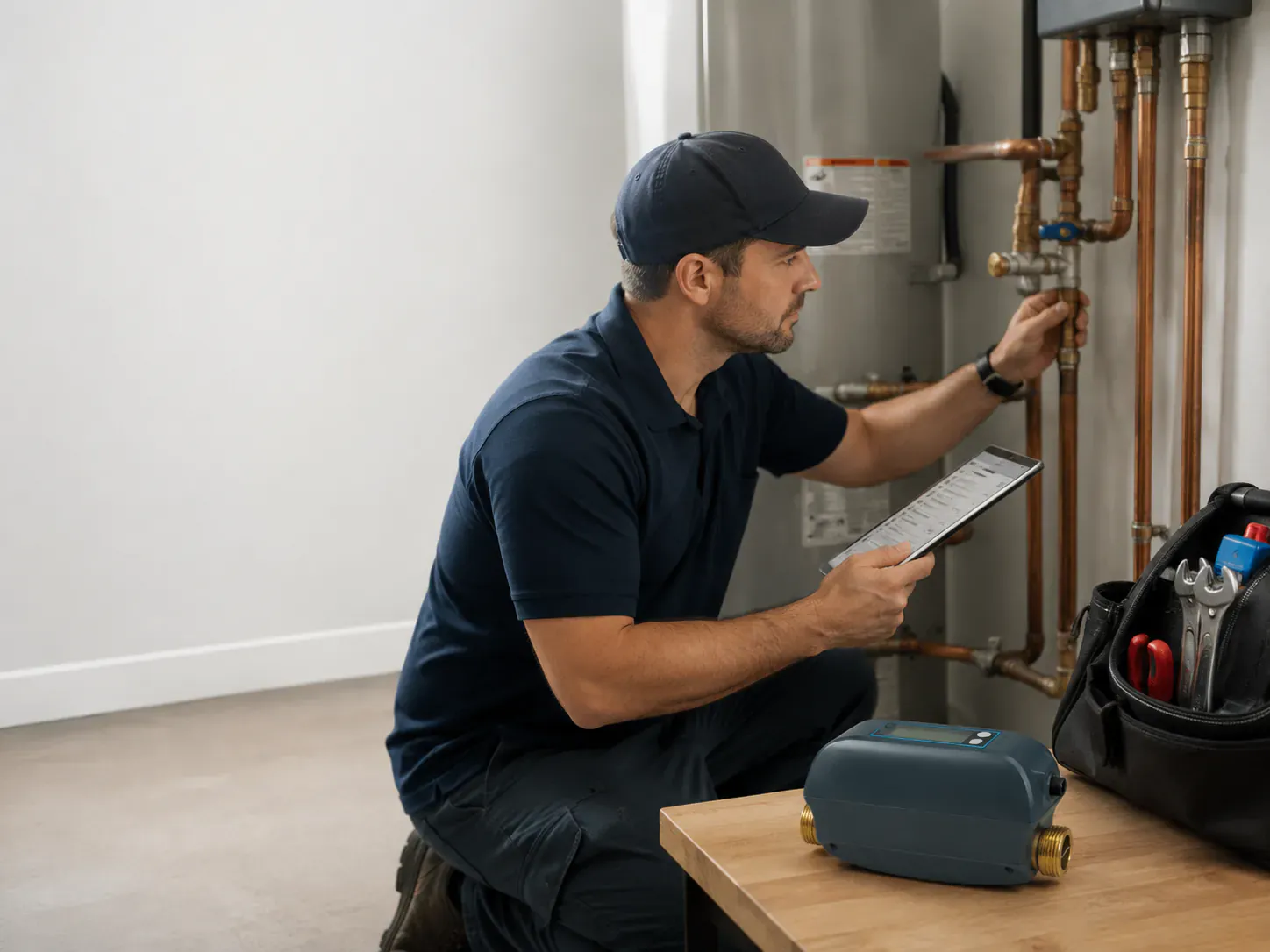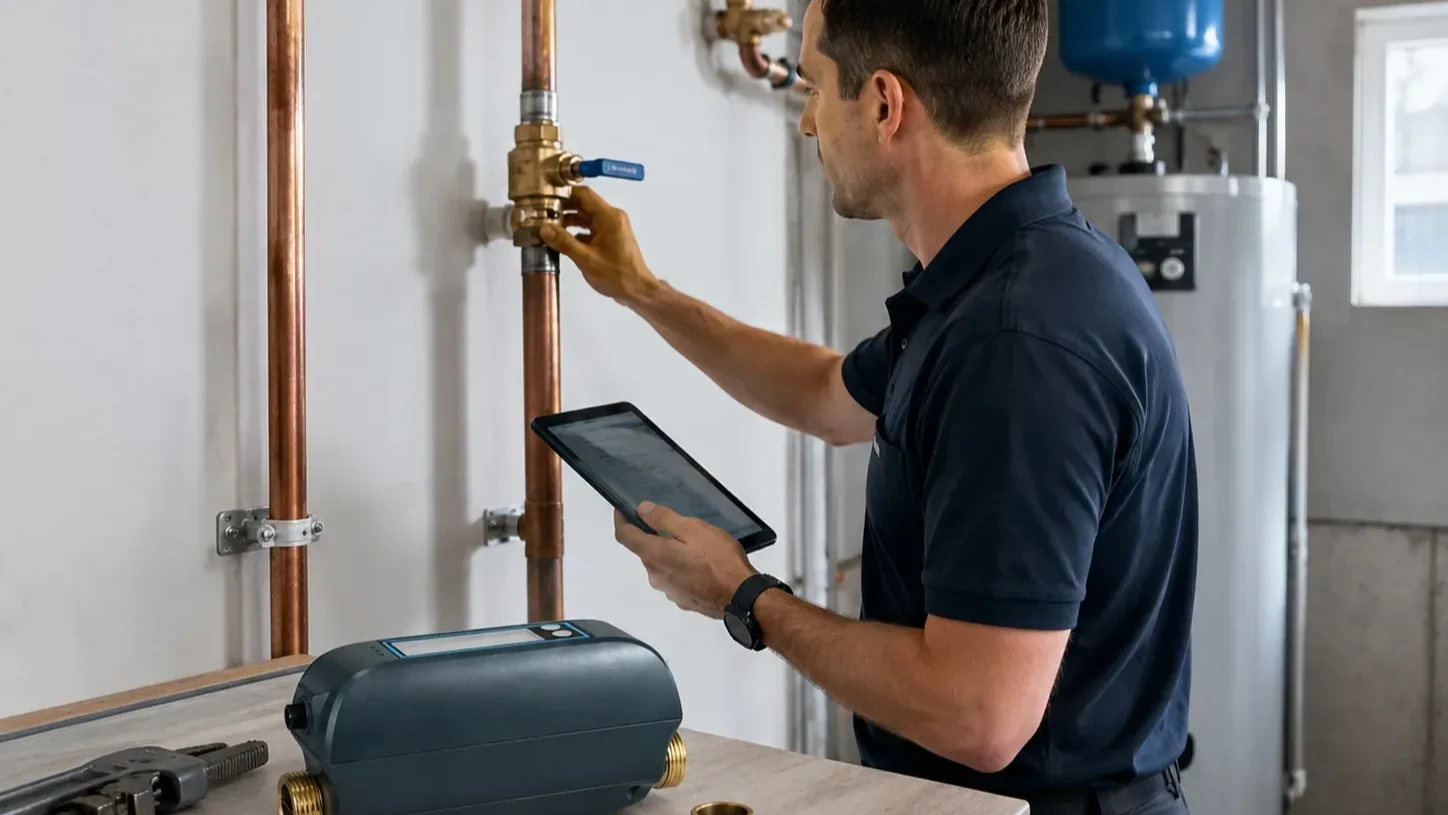
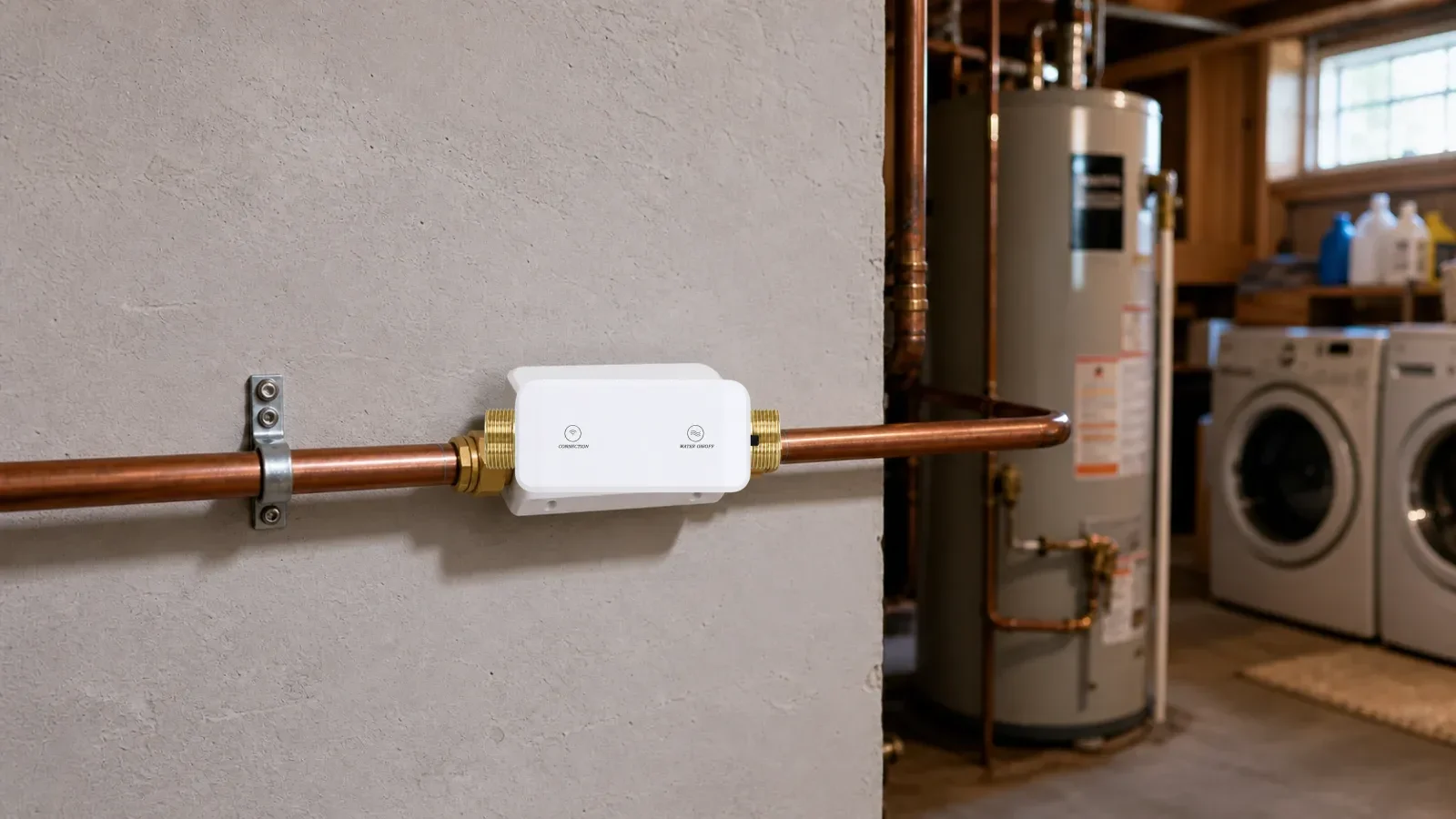
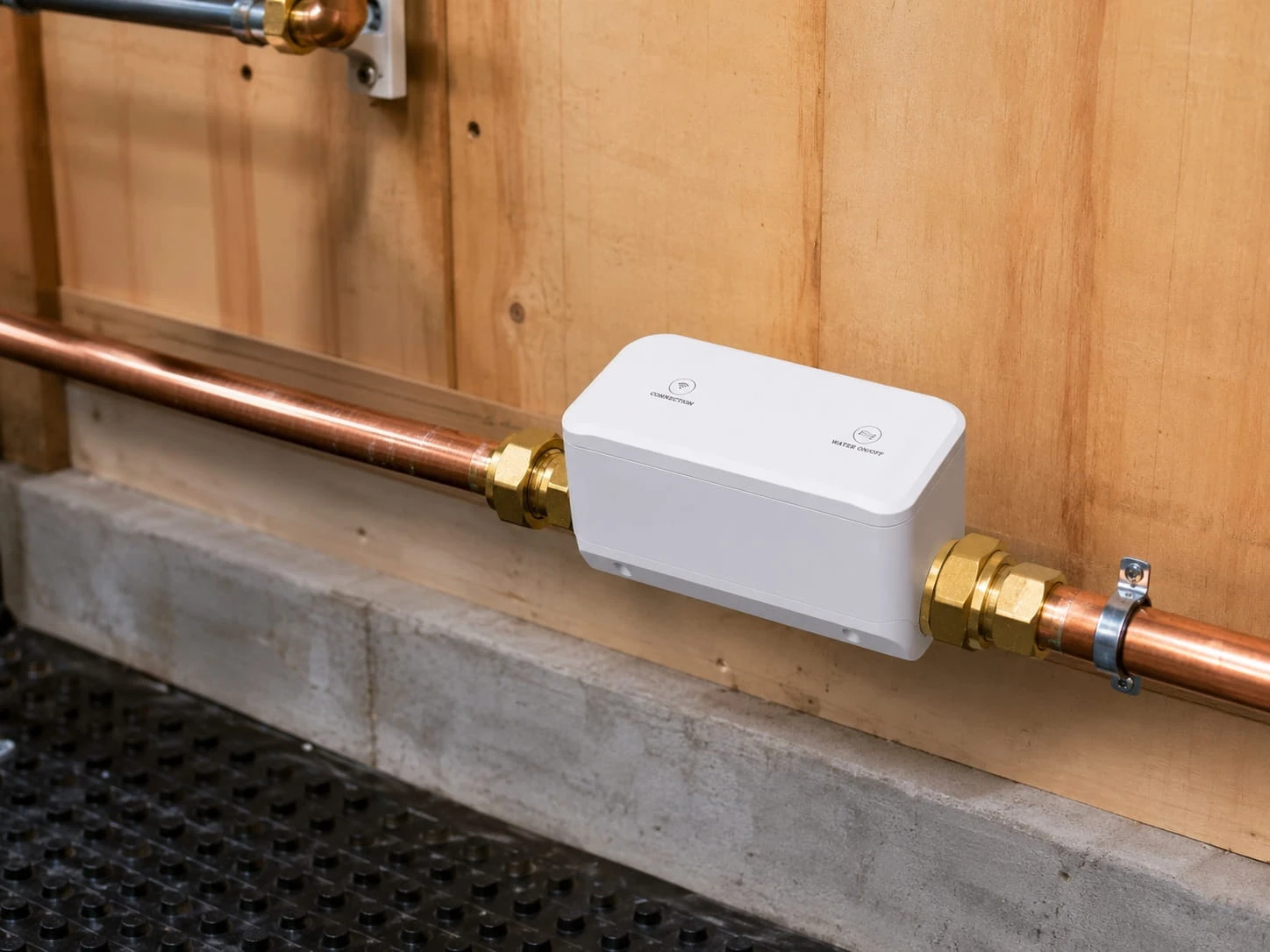
A smart water valve is a powered valve or valve actuator that can open or close a home’s water line through local controls, an app, or an approved automation. Some models also report flow or water-use data. Others rely on separate leak sensors to provide the event that triggers a shutoff.
The important boundary is that “smart” does not mean every model detects every leak or closes automatically in every situation. The result depends on the valve, connected sensors, configured rules, power and network state, pipe fit, and professional installation. Treat it as one controlled part of a water-protection plan, not as a guarantee against water damage.
What a smart water valve does
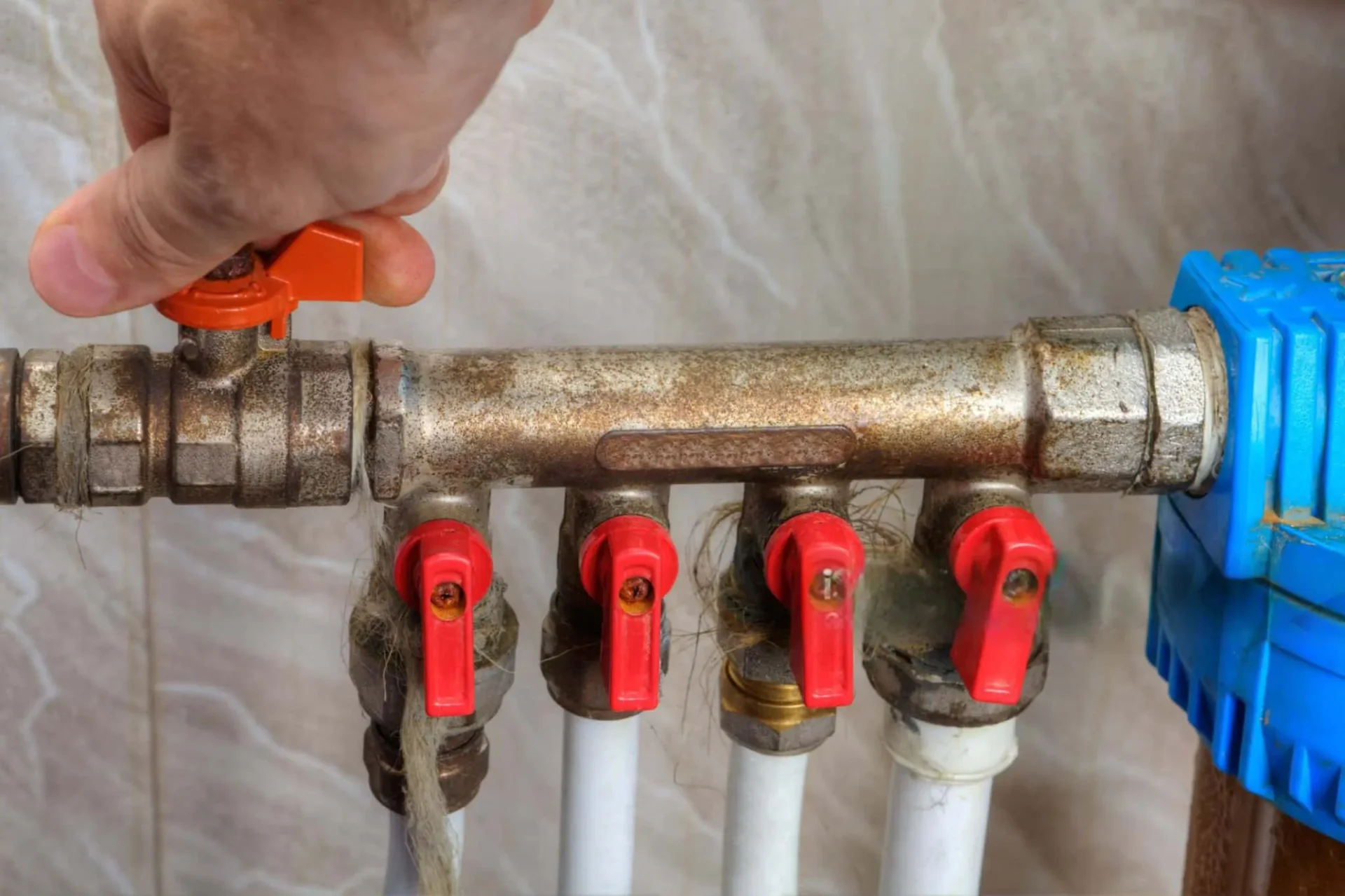
A manual main shutoff changes the water supply only when someone physically turns it. A smart valve adds powered actuation and, depending on the model, remote status, remote control, flow information, or automation inputs.
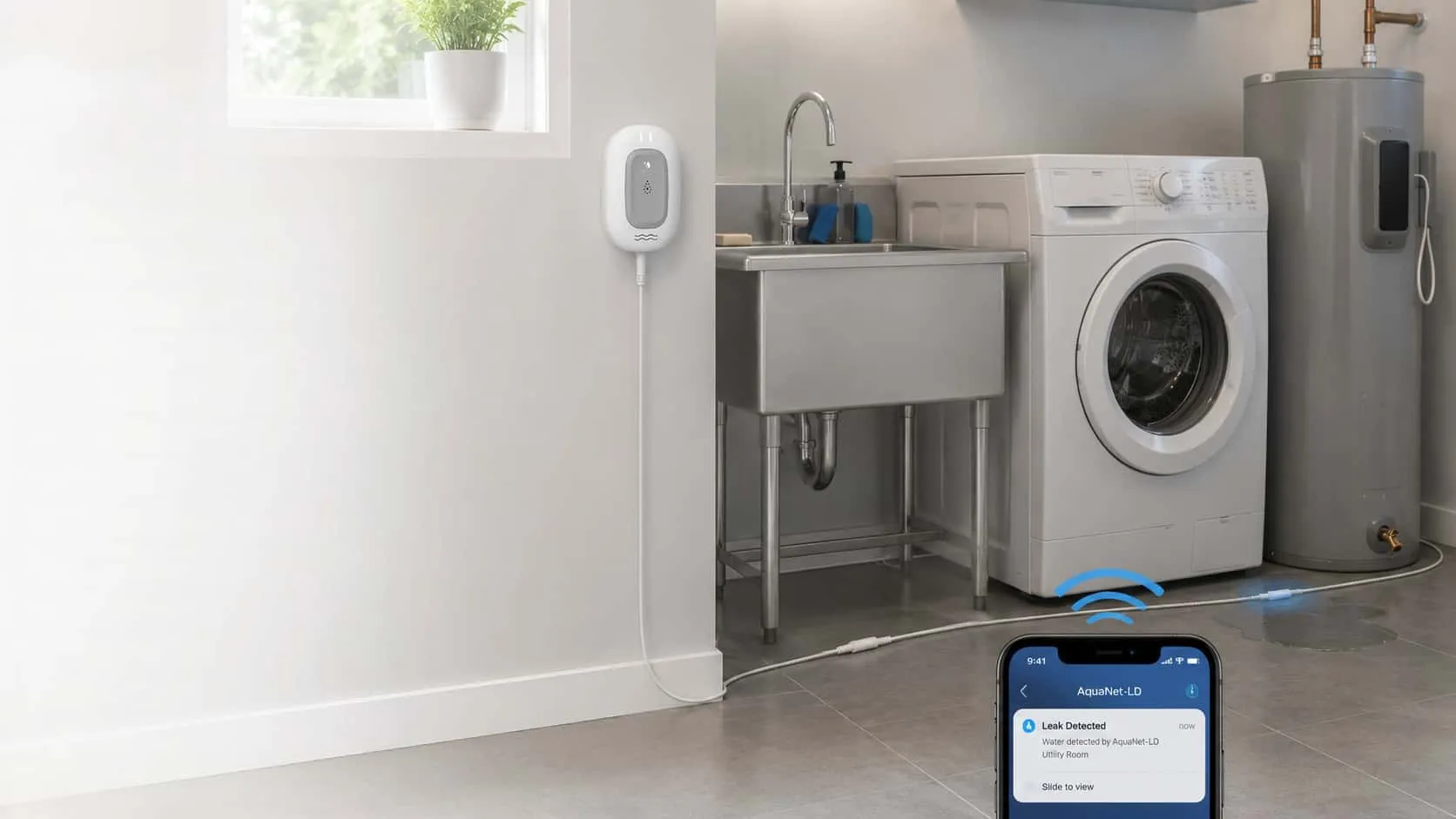
Those capabilities can be built into one device or divided across several components. For example, a valve may handle open and close commands while a separate moisture sensor detects water near a laundry machine. An app-based rule can then link the sensor event to the valve if both products and the automation platform support that workflow.
Before comparing models, separate four questions:
- Can the valve be opened or closed locally?
- Can its state be viewed or changed remotely?
- Does the valve measure flow, pressure, temperature, or water totals?
- Can a compatible leak sensor or configured rule request a shutoff?
One “yes” does not automatically imply the other three.
How shutoff decisions are triggered
Smart-water-valve systems generally use one or more trigger paths:
| Trigger path | What it means | What to verify |
|---|---|---|
| Local control | A button or control on the device opens or closes the valve | Whether local control remains available if external power or networking changes |
| App command | An authorized user requests a change remotely | App compatibility, account access, network requirements, and current valve state |
| Flow rule | A model uses measured flow and a configured threshold or duration | Which measurements the specific model supports and how the rule behaves |
| Linked leak sensor | A compatible sensor reports moisture and an automation requests closure | Sensor placement, platform linkage, notification path, and failure behavior |
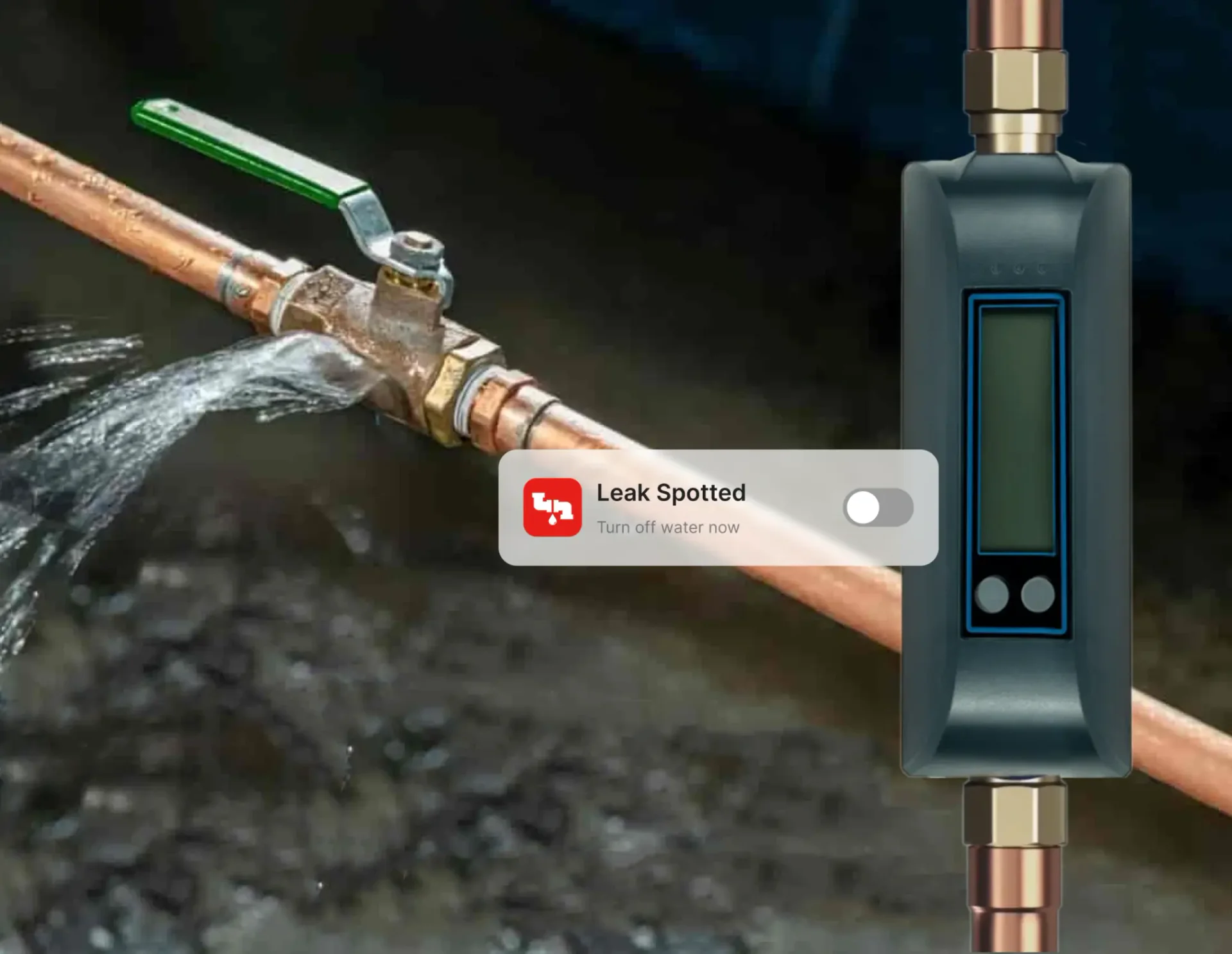
Do not assume that a flow-monitoring valve is also a room-level moisture detector. Flow data can indicate an unusual pattern, while a leak sensor can identify water at a particular location. Using both can provide more context, but the linkage must be supported and configured.
Smart valve versus manual main shutoff
The manual shutoff remains an important physical control. A smart valve does not remove the need to know where the main shutoff is or how the plumbing system is isolated safely.
The practical difference is response and visibility. A supported smart setup may let an authorized user check valve state, receive an alert, or request closure without being next to the pipe. A configured automation may also respond to a supported sensor or rule. However, those functions can depend on power, networking, account access, and the specific product design.
Battery backup should also be read model by model. A battery may preserve local valve movement without preserving Wi-Fi or remote app control. Never infer full remote operation during an outage from the presence of a battery alone.
What a smart water valve cannot guarantee
A smart valve can reduce the time between a detected condition and a shutoff request, but it cannot promise that every water event will be detected or that all damage will be prevented.
Important limits include:
- Water already in a pipe, appliance, tank, or room may continue to move after the main supply closes.
- A sensor only covers the location and condition it is designed to detect.
- A flow rule can miss a pattern or flag normal use if thresholds are not appropriate.
- Remote features may be unavailable during a power, network, cloud, or account interruption.
- Pipe size, thread, material, pressure, temperature, direction, and indoor-use limits vary by model.
- A closed valve does not repair a failed pipe, appliance, fitting, drain, or waterproofing problem.
If there is active flooding or an electrical hazard near water, prioritize personal safety and the appropriate emergency or qualified service response rather than troubleshooting an app.
Check compatibility before choosing a valve
Compatibility is a purchase and installation decision, not a detail to solve after the product arrives. Confirm the following with the product documentation and a qualified plumbing or installation professional:
- the pipe diameter, thread standard, pipe material, and available straight-pipe space;
- the correct flow direction and an indoor location within the product’s environmental limits;
- the required power source and what local controls remain available during an outage;
- the home network and app requirements for any remote function;
- whether a specific leak sensor and automation platform are supported together;
- access for inspection, service, manual isolation, and future replacement;
- local plumbing, permit, backflow, and potable-water requirements where applicable.
Do not open, cut, or modify a main water line based only on a general article. Use the product-specific instructions and the appropriate licensed professional for the property and jurisdiction.
Use the water-valve compatibility checklist →
When separate leak sensors add useful context
A valve installed on the main supply controls one point in the system. Leak sensors can add location-specific information near water heaters, laundry equipment, sinks, toilets, or other appropriate areas.
The useful relationship is straightforward: the sensor reports a supported event, the platform evaluates a configured rule, and the valve receives a supported command. Whether that chain works locally or through a cloud service—and what happens if one part is unavailable—must be confirmed for the chosen products.
For a clearer comparison of valve-only, sensor-only, and linked setups, read Smart Water Valve with Leak Detector: How the Setup Fits Together.
Who should consider a smart water valve
A smart valve may be worth evaluating when faster visibility or controlled shutoff would materially improve a home’s response plan. Common examples include:
- a frequently unoccupied or seasonal property;
- a finished basement or utility area where a leak may not be seen quickly;
- a home where the main shutoff is difficult to reach in an emergency;
- a property using compatible point leak sensors in several water-prone locations;
- a homeowner or property manager who needs a documented alert and response workflow.
That does not make one valve suitable for every home. A compatibility review may determine that the pipe, location, power, network, service access, or responsibility model needs a different approach.
Choose a controlled water-protection path
Start with the decision you need to make: remote valve control, water-use visibility, sensor linkage, or a broader property response plan. Then compare only products that meet the verified pipe, installation, power, network, and support requirements.
Grus currently treats the Water path as compatibility-first and installer-supported. It is not presented as an ordinary homeowner checkout or a promise of local installation by Grus.
Compare smart water protection setups →
Review the installer-supported Water partner path →
Frequently asked questions
Does a smart water valve detect leaks by itself?
Not always. Some models monitor flow or include specific diagnostic functions. Others depend on separate moisture sensors or external automation. Check what the exact valve measures and which linked sensors are supported.
Can it close the water automatically?
Some systems can request closure through a configured flow rule or compatible leak-sensor automation. Automatic behavior is product- and configuration-dependent, so confirm the trigger, delay, notification, failure state, and local override before relying on it.
Does a battery backup keep remote control working?
Not necessarily. A backup battery may support local valve movement while Wi-Fi and app control are unavailable. Follow the exact product documentation rather than assuming every feature remains online.
Where is a smart water valve normally installed?
Many whole-home models are designed for an indoor main-water-inlet location, but the correct location depends on the product, pipe layout, service access, local requirements, and professional installation plan.
Will a smart valve prevent all water damage?
No. It may help limit continued supply flow after a supported condition is detected, but it cannot detect every event, remove water already present, repair the source, or guarantee a damage-free outcome.