How Many Gas Detectors Do I Need?
Once you’ve decided to buy a gas detector, the next concern is practical—and important:
How many gas detectors do I actually need, and where should I put them?
Choosing too few can leave blind spots. Choosing too many can feel unnecessary.
The right answer depends on how gas is used and distributed in your home, not on guesswork or one-size-fits-all rules.
This guide focuses on real residential layouts, helping you make a clear, confident decision.
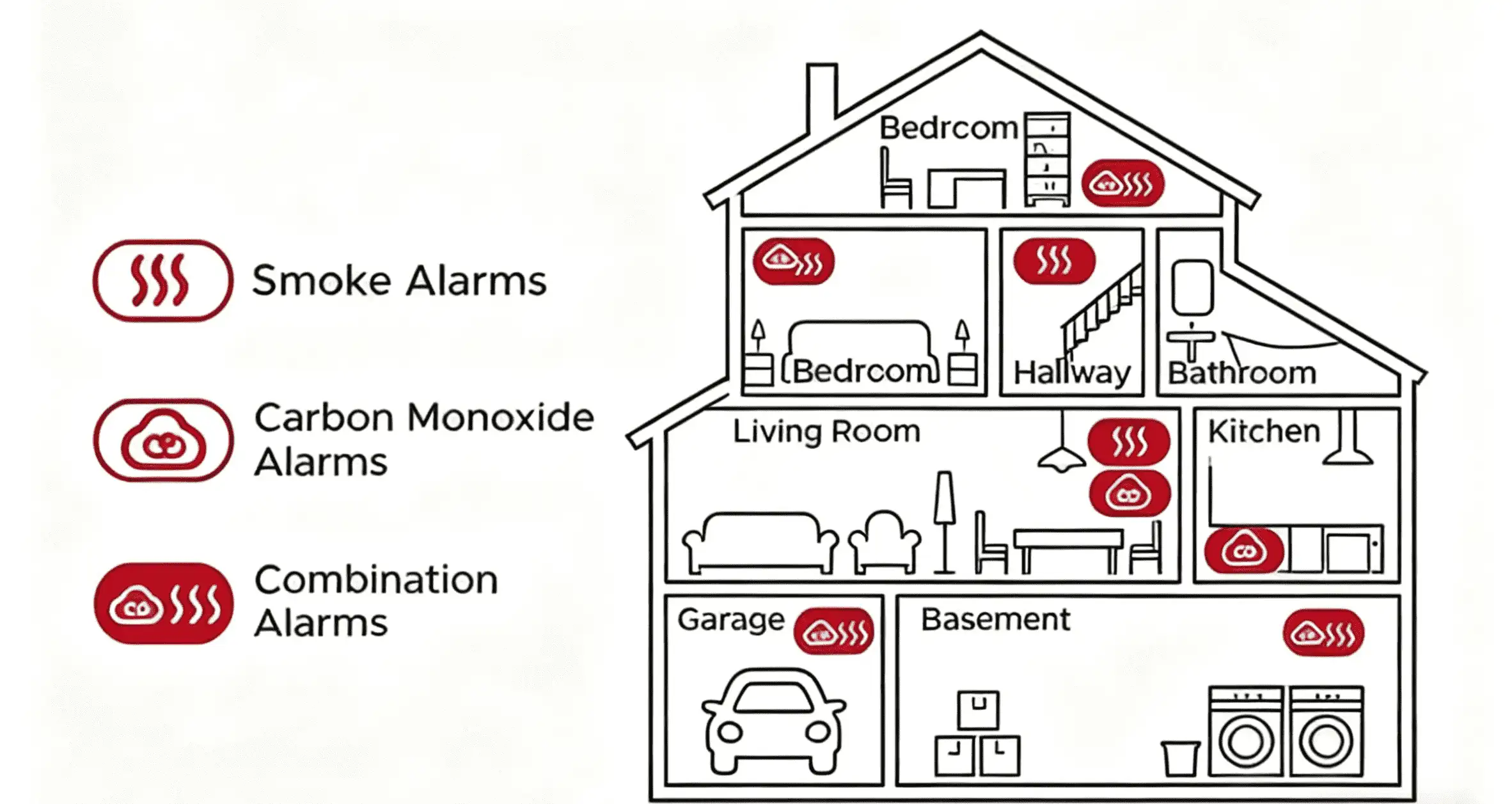
Key gas appliance locations to consider
Before deciding on quantity, start by identifying where gas risk actually exists.
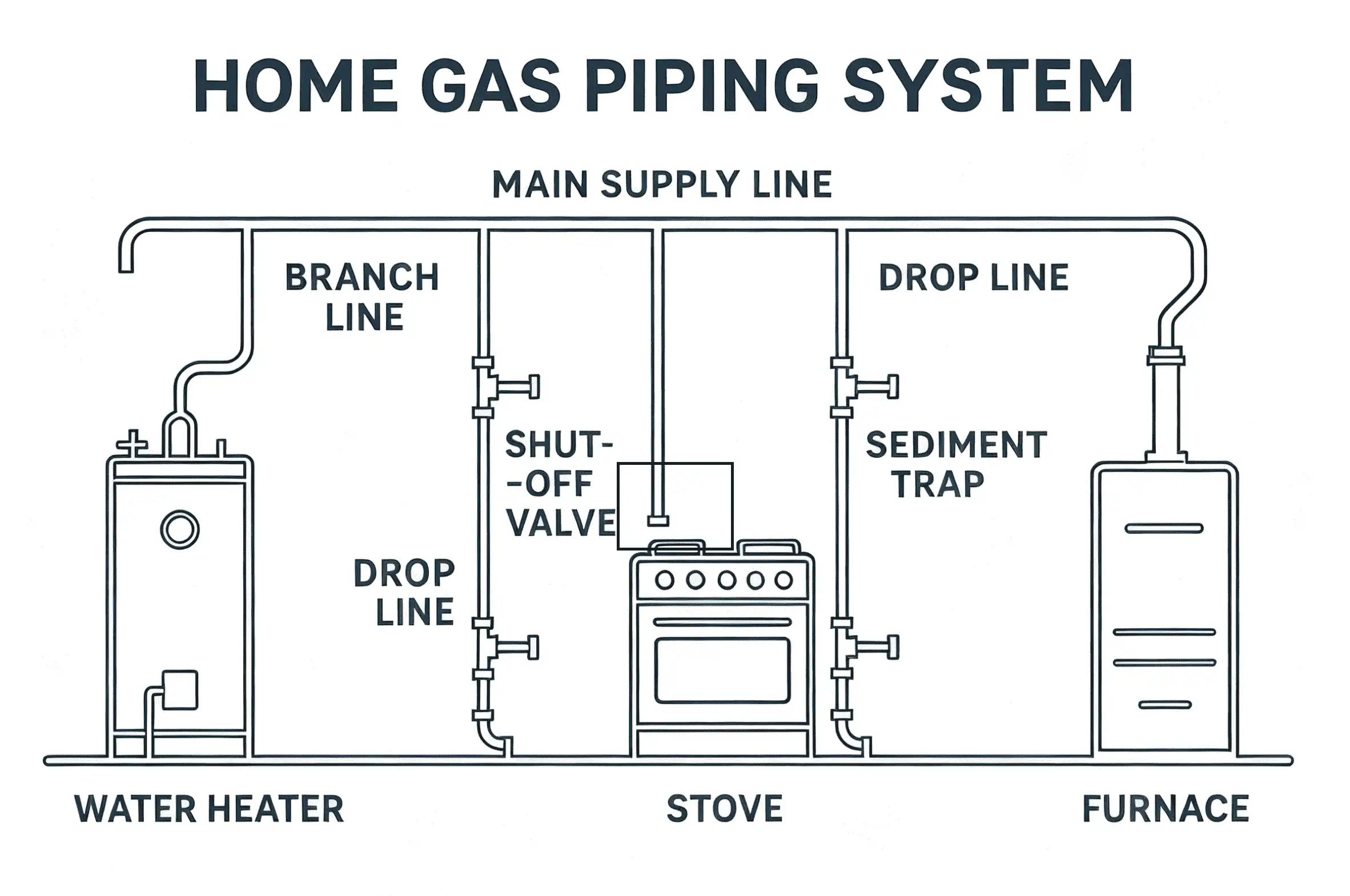
In most homes, gas leaks occur before combustion, often around fixed connections rather than open flames. Common risk zones include:
- Gas stoves and ranges
- Gas water heaters
- Furnaces or boilers
- Gas dryers
- Gas fireplaces
- Areas with exposed gas piping or near the main shutoff
What matters most is not the appliance itself, but the area where leaked gas could accumulate.
Detectors should be placed near these zones, not hidden inside cabinets or directly on equipment.
If you’re still unsure how gas leaks differ from smoke or carbon monoxide, see our Gas Safety Guide for Homes.
One detector vs whole-home coverage
This is the most common decision point:
Is one gas detector enough, or do I need more than one?
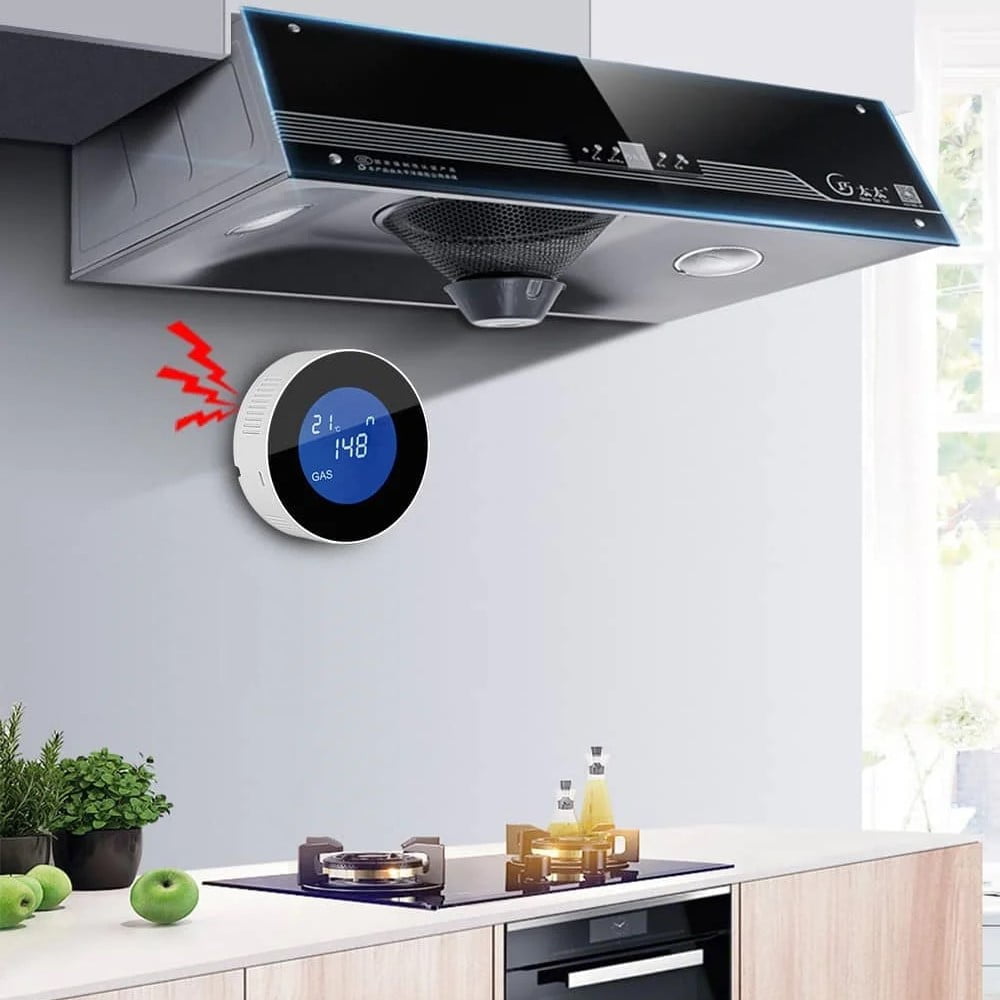
When one detector can be enough
A single gas detector may be sufficient if:
- You live in a small apartment or compact home
- Gas appliances are located close together (for example, kitchen + nearby utility area
- The home is single-story with limited gas piping
In these cases, placing one detector near the primary gas appliance zone can provide meaningful protection.
When more than one detector makes sense
You should consider multiple gas detectors if:
- Gas appliances are spread across different rooms
- Your home has more than one floor
- There is a basement or separate utility room
- Sleeping areas are far from gas sources
- You want alerts even when you’re not at home
A simple rule that works for most homes:
Homes with multiple gas zones often choose multi-pack gas detectors to cover kitchens, basements, and utility rooms without gaps.
Small homes vs multi-story houses
Home layout plays a bigger role than square footage alone.

Small homes and apartments
For studios, one-bedroom apartments, or compact homes:
- One detector near the kitchen or main gas source
- Optional second detector if gas appliances are separated from living or sleeping areas

Multi-story houses
For two-story or larger homes, distance and vertical separation matter.
Typical setup for a 2-story home
- Primary Zone:
Kitchen — wall-mounted higher on the wall near the gas source
- Utility Zone:
Basement or mechanical room — near the water heater or furnace
- Safety Buffer:
Hallway outside bedrooms — for peace of mind during sleep
If one of these detectors is installed in a basement or utility room, a model with remote or smart alerts can be especially useful—since an alarm may not always be heard from upstairs bedrooms.
Rental properties — what actually makes sense
Rental homes require a slightly different mindset. The goal is practical risk reduction without unnecessary complexity.
Single-unit rentals
- One detector may be reasonable if gas use is limited and centralized
- Add a second detector if there is a dedicated furnace or water heater room
Multi-unit or multi-floor rentals
- At least one detector per unit
- Additional detectors near shared gas equipment areas when applicable
Tenants may not always notice early signs of a gas issue, but detectors provide consistent, automatic monitoring without relying on occupant behavior.
Common placement mistakes to avoid
Even the right number of detectors can be ineffective if placed incorrectly.
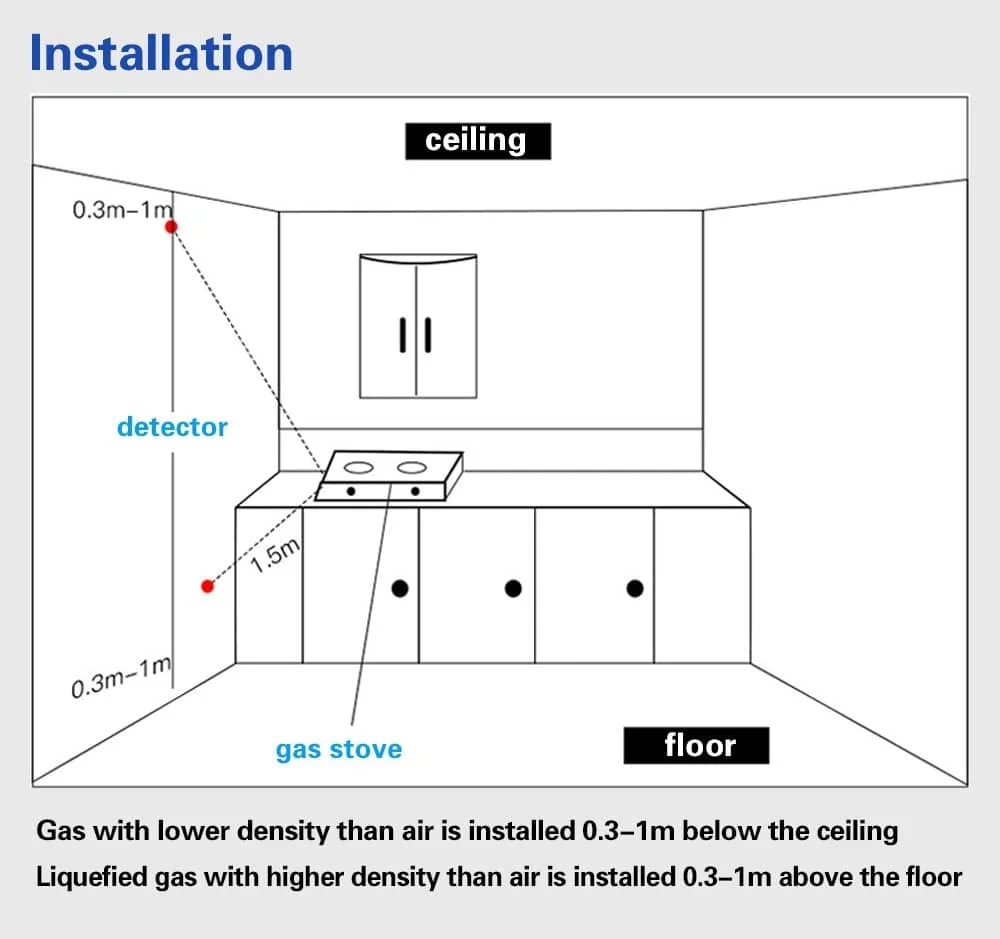
Installing at the wrong height
In most North American homes, natural gas (methane) is lighter than air and tends to rise.
Gas detectors should be installed higher on the wall, closer to where gas may accumulate.
In homes that use propane instead of natural gas, installation height may differ, since propane behaves differently in air.
Placing detectors too close—or too far
Placing a detector too close to a gas appliance may cause nuisance alerts during normal cooking or operation.
Placing it too far away may delay detection.
In many homes, positioning the detector a short distance away from the gas source provides a better balance between early detection and false alarms.
Other common mistakes
- Installing detectors directly above open flames
- Blocking detectors behind cabinets or appliances
- Using only one detector in a multi-story home
- Assuming smoke or carbon monoxide alarms also detect gas leaks (they do not)
But there is a reliable way to decide:
- Identify your gas appliance zones
- Match detector count to layout, not guesswork
- Adjust for floors, distance, and sleeping areas
- Keep placement practical and accessible
If you’re already planning to buy, choosing the right number and placement ensures the detector actually does its job—protecting your home when it matters most.
Now that you know how many detectors you need and where to install them, the next step is choosing a model that fits your layout.
View gas detector options designed for single-zone or whole-home setups, including models that support multi-room coverage and remote alerts.

Home Energy Efficiency and Security Solution Provider
©2025 All Rights Reserved. Grus IoT Co.,Ltd.