Water protection for a rental, second home, or vacant property is not just a device choice. It is a response-ownership plan. A detector can notice water at a monitored location. A supported system may send an alert. A compatible, correctly configured valve path may help control a water line. But none of those steps proves that someone received the message, entered the property, found the source, completed repairs, or authorized water service to return.
The practical goal is to shorten the time between an event and a qualified onsite response while keeping every handoff visible. Before relying on a system, name who owns detection coverage, alerts, access, water-control decisions, inspection, repair, drying, tenant communication, and restoration. If any owner is missing, the property still has an operational gap.
This guide follows Dana, a hypothetical property manager responsible for one occupied rental and one seasonally vacant home. Dana is not a Grus customer case, and the scenario is not proof of a product or insurance outcome. It is a consistent example for comparing responsibilities without assuming every building, lease, network, valve, or leak behaves the same way.
The short answer: build the response chain before choosing devices
Dana starts with six separate questions:
- Where can water first become visible? Point sensors and sensing cables only monitor the places water can reach.
- How can abnormal water use be noticed? Flow monitoring answers a different question from floor-level moisture detection.
- Who receives and acknowledges an alert? A notification without an accountable recipient is not a response.
- Which water line can be controlled? A valve only affects the line where it is correctly fitted and available.
- Who can enter the property? Rental access, vacant-home keys, tenant notice, and local travel time all matter.
- Who decides the property is safe to restore? A cleared alert cannot replace inspection, repair, drying, and authorization.
The U.S. EPA WaterSense overview of leak detection and flow monitoring devices separates moisture detection from flow monitoring. Moisture devices respond when unintended water reaches a sensing location; flow-monitoring devices look for water-use patterns that may indicate an irregularity. Dana uses both categories as planning tools, not as promises that every leak will be detected.
Occupied rentals and vacant properties have different operating assumptions
An occupied rental has people onsite, but the property manager may not control the daily schedule. Normal showers, laundry, guests, maintenance, and tenant turnover can change water-use patterns. The response plan must say what the tenant should do, who receives system alerts, how urgent events are escalated, and when management or a qualified service provider may enter.
A vacant or seasonal property has less normal water use, but it also has fewer people available to notice a problem. Network service may be paused, power may fail, heating conditions may change, and the nearest authorized responder may be far away. “Nobody is using water” does not mean the building can be treated as self-managing.
| Property state | Main advantage | Main operational gap | Planning priority |
|---|---|---|---|
| Occupied rental | A tenant may see or hear a local event | Alert ownership, lease communication, and access may be unclear | Define tenant, manager, and service-provider handoffs |
| Turnover or renovation | Management may have temporary access | Equipment, fixtures, and normal use may be changing | Revalidate sensor locations, controlled lines, contacts, and permissions |
| Seasonal second home | The owner knows the property | Travel time and remote dependencies can delay inspection | Name a local responder with current access instructions |
| Long-vacant property | Expected water use may be limited | Power, network, heat, maintenance, and inspection can lapse | Use a documented inspection schedule and explicit restoration authority |
Dana does not copy one checklist across both properties. She preserves the same response stages but assigns different people, access rules, and backup paths.
Map detection coverage by water path, not room label
“Put a sensor in the laundry room” is incomplete. Water from a supply connection, drain, water heater, sink, toilet, refrigerator, or concealed pipe may follow different slopes, seams, thresholds, and absorbent materials. A point sensor answers whether water reached one selected contact area. A sensing cable watches a longer routed contact path. Neither automatically covers the whole room or diagnoses the source.
For the occupied rental, Dana maps the floor around the washing machine and nearby sink. For the vacant home, she maps accessible paths around the water heater and other documented risk points. She records what each sensor can intercept, what can bypass it, and what changes would invalidate the placement assumption.
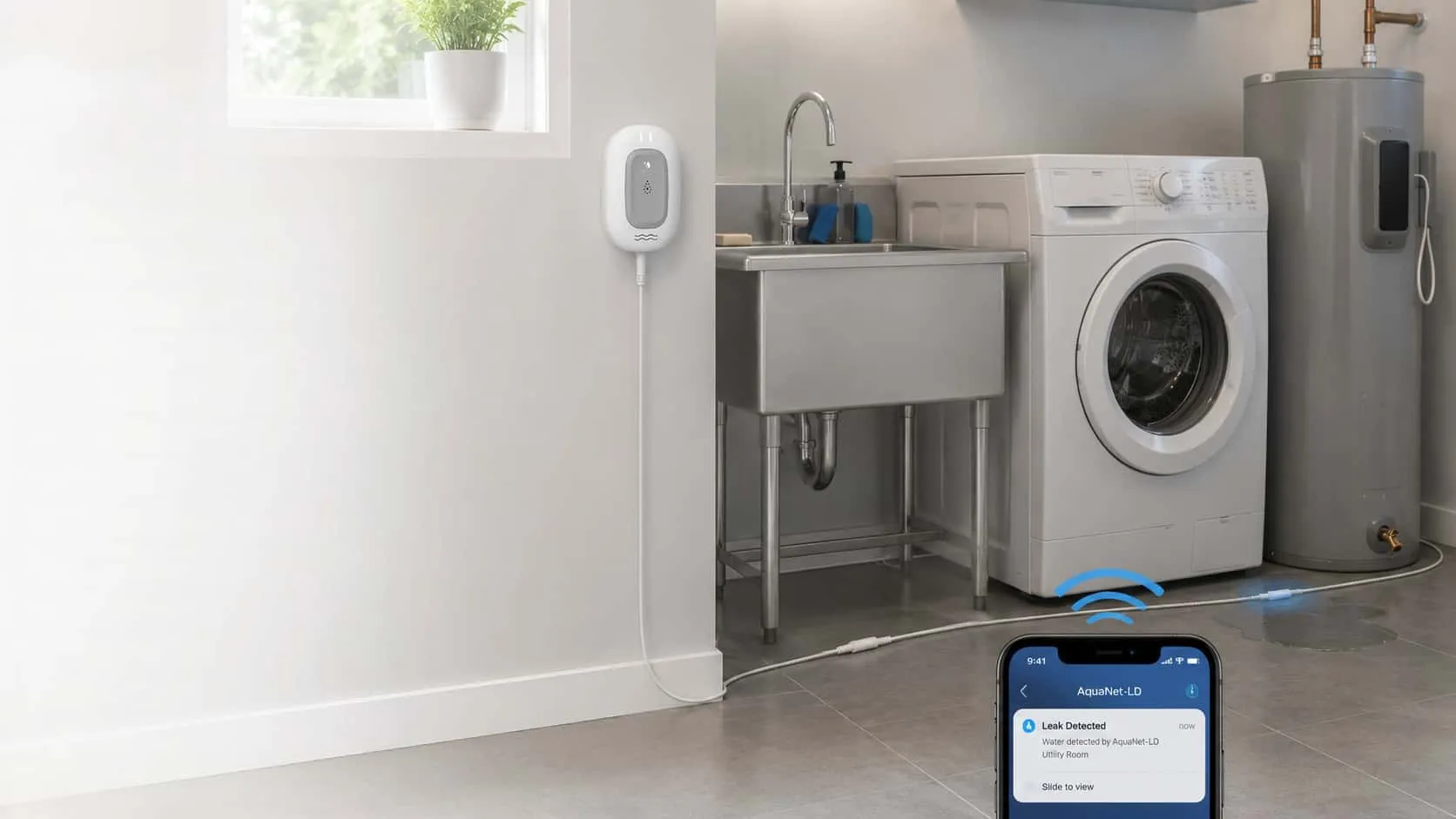
The current Grus AquaNet-LD product boundary is specific: it is a Wi-Fi sensing-cable detector, the detector body is not waterproof, and the sensing cable is the part intended to contact water. That distinction belongs in the property record. Dana does not place or describe the device body as a submersible sensor, and she follows current product documentation for the actual site.
The result is a coverage map, not a protection guarantee. It should include inaccessible areas, upper floors, concealed cavities, drains, outdoor systems, and any water source outside the planned sensing path.
Separate detection, flow monitoring, and water control
These functions answer different questions:
| Function | Useful question | What it does not prove |
|---|---|---|
| Point or cable moisture detection | Did water reach this monitored contact area? | The source, volume, full affected area, or whether water stopped |
| Flow monitoring | Is water use or flow behavior unusual under the configured conditions? | That visible water is present or that the cause is a leak |
| Alert delivery | Did the supported system attempt to notify a recipient? | That a person saw, understood, or acted on the alert |
| Valve command | Did a configured system request a compatible valve action? | That the valve moved, sealed, or controls every possible source |
| Onsite inspection | What can an authorized person observe safely at the property? | Hidden damage, repair completeness, or permission to restore service |
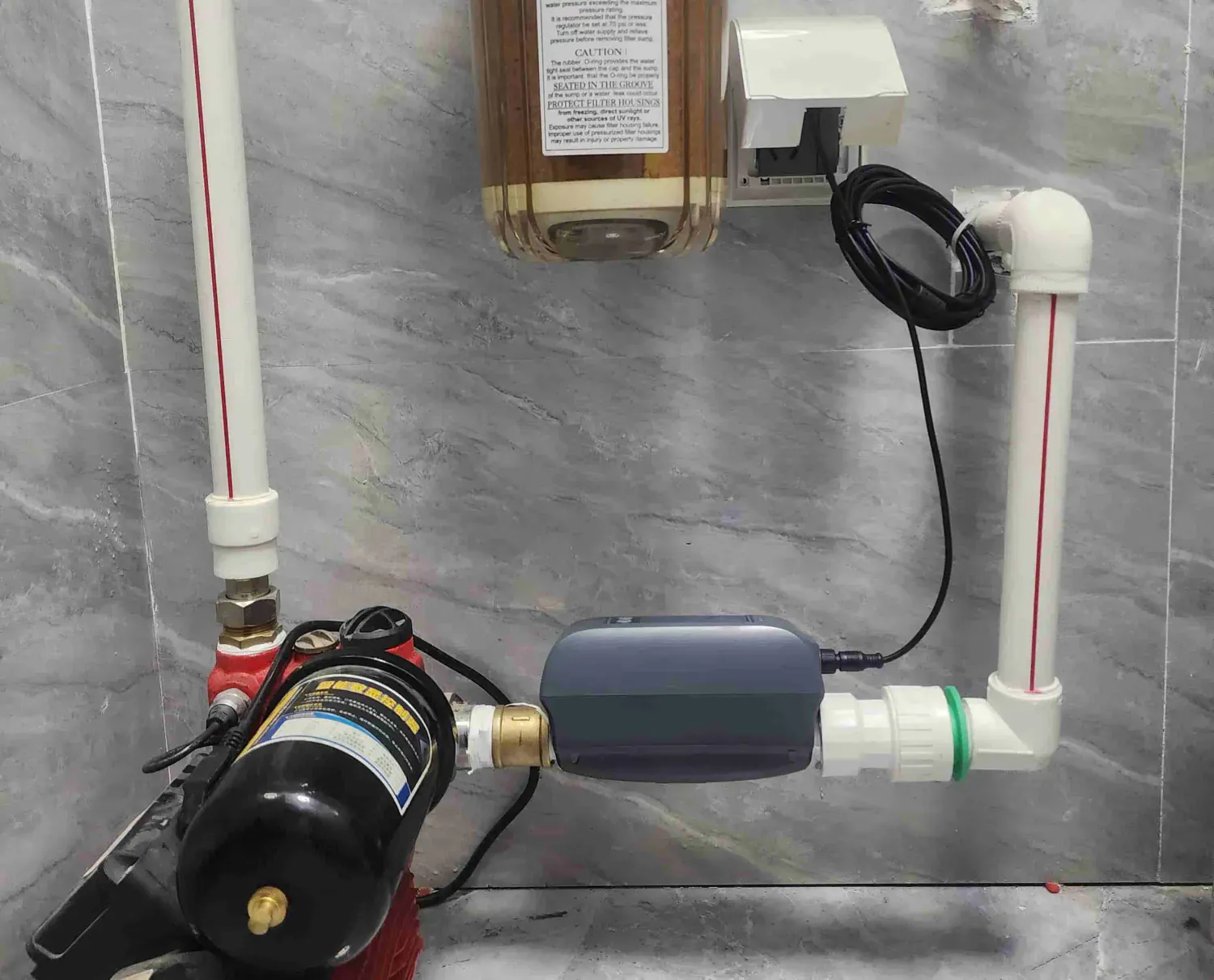
In the approved Grus AquaNet-BD context, leak-detector-triggered valve action must be described as configured Smart Life or Tuya app-based automation with compatible equipment. It is not a direct hardware connection between every detector and valve. During an external-power outage, Wi-Fi and App remote control are unavailable; the approved backup boundary supports local valve control. Dana therefore includes a no-network and no-remote-control branch instead of assuming the cloud path is always available.
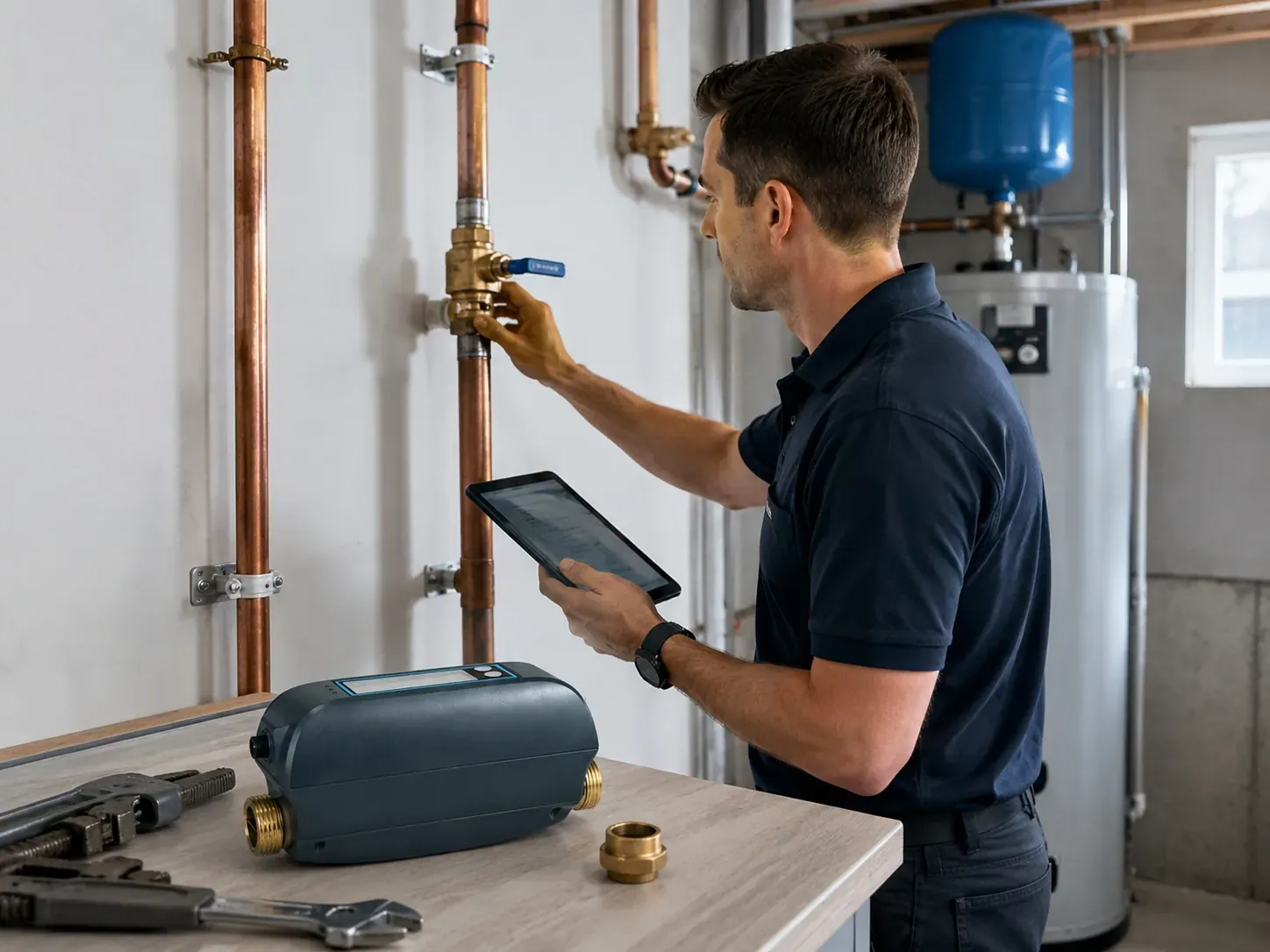
Product selection follows the mapped water lines, documented compatibility, installation context, and response plan. This article does not authorize plumbing work or establish fit for a particular property.
Assign a named owner to every handoff
Dana turns the technology diagram into a responsibility table. A small portfolio may use individual names; a larger operator may assign job roles and an on-call schedule. Either way, “someone” is not an owner.
| Handoff | Primary owner | Backup owner | Evidence Dana keeps |
|---|---|---|---|
| Coverage map and device record | Property manager | Qualified installer or service provider | Location, model, monitored path, blind spots, current documentation |
| Alert account and acknowledgement | On-call manager | Secondary on-call contact | Account owner, escalation order, last supported test date |
| Property access | Local responder | Approved backup responder | Key or access process, tenant notice rules, travel time, contact method |
| Water-control decision | Authorized property representative | Defined escalation contact | Controlled line, valve state evidence, exceptions, power/network condition |
| Source assessment and repair | Appropriate qualified professional | Alternate provider | Observations, work record, affected systems, unresolved conditions |
| Drying and habitability decisions | Authorized owner/manager and relevant professional | Defined escalation role | Area affected, drying or remediation record, tenant communication |
| Return to service | Named restoration authority | Named substitute | Repair confirmation, inspection basis, test plan, authorization time |
The same person may own several rows, but each responsibility remains separate. A plumber who repairs a connection may not own tenant communication. A property manager who receives an alert may not be qualified to diagnose electrical exposure or structural moisture. The table prevents one completed step from being mistaken for completion of the whole event.
Use a responsibility flow that survives a missing alert
Dana’s process allows for an unavailable notification, unknown valve state, or delayed responder. Every branch still reaches onsite assessment and an authorized restoration decision.

The flow deliberately does not end at “valve closed.” Water already released can remain in floors, walls, cabinets, insulation, or contents. The source may also sit outside the controlled line. Inspection, repair, drying, and restoration remain human responsibilities.
Plan for power, network, access, and communication failures
Remote visibility is useful only when its dependencies are available. Dana records the power source, network path, account owner, notification permissions, and last approved test for each supported device. She also records what the exact product can do locally when remote access is unavailable.
The backup plan is operational rather than technical improvisation:
- a second named contact receives escalation;
- an authorized local responder has a current access method;
- the property record identifies the relevant main and individual shutoff locations for qualified responders;
- tenant and owner contact rules are current;
- a responder knows which professionals to call for plumbing, electrical, appliance, drying, or building concerns; and
- no one restores service solely because an App status changes.
Travelers Risk Control’s current guidance for protecting a home while away likewise treats sensors, shutoff planning, local contacts, maintenance, inspections, and professional guidance as separate parts of preparation. Dana uses that structure as general risk-control context, not as a promise of insurance coverage, a discount, or a claim outcome.
Inspect and maintain the plan, not just the hardware
EPA WaterSense home maintenance guidance recommends checking installed leak-detection or flow-monitoring systems regularly and notes that such systems may alert on irregular use, detect unintended moisture, or activate a shutoff valve depending on the system. Dana schedules a documented review after tenant turnover, maintenance work, long vacancies, equipment replacement, network changes, and any water event.
The review asks:
- Are sensor locations still accessible and aligned with the recorded water paths?
- Are device, account, power, and network dependencies current?
- Do the primary and backup contacts still acknowledge their roles?
- Can the authorized responder still enter under the property’s rules?
- Does the controlled line still match the property plan?
- Are product documentation, supported tests, and maintenance records current?
- Did a recent change create a new blind spot?
A passed device test does not prove that the access plan, contact list, repair provider, or restoration authority will work. Dana reviews the complete chain.
What the system cannot decide for you
No detector or smart valve can decide whether a rental is habitable, whether concealed materials are dry, whether a repair meets local requirements, whether a tenant may re-enter, whether an insurer will cover a loss, or whether water service is safe to restore. Those decisions belong to the relevant owner, manager, qualified professional, authority, or insurer under the actual circumstances.
The system also cannot guarantee detection of water outside its sensing area, successful notification, valve movement, complete isolation, or prevention of damage. Treat every product state as one piece of evidence in a larger response—not as a certificate that the property is safe.
Build the property brief before requesting a solution
Dana’s final brief contains the property type and occupancy pattern, visible water-use areas, mapped detection paths, unmonitored areas, water-line context, power and network constraints, account owner, primary and backup responders, access rules, local service contacts, and restoration authority. That brief is more useful than asking for a generic “vacant-home leak system” because it exposes the decisions a qualified project must resolve.
For an installer-supported review, plan a smart water protection project with the property brief, intended sensing coverage, water-control goals, installation context, and response owners you can actually support.