A thermostat model should not be recommended from a front-cover photo, a wire count, or the word “smart.” Before a heating contractor proposes a control path, the project needs a consistent compatibility intake record: the customer objective, heating-system category, equipment identity, current control, approved voltage and terminal records, connected-load documentation, site constraints, installation owner, and unresolved conditions.
That record improves the quality of the next decision. It is not compatibility approval, an electrical test report, or permission to install. Exact fit still depends on the product documentation, the actual site, the qualified professional responsible for the work, and applicable local requirements.
This guide follows Dana, a hypothetical heating contractor, preparing an intake for Alex, a hypothetical homeowner. They are not a Grus customer case. Dana collects existing records and routes missing evidence to the right owner; the scenario does not teach anyone to open a wall box, remove a thermostat, inspect conductors, measure energized equipment, troubleshoot controls, or make connections.
The short answer: complete nine fields before choosing a path
Dana does not start with a product. Dana starts with nine intake fields:
- Customer objective: the comfort, control, scheduling, remote-access, or replacement decision the project should support.
- System category: electric resistance, boiler or hydronic, furnace, heat pump, fan coil, central HVAC, or another documented system.
- Equipment identity: manufacturer, model, available nameplate record, and applicable equipment manual.
- Existing control identity: thermostat or controller model, supported documentation, and current operating role.
- Documented control class: only voltage, terminals, load, and interface details already established by approved documentation or a qualified professional record.
- Zone and accessory context: the controlled zone, additional sensors, relays, control boards, or accessories that may affect the control relationship.
- Customer and account context: who needs physical control, App access, scheduling, notifications, and future account ownership.
- Qualified work owner: who owns site assessment, safety, local requirements, installation, commissioning, and the final fit decision.
- Open conditions: every missing record, conflicting detail, or unresolved question, with one owner and one next evidence request.
If one of these fields affects fit and remains unknown, the correct intake result is hold and escalate, not “probably compatible.”
Define the customer decision before collecting product details
Alex says, “I want a smart thermostat.” Dana turns that request into a decision that can be scoped. Is the homeowner trying to replace a failed control, add a weekly schedule, manage temperature remotely, coordinate several zones, or prepare a larger heating upgrade? These are different projects even when the same word—thermostat—appears in each conversation.
The objective field should state both the requested outcome and the limits of the intake. A useful entry might read: “Document the existing living-room heating control and the evidence required for a qualified contractor to evaluate a supported scheduling and remote-control path.” It should not read: “Install any Wi-Fi thermostat.”
ENERGY STAR’s current smart thermostat buying guidance tells buyers to make sure a thermostat is compatible with their heating and cooling system and notes that very high-efficiency equipment may require a controller from the same company. That is useful general guidance, not approval for a particular Grus product or site. It reinforces the intake principle: equipment and control context come before a feature list.
Classify the heating system without guessing from the old thermostat
A familiar wall control can hide very different systems. Dana records the system category from existing equipment documentation, a prior qualified service record, or the responsible professional’s assessment. A photograph of the thermostat face or the number of visible terminals cannot establish the complete control architecture.
| Intake field | Record | What this field does not establish |
|---|---|---|
| Heat source | Documented equipment type and model | That every home with radiators uses the same control voltage |
| Distribution | Baseboard, radiator, ducted air, fan coil, floor loop, or another documented path | That the distribution type alone identifies the controller |
| Control relationship | Which equipment or approved interface the current control operates | That a matching terminal label means matching behavior |
| Zones | Number and identity of independently controlled areas | That one photographed thermostat represents the entire property |
| Change scope | Control-only review or part of a larger equipment project | That a thermostat swap leaves every other dependency unchanged |
The U.S. Department of Energy’s Building Science Education site explains that programmable thermostats control heating and cooling equipment and that smart controls add functions such as remote control and energy-use management. Its HVAC programmable thermostat overview is general education, not a site-specific installation standard. The relevant intake lesson is that the thermostat belongs to an equipment-control relationship; it is not an isolated accessory.
Build an evidence packet, not a compatibility story
Dana asks Alex for records that already exist: equipment nameplate photos captured without opening equipment, model numbers, manuals, previous service documentation, current thermostat model information, the number and location of controlled zones, and a description of the customer’s desired behavior. If a qualified professional has already documented control voltage, terminals, connected load, or interface equipment, Dana attaches that record and identifies its author and date.
Dana does not ask Alex to remove the thermostat, expose a wall box, identify conductors, use a meter, or test equipment. Those are not intake activities for a homeowner. When required evidence does not exist, the intake creates a field-assessment request for the qualified person responsible for the work.
| Evidence item | Minimum useful identity | Status options |
|---|---|---|
| Heating equipment | Manufacturer, model, location, document source | Confirmed / incomplete / conflicting |
| Existing control | Model or document reference and controlled zone | Confirmed / incomplete / unknown |
| Control record | Qualified source, date, documented voltage or interface facts | Current / needs review / absent |
| Load record | Nameplate, manual, or qualified project record | Within approved evidence / unresolved |
| Customer requirements | Required local and connected functions, account owner | Approved / optional / out of scope |
| Site constraints | Access, finish, network, schedule, permit or local-process notes | Known / owner assigned / unresolved |
Each item carries provenance. “24 V” without a source, date, and scope is weaker than “24 V recorded by the named qualified technician for the documented control circuit on the service record dated ….” The intake should expose that difference.
Keep Grus thermostat paths separate
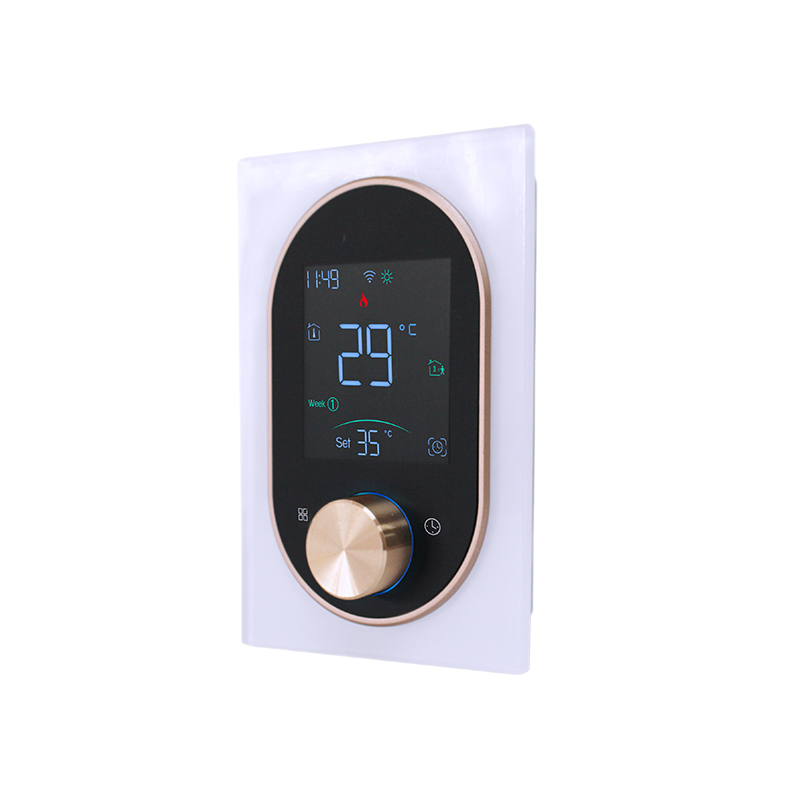
Approved Grus product truth separates control families that should not be blended during intake. The EcoNet-BH path is for documented high-voltage electric-heating applications within its approved product boundary. EcoNet-HP and EcoNet-TU are 24 V HVAC control paths within their respective approved boundaries. EcoNet-RV is a radiator-valve control path, not a central HVAC thermostat.
Those category statements are screening boundaries, not a fit result. They do not establish that a particular home, load, terminal set, heating appliance, control board, valve, or network is supported. Dana uses them to reject obvious category mixing and to identify which product documentation a qualified reviewer must consult next.
For Alex’s hypothetical project, the intake might say “documented electric baseboard-heating context; exact site fit unresolved pending qualified review of the applicable product manual and project record.” It should not turn that category into “EcoNet-BH is compatible.”

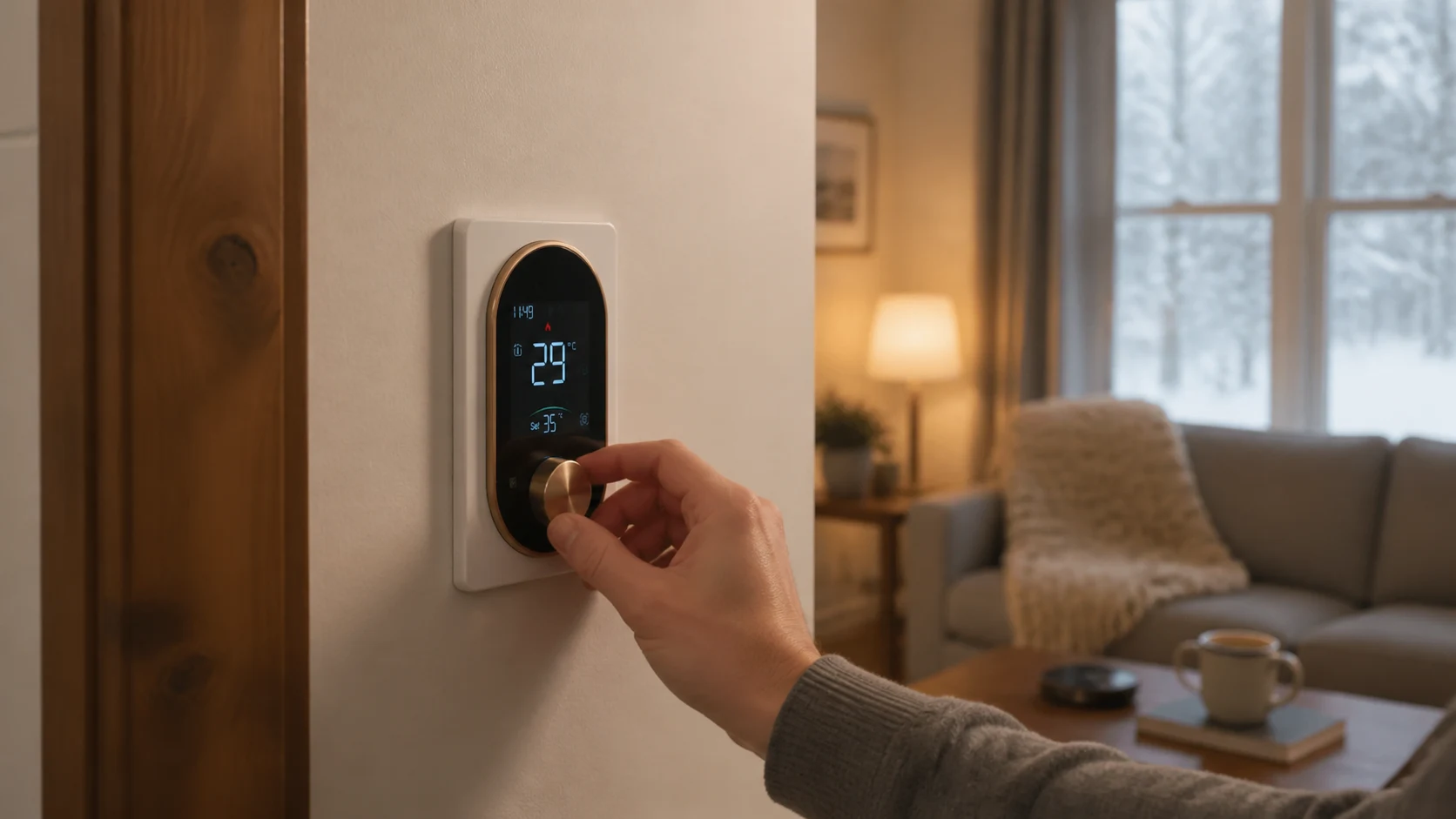
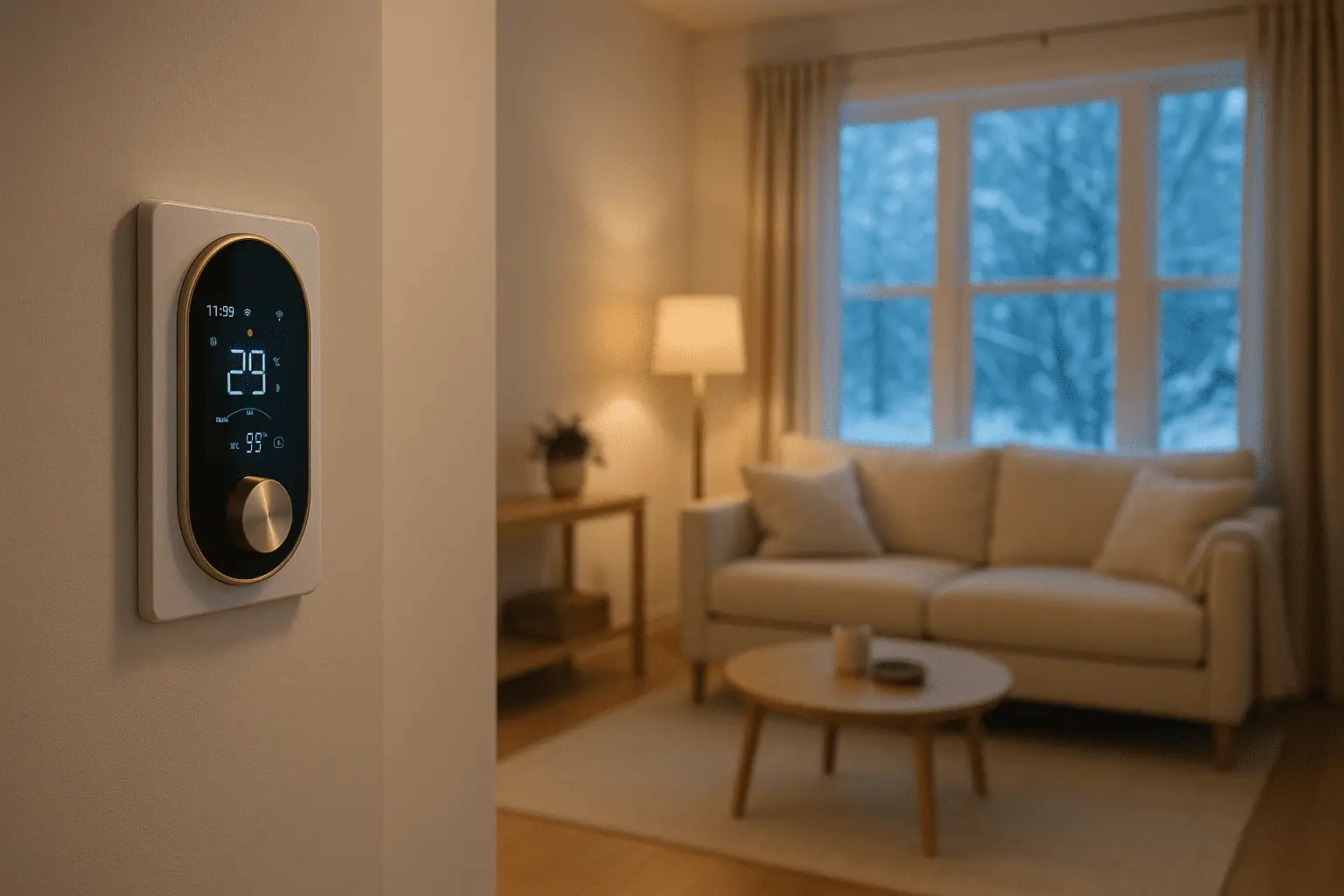
The image illustrates a home-use context. It does not prove the hidden control class, connected load, wiring, product fit, installation quality, or compatibility of any real property.
Use a hold-or-advance intake flow
The intake flow below protects unresolved evidence. It is a project-record workflow, not an electrical procedure.

The loop is deliberate. A missing equipment model, conflicting control record, uncertain interface, undocumented load, or absent installation owner sends the project back to evidence collection. It does not become a sales assumption.
Separate customer, contractor, product, and local-authority decisions
A clean intake assigns each decision to the party that can actually make it.
| Party | Owns in the intake | Does not automatically establish |
|---|---|---|
| Customer | Objective, property access process, desired experience, account participants, and approval to proceed with assessment | Electrical facts, product compatibility, or installation method |
| Qualified contractor | Site assessment, applicable records, safe work, local requirements, fit decision, installation scope, commissioning, and workmanship | Manufacturer certification, utility policy, or unlimited support |
| Grus | Approved product documentation, confirmed product facts, and product-specific support within stated boundaries | Site assessment, permits, local labor, contractor price, territory, or a compatibility result without evidence |
| Authority, utility, or equipment manufacturer | Decisions within its own code, tariff, approval, warranty, or equipment-document scope | A broader Grus partner or product commitment |
Dana also names the future account owner and support route. A connected feature can add value only when the project record identifies who owns the network, phone access, shared accounts, notifications, privacy decisions, and account transfer. These fields remain separate from the electrical fit decision.
Stop when a red flag changes the project
The intake should have an explicit stop list. Dana holds the recommendation when:
- the heating-system or current-control identity is missing or conflicting;
- voltage, terminal, load, interface, or zone evidence is required but lacks an approved source;
- a customer is being asked to expose wiring or perform a measurement;
- the proposed product family does not match the documented system category;
- the project depends on an unverified certification, compatibility, savings, utility, or rebate claim;
- the party responsible for site assessment, installation, commissioning, or local requirements is not named;
- the expected App, schedule, sensor, accessory, or offline behavior is assumed rather than documented; or
- a quote depends on product availability, pricing, training, territory, local service, or partner status that has not been confirmed.
A hold is useful work. It converts uncertainty into a named evidence request and prevents the project from moving forward on a weak story.
Turn the intake into a contractor-ready brief
Before Dana starts a product discussion, the record should fit on one concise project brief with attachments:
- one-sentence customer objective and explicit exclusions;
- property and controlled-zone identity;
- heating equipment and current control records;
- documented control, load, interface, and accessory evidence;
- desired local and connected behavior;
- site, access, network, schedule, and local-process constraints;
- qualified assessment, installation, commissioning, and customer-handoff owners;
- product-document path to be reviewed;
- unresolved conditions, next evidence, owner, and due date; and
- a bounded decision: hold, continue assessment, or prepare a scoped proposal.
The brief remains versioned. If the equipment, zone plan, control interface, customer objective, product document, or local requirement changes, Dana reopens the relevant fields rather than carrying forward an old conclusion.
Start the partner conversation with evidence, not assumptions
A strong thermostat intake does not promise a product before the system is understood. It gives the customer and contractor a common record, preserves the boundary between documentation and site work, and makes unresolved conditions visible early enough to manage them.
Bring the customer objective, system and equipment identity, existing-control documentation, approved control and load records, zone context, desired connected experience, site constraints, named work owners, and unresolved questions. Then discuss a contractor-ready smart heating project within the confirmed product and site boundary.