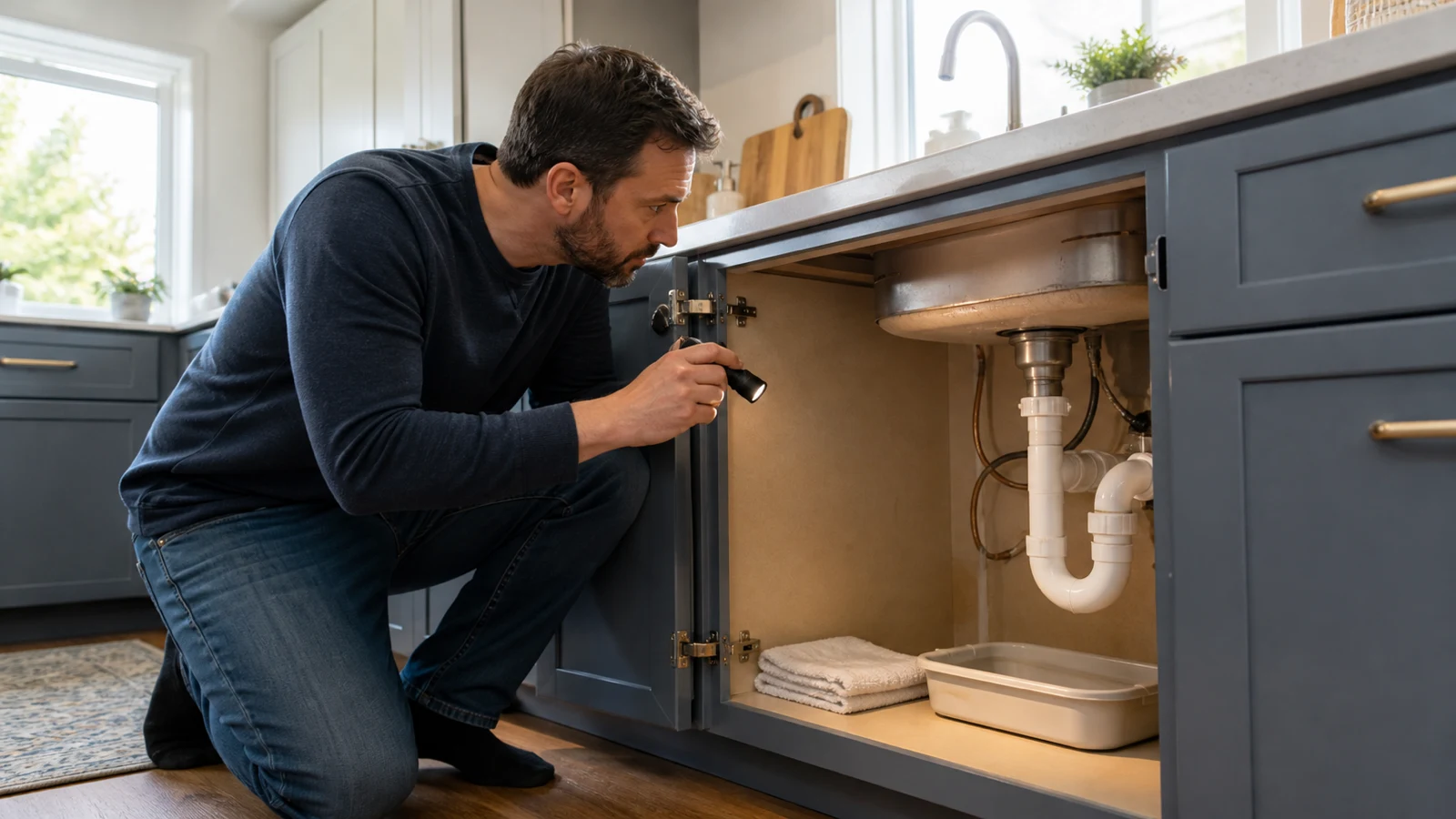
If you find water under the kitchen sink, stop using the fixture or appliance that appears to trigger it, keep people away from electrical or contaminated-water hazards, contain visible water only when that can be done safely, and arrange the right repair before using the area normally again. A puddle tells you where water collected. It does not, by itself, identify the failed part.
The useful first response is short: control what you safely can, note when the water appears, protect the cabinet from additional moisture, and stop before observation becomes disassembly. This guide does not provide pipe, valve, garbage-disposal, dishwasher, appliance, or electrical repair instructions.
What to do in the first few minutes
Use this sequence before trying to name the cause:
- Stop the current activity. Turn off the faucet, pause the dishwasher, or stop using the sprayer if that is when water appeared.
- Keep clear of hazards. Do not reach into water near outlets, disposal wiring, damaged cords, hot surfaces, sewage, or an unknown electrical source. Move people and pets away and call qualified help.
- Limit additional water only if the control is known and safe to use. If the correct local shutoff is obvious, accessible, and operates normally, the household response plan may call for closing it. Do not force a stuck or corroded valve.
- Contain and document. A towel or shallow tray can limit a small clean-water drip when no hazard is present. Photograph the wet area and note what was running.
- Arrange diagnosis and repair. Recurrent water, damaged fittings, an uncertain source, cabinet swelling, or water near an appliance should move the task to a plumber, appliance technician, electrician, property manager, or restoration professional as appropriate.
The U.S. Environmental Protection Agency’s WaterSense leak guidance recommends checking fixtures and fittings for leaks and using a plumbing professional when help is needed. That supports prompt action, not a universal DIY repair method.
Use the trigger to narrow the source—not prove it
After the area is safe, the timing of the water can help the right responder decide what to inspect. It is evidence, not a diagnosis.
| When water appears | A responder may investigate | What the observation does not prove |
|---|---|---|
| Only while the faucet runs | Faucet body, supply path, sprayer path, or water traveling from the sink rim | Which fitting failed or whether tightening anything is safe |
| Only while the sink drains | Drain basket, trap, joint, or another drain path | That the visible joint is the source rather than the place water collected |
| Only when the sprayer moves | Sprayer hose, connector, or faucet-body path | That the hose can be safely removed or repaired in place |
| During or after a dishwasher cycle | Supply, drain, clamp, appliance, or water traveling from another point | That the dishwasher itself is defective |
| Even when nothing is in use | Supply-side seepage, valve area, condensation, or water arriving from elsewhere | That a continuously wet area is safe to monitor without repair |
| After countertop splashing or cleaning | Sink rim, faucet base, countertop seam, or surface runoff | That the plumbing below is sound |
A dry pipe during one check does not close the case. Intermittent leaks can depend on flow, drainage, hose movement, appliance cycles, temperature, or how water travels across a surface.
A safe response flow
The flow keeps observation, professional diagnosis, repair, drying, and prevention as separate decisions.

The loop back to diagnosis is deliberate. A surface that looks dry, a cleared sensor, or a stopped drip does not prove that the source is repaired or concealed materials are dry.
Know when to stop observing
Household observation should stop when it would require opening, disconnecting, tightening, forcing, energizing, or testing a component you are not qualified to service.
Bring in qualified help when:
- water is near an outlet, disposal connection, damaged cord, or other electrical equipment;
- the water may contain sewage or another contaminant;
- a shutoff valve is stuck, corroded, hidden, or unclear;
- the leak returns after the fixture or appliance is used again;
- water appears to come from inside an appliance or finished wall;
- the cabinet, floor, or wall is swollen, soft, stained, or persistently musty;
- the source cannot be identified without disassembly; or
- the property is rented, vacant, managed, or subject to an owner response procedure.
Calling the right professional is not a failure of troubleshooting. It is the boundary between a useful observation and an unsupported repair attempt.
Drying is a separate job
Stopping new water does not remove moisture already absorbed by cabinet panels, flooring, drywall, insulation, or stored items. Remove movable wet contents only when conditions are safe, document damage, and follow the property owner’s or professional responder’s drying plan.
The U.S. Centers for Disease Control and Prevention advises acting quickly on wet materials and following appropriate mold cleanup and drying guidance. A cabinet surface that feels dry can still hide moisture in seams or composite wood. Persistent odor, discoloration, softness, or visible growth warrants a qualified assessment rather than a cosmetic cover-up.
Do not treat a water sensor returning to normal as a moisture clearance certificate. The sensor reports its own sensing condition; it does not evaluate cabinetry, structure, contamination, or indoor air quality.
What a leak sensor can and cannot do here
A point leak sensor placed beneath a sink can help create earlier awareness when water reaches its sensing area. That can be useful in a cabinet where small drips may otherwise remain hidden.
It cannot, by itself:
- monitor every connection or the entire cabinet;
- identify whether the source is supply, drain, seal, appliance, condensation, or surface runoff;
- measure the full affected area;
- repair a fitting, hose, valve, drain, or appliance;
- prove that a notification reached the responsible person;
- guarantee that a separate valve will close; or
- certify that repair and drying are complete.
Sensor placement therefore belongs inside a response plan. Decide where water is likely to travel, who receives an event, who can access the property, what happens when no one is nearby, and who can authorize repair and return to use.
Prevent the next surprise with a response plan
Prevention is more than adding a device. Use a short operating checklist:
- keep the cabinet visible enough to notice new moisture or material changes;
- avoid storing items where they hide likely leak paths or block safe access;
- know which fixture and property shutoffs are part of the household plan without forcing or servicing them;
- record the appliance or activity associated with an intermittent event;
- place detection only after considering where water can realistically collect;
- assign a notification recipient and an onsite responder;
- include power, connectivity, access, and vacation contingencies; and
- keep diagnosis, repair, drying, and restoration ownership explicit.
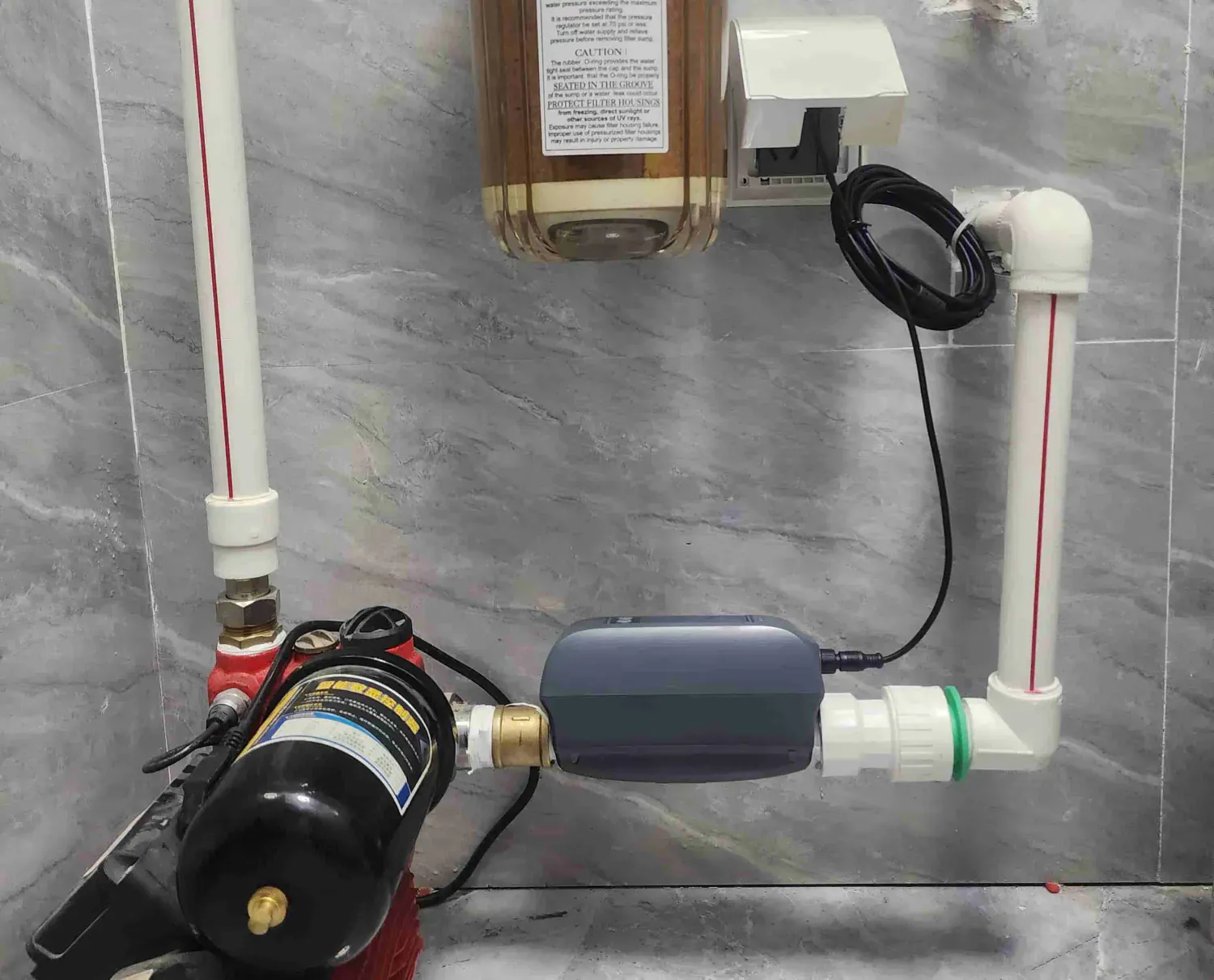
Connected detection or shutoff products may support parts of this plan when exact devices, installation conditions, configuration, and valve fit are verified. They do not eliminate the human handoffs.
Frequently asked questions
Why is the cabinet wet only after the dishwasher runs?
The timing tells a responder to include the dishwasher supply, drain, connections, appliance, and nearby water paths in the assessment. It does not prove the appliance is the source or authorize household disassembly.
Could condensation look like a leak?
Yes. Moisture can form on a cold surface in humid conditions, but repeated water still deserves evaluation. Do not label it condensation until a credible source assessment rules out a leak.
Is one dry check enough?
No. An intermittent condition may appear only during a particular faucet position, drain event, sprayer movement, or appliance cycle. Avoid recreating a hazardous event; give the timing and photos to the appropriate responder.
Will a leak sensor tell me which pipe is leaking?
No. A point sensor can indicate water at its sensing area. It does not identify the failed component or trace where the water originated.
Does a smart water valve guarantee that cabinet damage will be prevented?
No. Valve fit, the controlled water line, device support, configuration, communication, power, mechanical condition, and water already released all affect the outcome. Onsite inspection, repair, and drying remain necessary.
Make the next response easier
A kitchen-sink leak is easier to manage when the household already knows who receives an alert, who can enter the property, which controls are safe to use, and who owns diagnosis and restoration. Detection can start that process; it cannot replace it.
Explore the Grus Smart Home Water Protection solution to compare detection, compatible shutoff planning, response ownership, and professional-fit questions before choosing a system.