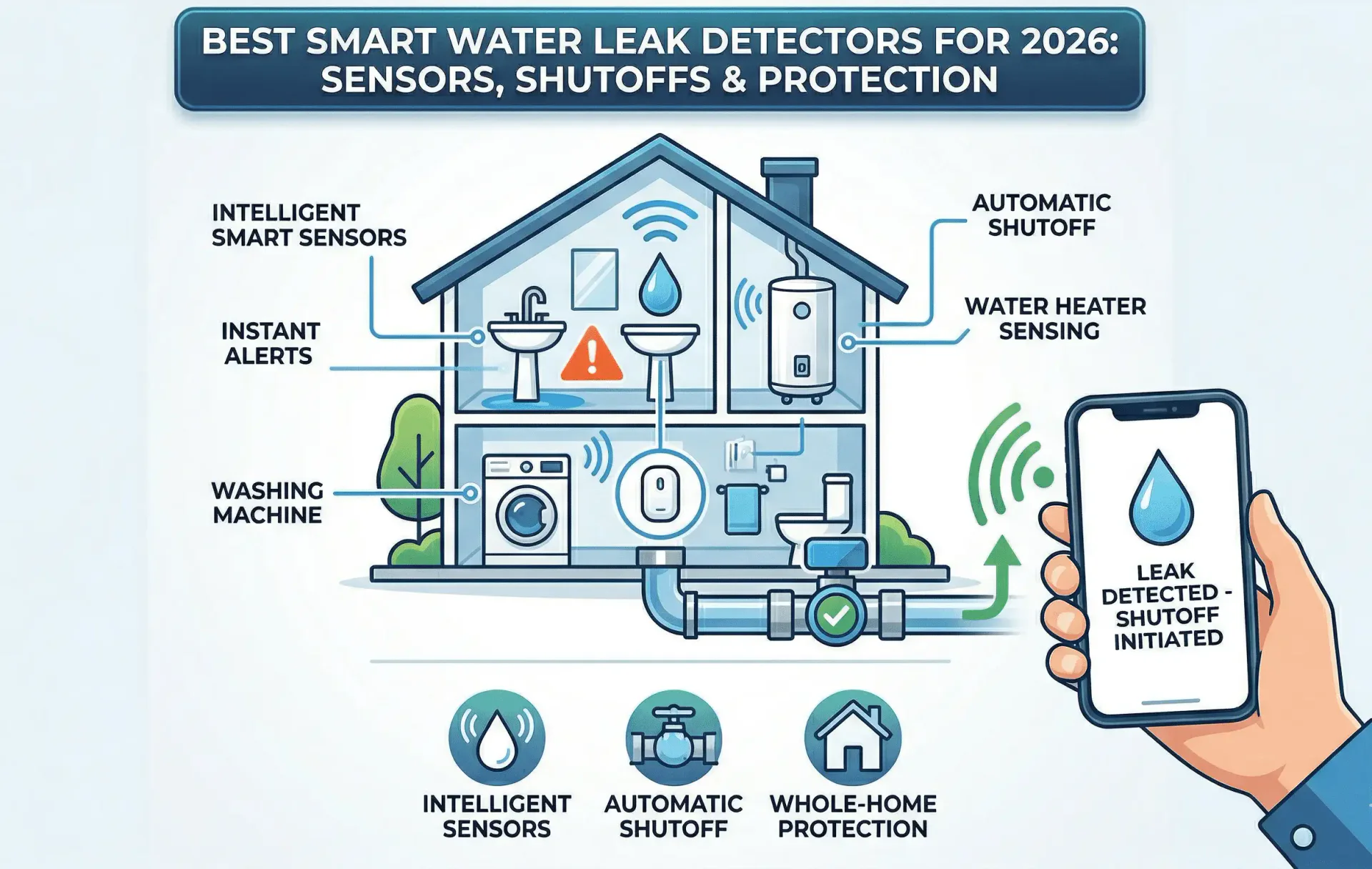

Start With Detection, Response and Fit
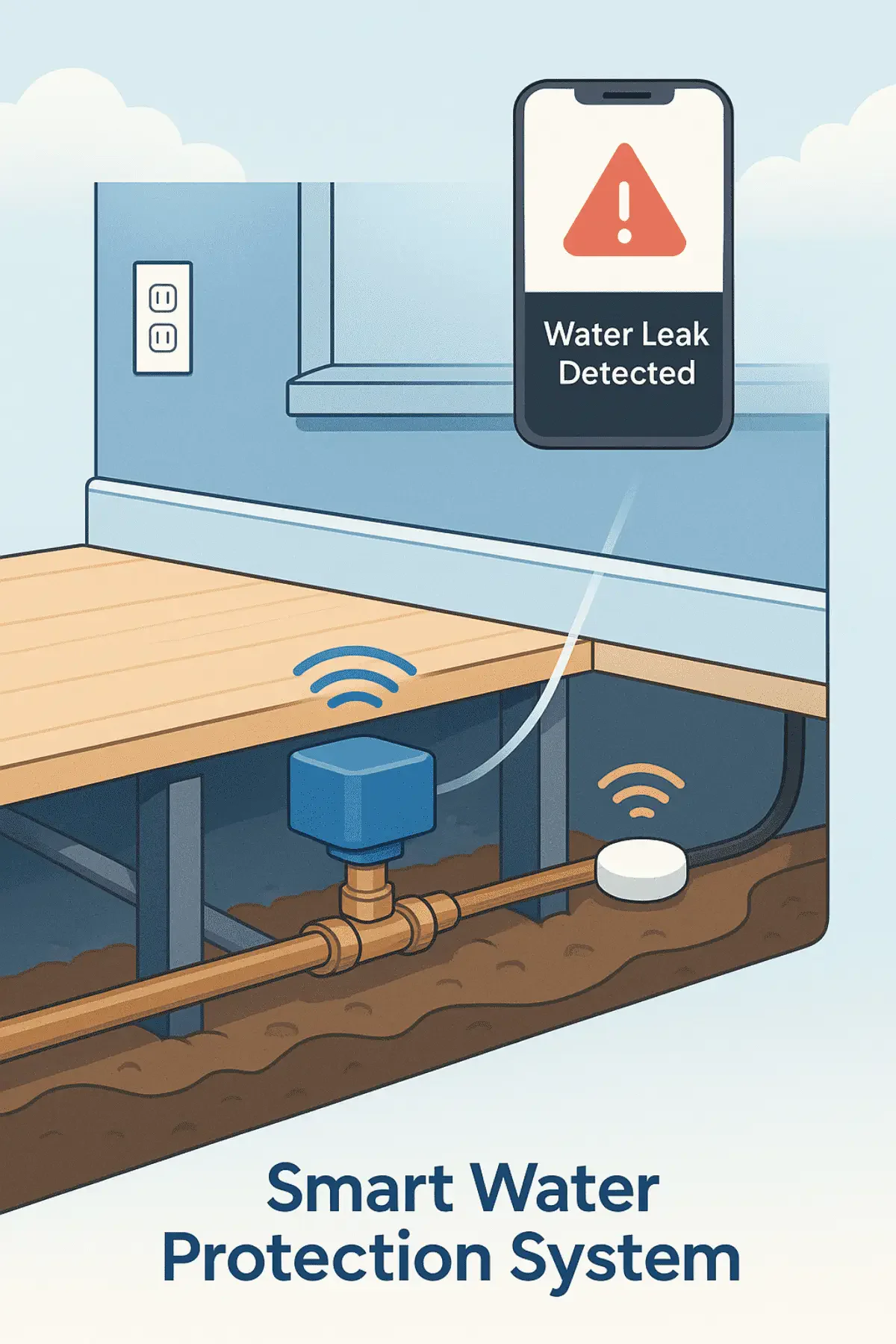
A water-protection purchase should begin with a practical question: do you need to know water has reached a location, operate a valve, or combine those tasks? A manual shutoff already being present does not by itself decide the answer.
The presence of a manual valve alone does not decide which smart product to buy. Check the desired response and the physical installation conditions.
| Need | Check before choosing |
|---|---|
| Water alert | Sensing area and notification path |
| Valve operation | Valve fit, access and power |
| Combined response | Supported device pairing and testing |
Compare Exact Devices, Not Just Brands
| Criterion | What to establish |
|---|---|
| Sensing coverage | Point, cable or another documented measurement method |
| Notification | Local and app behavior for the exact model |
| Valve fit | Supported pipe connection or existing valve arrangement |
| Combined response | Which devices and pairing are explicitly supported |
| Connectivity | Required network, gateway and account |
| Maintenance | Documented testing, replacement and access needs |
Use the AquaNet category to compare current products. A detector, a valve actuator and a combined kit are not interchangeable versions of the same device.
Do not assume that every option is hub-free, supports battery backup or works with the same third-party platform. Obtain the specific documentation before making those features part of your decision.
Match Coverage to the Property
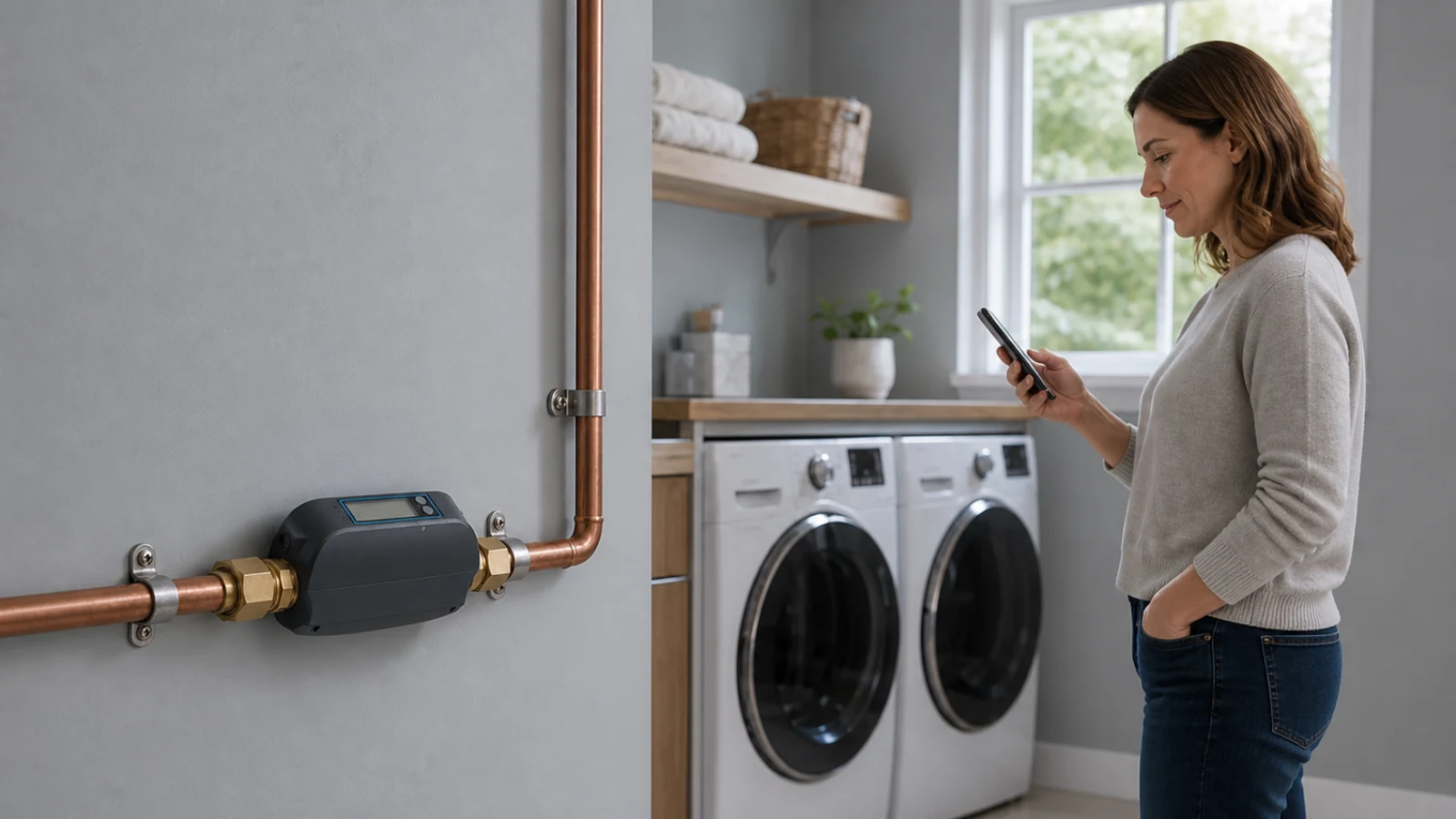
For a kitchen or laundry room, identify where water could reach the detector and how the device will remain accessible. For a long equipment edge, compare the documented cable-sensing scope. For an unattended property, establish who can respond to a notification.
If you want valve operation, have the physical fit, access and plumbing requirements checked. A detector near a pipe does not establish that an arbitrary smart valve can control it.
Separate Installation Tasks
Follow the instructions for the exact equipment. Placing a detector and modifying a water line are different tasks. Arrange qualified help for plumbing or fixed installations rather than relying on a generic pipe size, tool list or estimated installation time.
Review the intended notification or valve response using the manufacturer’s documented test procedure. Do not assume a prescribed sensor count or universal reset sequence across the range.
Evaluate the Whole Cost
Compare the selected devices, required accessories and installation work. Review current prices and support terms. A higher price or a long feature list is not evidence of a particular prevented loss or insurance discount.
After setup, retain the model information and installation record. Revisit coverage when room use, appliances or occupants change.
Questions Before Ordering
Does an existing manual valve mean I only need a sensor?
No. Decide whether an alert is enough or whether a supported valve-control arrangement is required. The existing valve’s type and access still need review.
Will everything work during a power or network outage?
Check each function against the exact product manual. Do not assume that local alerts, app access and motorized valve operation share the same fallback.
Where can I compare the overall approach?
Read what a smart water valve does and the water-protection guide, then browse products with a defined scope.