Do You Really Need a Gas Leak Detector at Home?
If you’ve ever noticed a gas smell at home — even briefly — it often triggers a quiet but unsettling question:
Am I overthinking this?
I already have a carbon monoxide alarm… isn’t that enough?
This hesitation is common. Many homes already have CO alarms, and gas safety devices can sound interchangeable. Before deciding whether you actually need a gas leak detector, it helps to understand what each device does — and just as importantly, what it doesn’t.

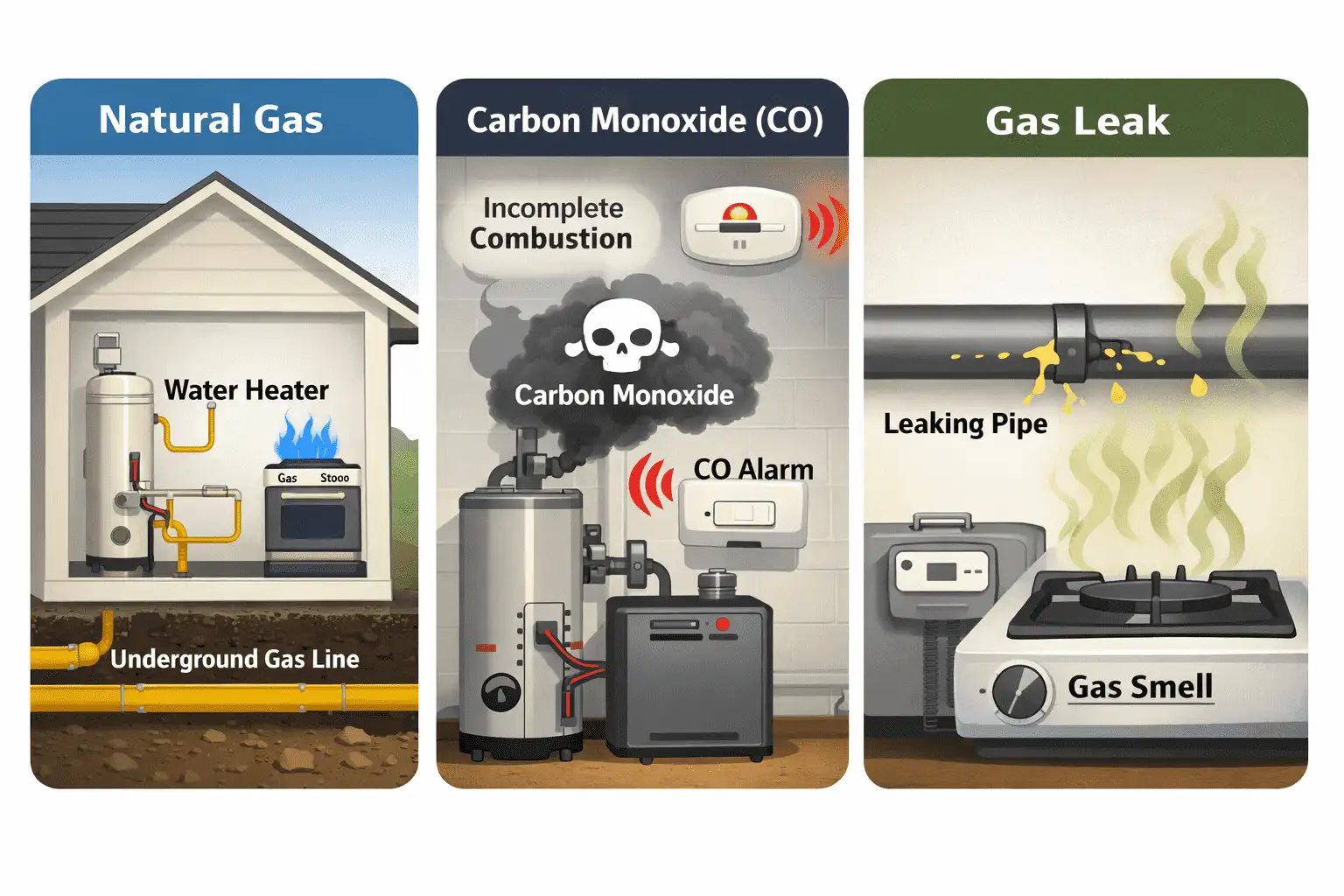
Gas smell, CO, and natural gas — what’s the difference?
These terms are often used together, but they describe different stages of different risks
In simple terms:
A gas leak happens before burning. CO appears after something has already gone wrong during burning.
This difference explains why gas safety devices are not interchangeable.
What CO alarms can detect — and what they can’t
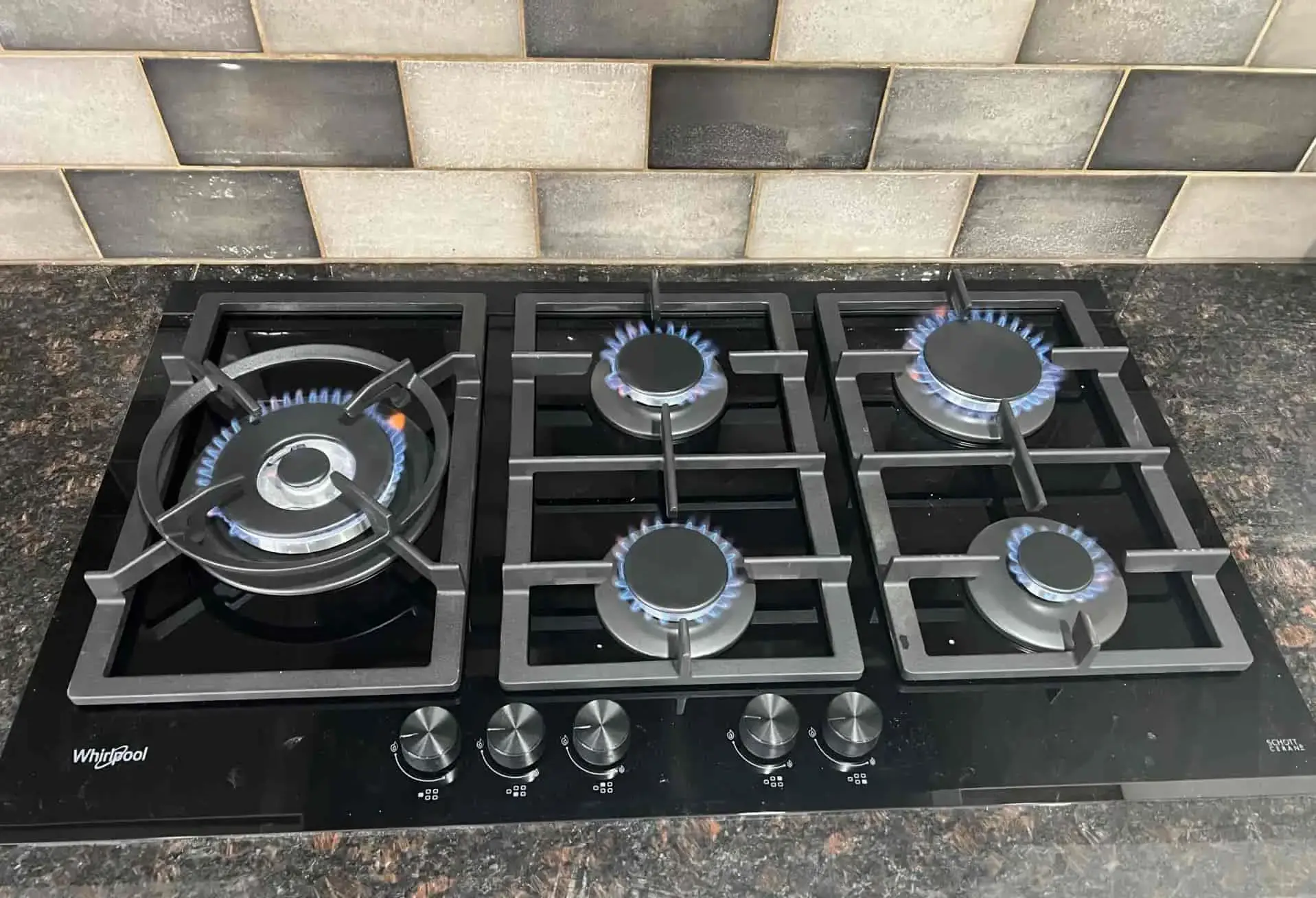
Carbon monoxide alarms are designed for one specific purpose:
detecting elevated CO levels in the air.
They are effective at alerting you to combustion-related problems, such as a malfunctioning furnace or blocked vent.
However, CO alarms cannot:
- Detect unburned natural gas or propane
- Warn you about leaks from pipes, fittings, or idle appliances
- Provide early notice before gas reaches potentially dangerous levels
That’s why the answer to a common question is often surprising:
Does a CO alarm detect natural gas?
No. It doesn’t.
A CO alarm reacts after combustion. A gas leak detector responds before combustion begins.
CO alarm vs. gas leak detector: a clear comparison
To make the difference easier to see, here’s a simple side-by-side comparison:
Feature
Carbon Monoxide Alarm (CO Alarm)
Gas Leak Detector
Gas Leak Detector
Carbon monoxide (CO)
Unburned gas (natural gas / propane)
When it alerts
After combustion problems occur
When a gas leak begins
Primary risk addressed
Poisoning / suffocation
Fire or explosion
Typical trigger source
Faulty or poorly vented appliances
Leaking pipes, fittings, or appliances
Role in home safety
Detects combustion failure
Provides early leak warning
This is why one device does not replace the other. They address different failure points in a gas-powered home.
Why smell alone isn’t always a reliable warning
Many homeowners assume they’ll notice a leak on their own. In reality, smell is not always dependable.
- Olfactory fatigue: With low-level or ongoing leaks, the human nose can gradually adapt, making the odor harder to notice over time.
- Sleep and absence: During sleep — or when no one is home — your sense of smell isn’t providing any protection, even though a leak can continue.
Gas leak detectors are designed to provide consistent, early alerts, before gas concentrations approach unsafe thresholds — something human senses aren’t meant to do reliably.
Situations where a gas leak detector is strongly recommended
A gas leak detector isn’t about assuming danger. It’s about covering a gap that CO alarms don’t address.
It’s strongly recommended if:
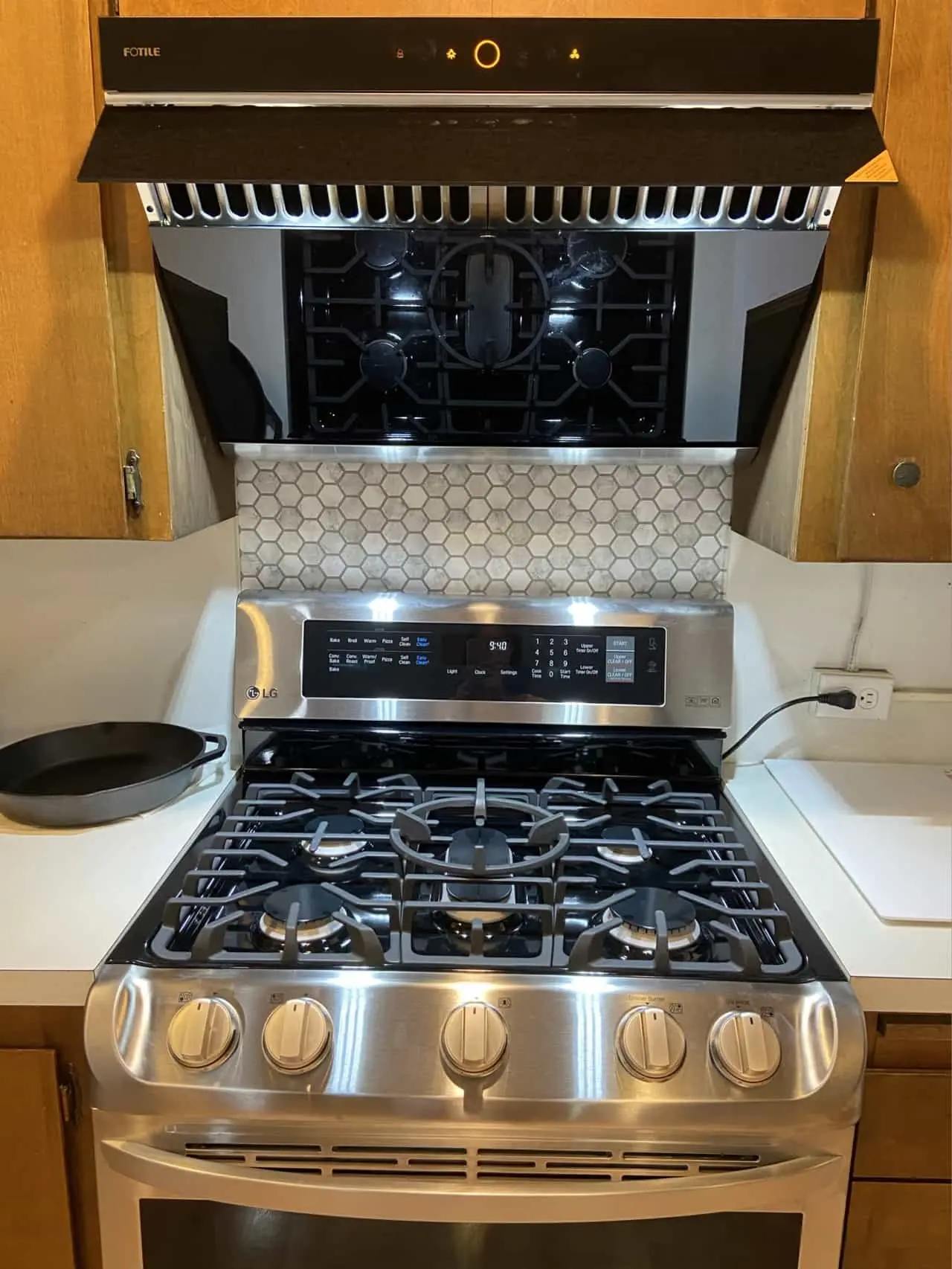
- Your home uses natural gas or propane for heating, cooking, or hot water
- You’ve noticed intermittent or unexplained gas smells
- Gas appliances are located in basements, utility rooms, or enclosed areas
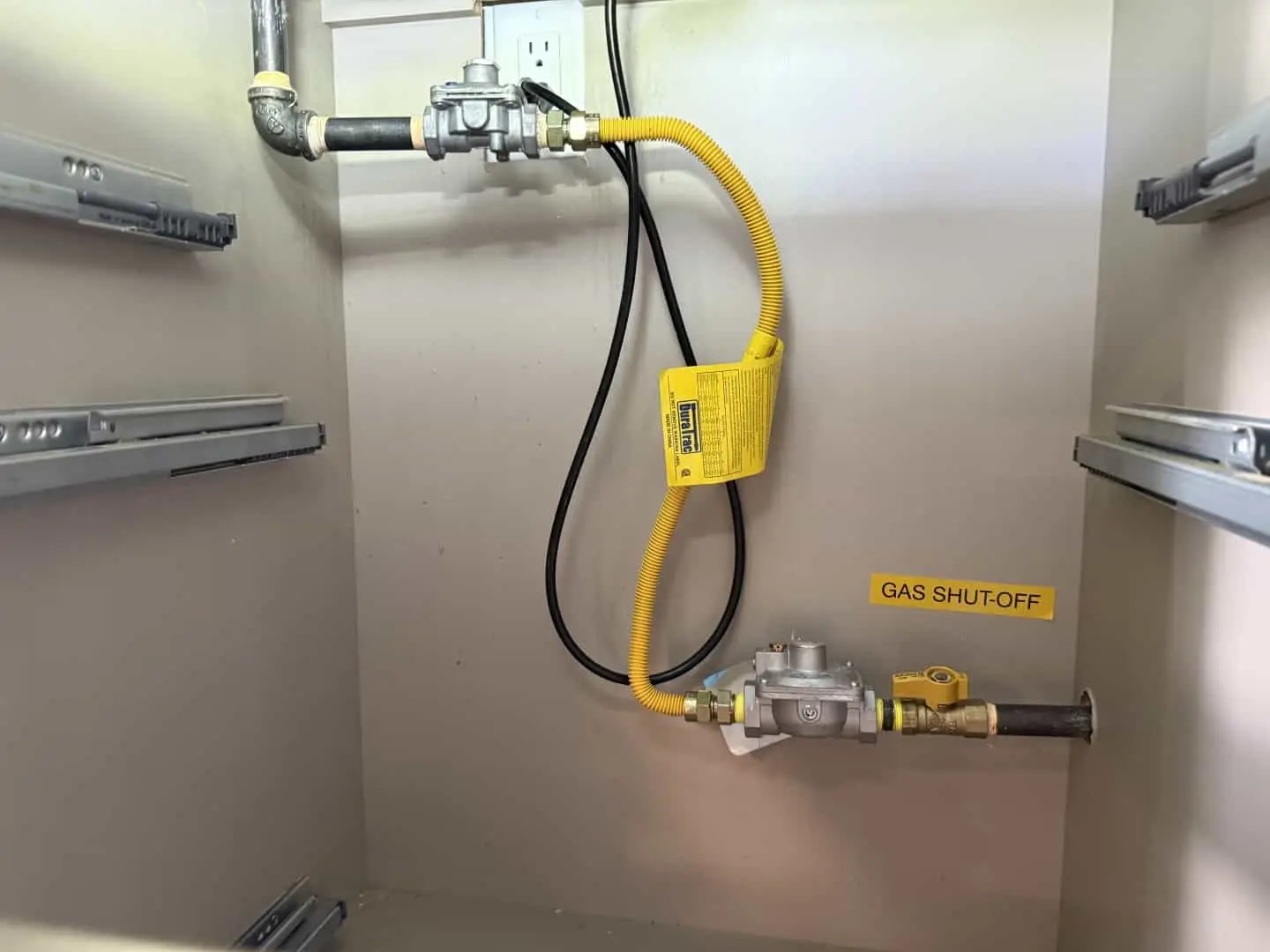
- The home is older, with aging gas lines or fittings
- You want earlier awareness — before gas accumulates to risky levels
In these cases, a gas leak detector acts as an early-warning layer, not a duplicate alarm.
Situations where it may not be necessary
Just as important: not every home needs one.
A gas leak detector may not be necessary if:
- Your home has no gas-powered appliances
- All heating and cooking are fully electric
- There is no gas line entering the property
In such homes, a CO alarm alone usually provides adequate protection.
So, do most homes with natural gas need one?
For homes that use natural gas, the answer is often yes — but not because something is wrong.
It’s because:
- CO alarms and gas leak detectors monitor different risks
- Smell alone isn’t a dependable safety mechanism
- One responds after combustion, the other before
A gas leak detector doesn’t imply a dangerous home. It simply fills a monitoring gap that CO alarms cannot.
Once homeowners recognize that distinction, the decision becomes clearer.
How this fits into overall gas safety planning
Gas safety isn’t about relying on a single device. It’s about understanding where risks appear — and which tools are designed to catch them.
If you want a broader overview of how different gas safety devices work together in a home, our Gas Safety guide explains the full picture.
Some homeowners also choose to add a dedicated gas leak detector as one practical way to address early leak detection, depending on their setup and comfort level.

Home Energy Efficiency and Security Solution Provider
©2025 All Rights Reserved. Grus IoT Co.,Ltd.