
Water protection comparison
Leak Detector or Shutoff Valve: Choose the Right Response
A detector can surface a condition. A shutoff component can change water flow when the system, fit, setup, and response path support that action. Many projects need both roles planned together.
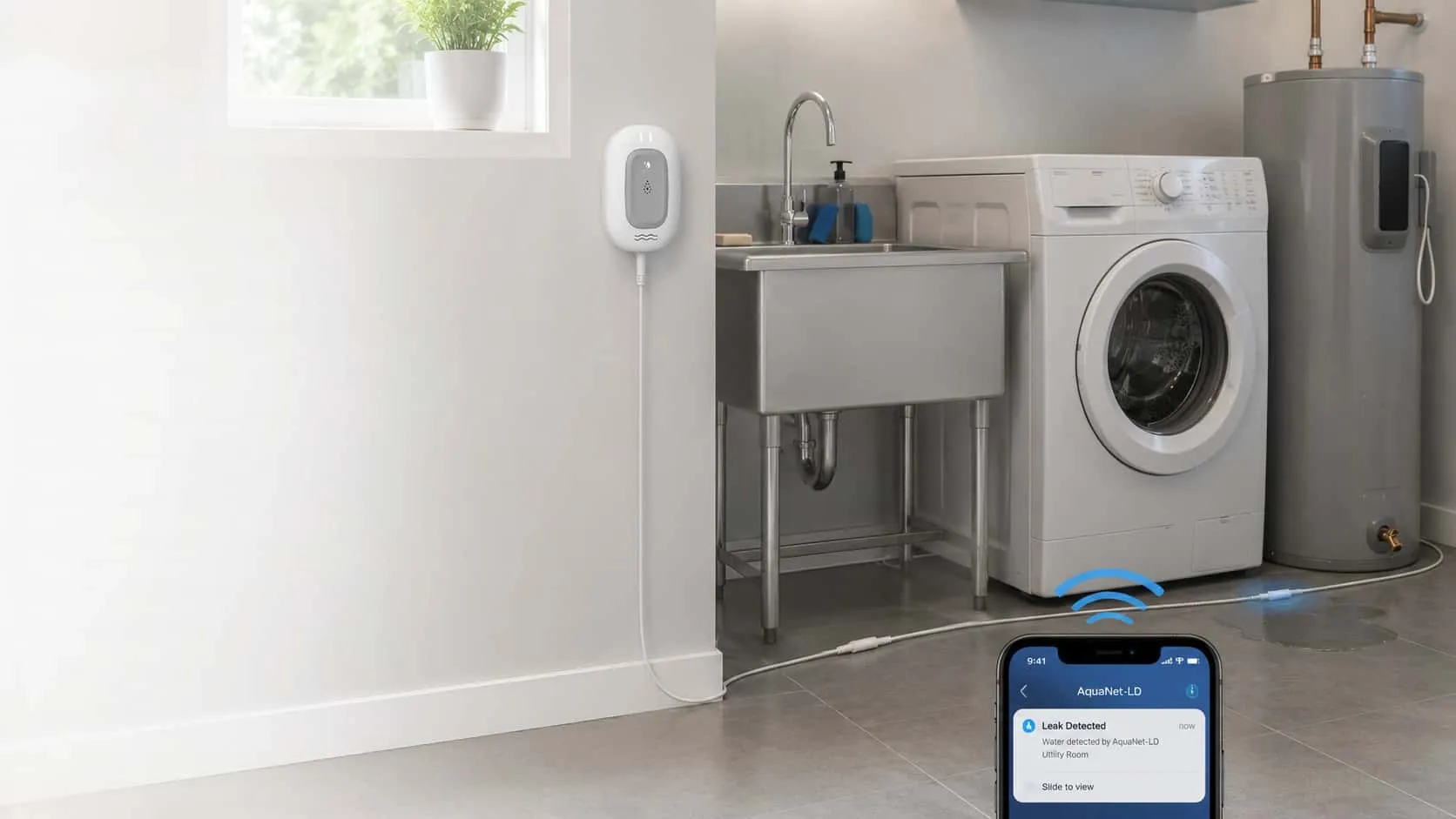
Detection and shutoff are separate system responsibilities.
Choose detection when the first need is awareness at a risk location. Add a compatible shutoff path when the project also needs a planned way to stop water flow. A complete design still requires sensor placement, valve and pipe fit, connectivity, power, commissioning, alert ownership, and installer-supported response planning.
Map the event, action, fit, and owner.
Detection point
Identify where water is most likely to reach a sensor and what condition the selected detector can observe.
Response action
Decide whether an alert is sufficient or whether the project needs a compatible, commissioned shutoff path.
Valve and pipe fit
Record valve type, pipe arrangement, clearance, access, and any plumbing work before selecting hardware.
Response owner
Name who receives an alert, who can inspect the property, and who is authorized to restore service.
01
A sensor, valve, actuator, app, and installer do different jobs.
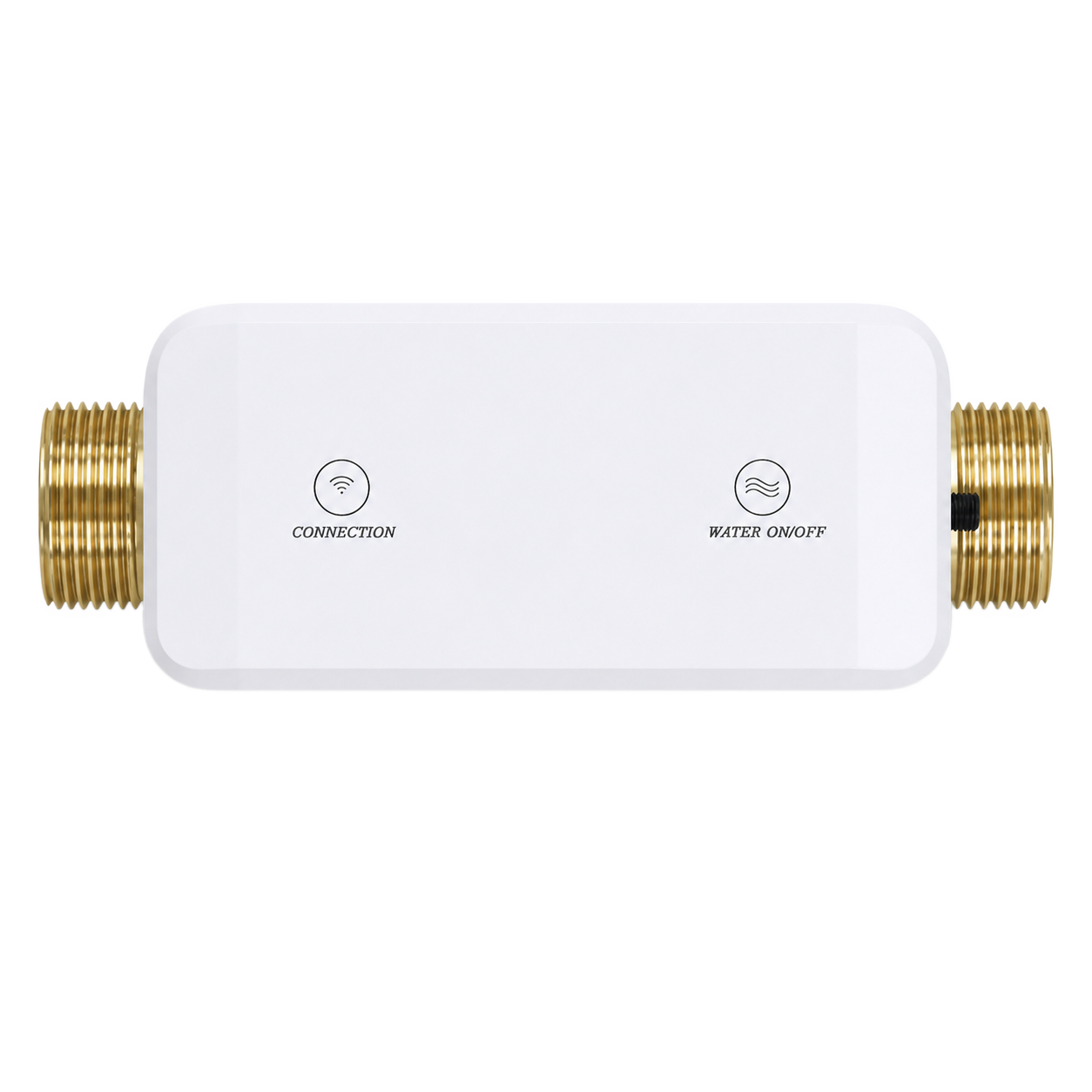
Product labels can blur the difference between detecting water and controlling water flow. Break the project into components and confirm how each one communicates, receives power, and behaves when a condition occurs.
| Role | Primary job | Still needs |
|---|---|---|
| Leak detector or sensor | Observe water at a planned location and surface a local or connected alert | Placement, testing, alert delivery, and a response owner |
| Shutoff valve or actuator | Change water flow when the supported system commands it | Valve fit, power, control logic, commissioning, and restoration procedure |
| App or gateway | Present status and route supported notifications or commands | Current connectivity, account setup, notification permissions, and service availability |
| Installer or service partner | Confirm fit, complete approved work, test behavior, and document responsibilities | Defined scope, local requirements, and an owner after installation |
02
Place sensors around plausible water paths, not generic room labels.
A detector only observes the area its sensing element can reach. Review the appliance or fixture, likely leak path, floor slope, drains, cleaning activity, cable or probe position, and whether routine movement can disturb the device.
Test the installed alert path and record the expected local response. Detection does not guarantee that damage is prevented.

03
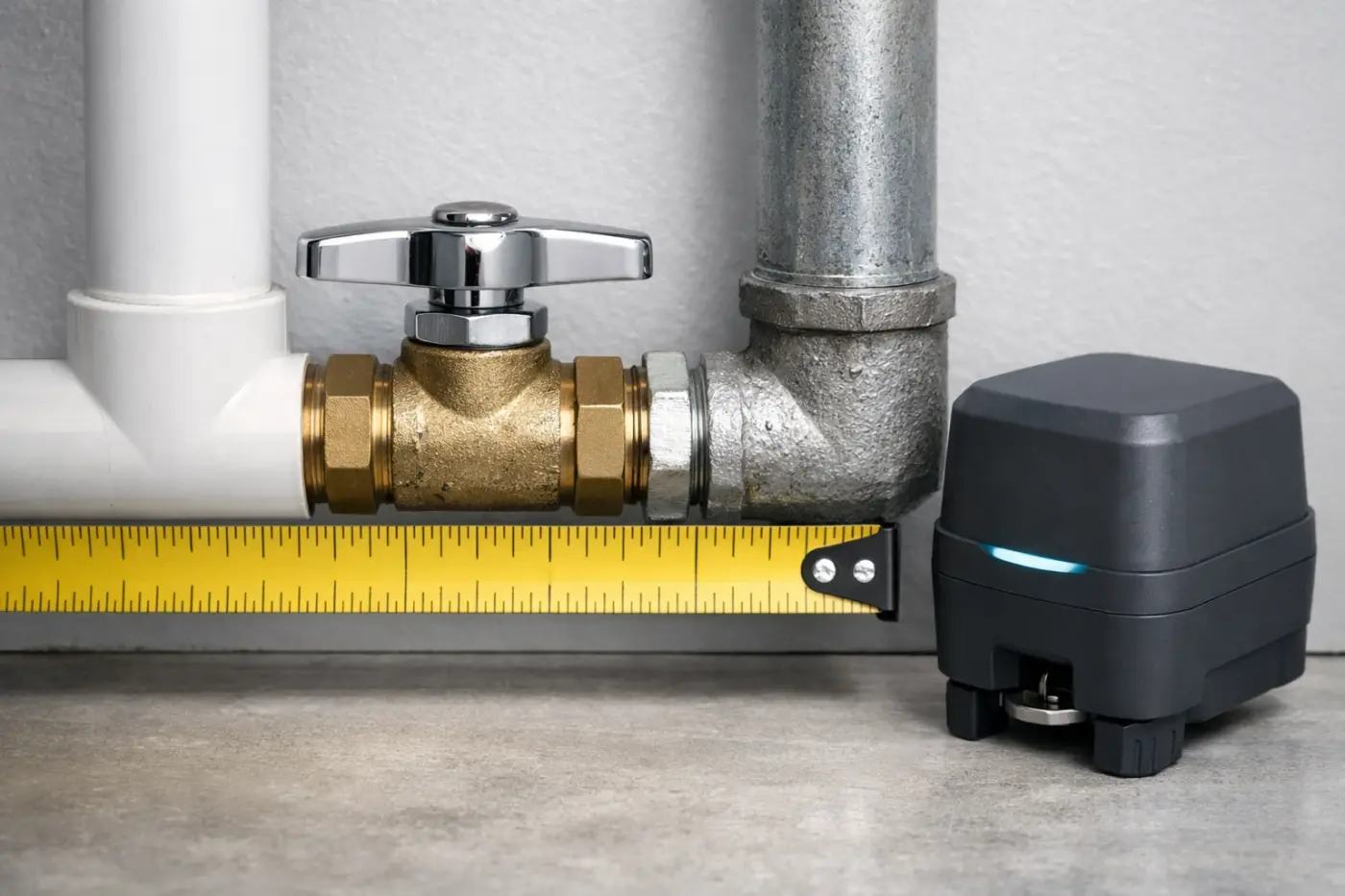
A shutoff decision starts at the existing valve and pipe.
Photographs can help a partner review the context, but they do not prove fit. Record valve type, dimensions, handle movement, pipe orientation, clearance, access, material, condition, upstream and downstream constraints, and the work needed to install or service the component.
Mechanical fit
Confirm that the selected component matches the documented valve or inline installation path.
Service access
Leave room for installation, testing, manual operation where applicable, and future maintenance.
Power and connectivity
Verify the supported power, network, app, gateway, and account requirements from current documentation.
Safe restoration
Document who may reopen the supply and what must be checked before water service resumes.
04
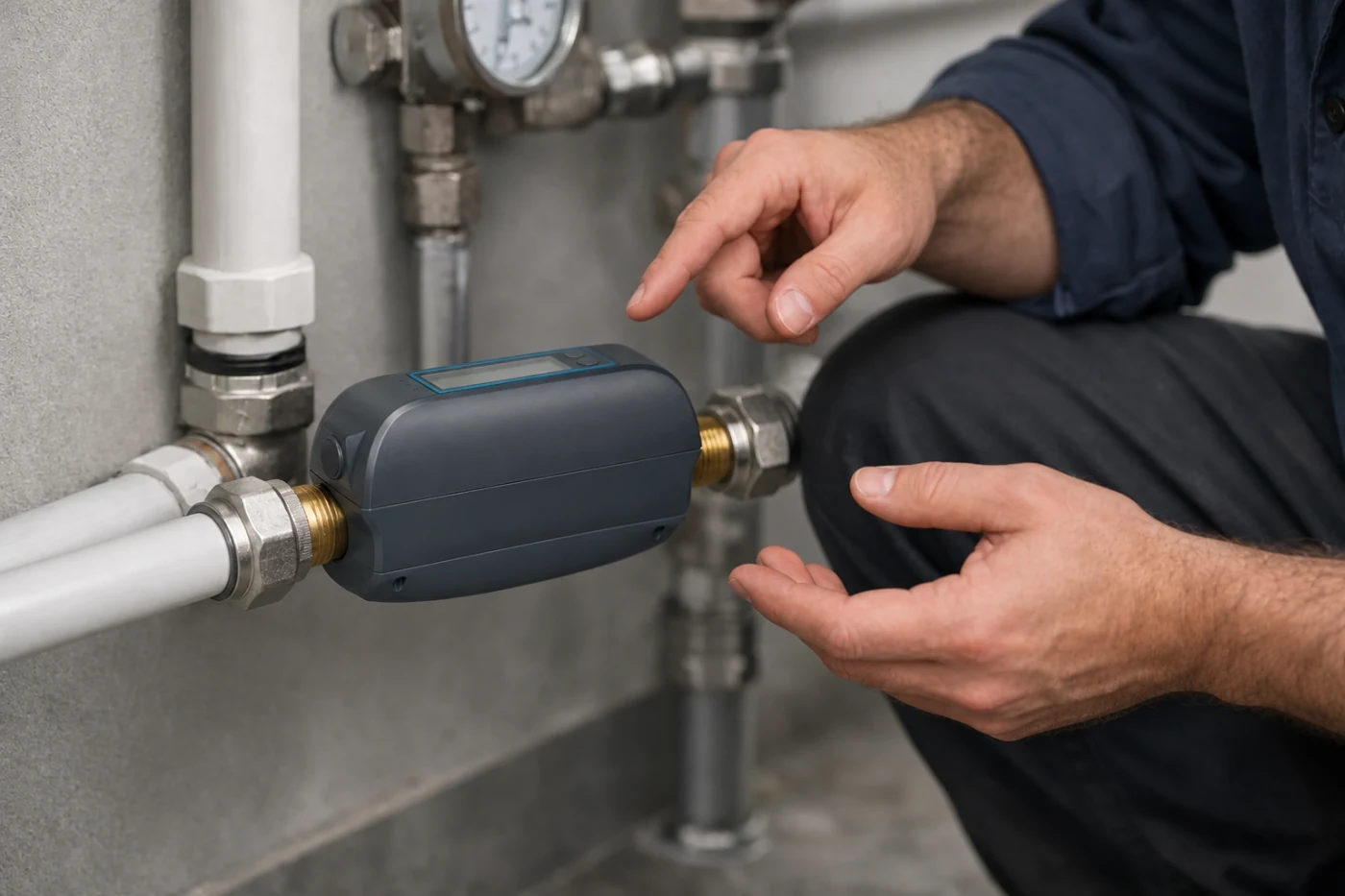
Turn the product comparison into an installation and response plan.
Water products can be purchased directly after fit review. For installed systems, the project record should identify components, locations, fit evidence, responsibilities, tests, notification recipients, local response contacts, and the procedure for returning the system to normal.
-
Document the property
Capture the main valve, pipe context, risk areas, network conditions, and access constraints.
-
Define the kit
Separate detection, shutoff, app or gateway, and accessory responsibilities.
-
Commission the system
Test detection, supported alerts, control behavior, and the agreed fallback procedure.
-
Assign ongoing ownership
Record who receives alerts, inspects the property, maintains devices, and authorizes restoration.
05
Questions people ask before the next step
Does a leak detector shut off the water?
Not necessarily. Detection and flow control are separate roles unless the selected product documentation explicitly defines and supports an integrated response.
Is a shutoff valve enough without sensors?
That depends on how the system detects a condition and issues a supported command. Map the sensing, control, alert, and response paths rather than assuming one component covers every role.
Can a photo confirm valve compatibility?
No. A photo can support review, but valve type, dimensions, movement, pipe context, clearance, condition, power, connectivity, and installation requirements still need confirmation.
Does water protection guarantee that damage will be prevented?
No. Detection, connectivity, mechanical control, maintenance, and human response can all affect the outcome. Use the system as one part of a documented protection and response plan.
Plan detection, shutoff, and response as one complete system.
Review the property context, valve details, risk locations, connectivity, and response ownership before choosing a product; use partner support for installation-led projects.