
If you notice a strong rotten egg or sulfur-like smell inside your home, this is not something to ignore.
In residential settings, this type of odor often points to a natural gas leak, which is considered a high-risk safety situation. Even if the smell is faint, intermittent, or seems to disappear, it still deserves immediate attention.
This article is written to help you quickly judge whether the situation may be dangerous and understand what to do right now, without panic or guesswork.
If you’re unsure how to respond safely or want a broader checklist for different gas-related odors, you can follow our Gas Smell Safety Guide for step-by-step actions and risk awareness.

Why a Rotten Egg Smell Indoors Often Signals a Natural Gas Leak
Natural gas is odorless by nature. To make leaks detectable, gas utilities intentionally add a warning odorant that most people recognize as a rotten egg or sulfur-like smell.
That means:
- The smell is intentional, not accidental
- It exists so leaks can be noticed before gas builds up to dangerous levels
- The odor may vary in strength depending on airflow, room size, and leak severity
You do not need technical knowledge to respond safely. If you smell rotten eggs indoors, the smell itself is meant to alert you that something may be wrong.
How Dangerous Is a Rotten Egg Smell? A Quick Risk Guide
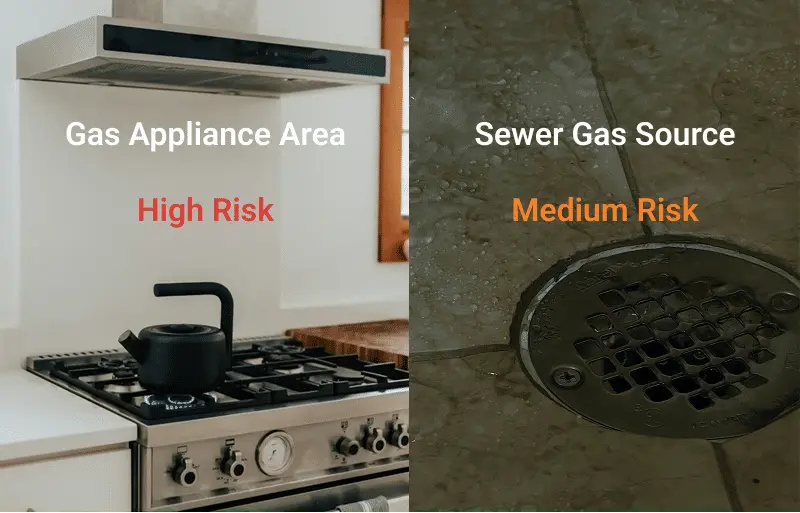
Not every sulfur-like smell has the same cause or risk level. The table below helps distinguish common scenarios.
| Situation | Possible Cause | Risk Level | What to Do |
|---|---|---|---|
| Strong rotten egg smell throughout living areas | Natural gas leak | 🔴 High | Leave immediately and contact professionals |
| Smell strongest near a furnace, stove, or gas appliance | Appliance leak or connection issue | 🔴 High | Avoid use and seek immediate help |
| Rotten egg smell near drains or bathrooms | Sewer gas | 🟠 Medium | Ventilate and check plumbing |
| Faint smell only outdoors | Sewer venting or utility work | 🟡 Low | Monitor and observe |
Important:
A rotten egg smell inside occupied living space, especially near gas-powered equipment, should always be treated as potentially dangerous until ruled out by professionals.
What to Do Immediately If You Smell Rotten Eggs Indoors
If you suspect a gas leak, take these steps calmly and promptly:
- Do not operate electrical switches or devices
Avoid turning lights on or off or using electronics indoors. - Leave the house as soon as possible
Make sure everyone, including pets, gets outside to fresh air. - Ventilate only if it can be done safely
If doors or windows are already open, leave them open. Do not re-enter just to ventilate. - Shut off the gas supply if you know how and can do so safely
Only attempt this if the shutoff valve is easily accessible and you are already leaving. - Contact qualified professionals from outside the home
Reach out to your gas utility or emergency services.
These steps are about reducing immediate risk, not identifying the exact source yourself.
Can Sewer Gas Smell Like Rotten Eggs?
Yes, sewer gas can sometimes produce a sulfur-like odor, especially near:
- Bathroom sinks or tubs
- Floor drains
- Basement plumbing
- Guest bathrooms that are rarely used
A common difference is that sewer gas odors are often localized near drains, rather than spreading evenly through the home.
A simple check many homeowners try:
If the smell is strongest near a rarely used drain, run water for about a minute. This can refill a dry P-trap, which normally blocks sewer gases.
- If the smell fades afterward, the issue may be plumbing-related
- If the smell persists, spreads, or is noticeable near gas appliances, it should not be assumed to be sewer gas
When in doubt, indoor rotten egg smells should always be treated cautiously.
What About Detection Devices?
Some households use natural gas detectors as an added layer of safety awareness. These devices are intended for early identification of gas presence, especially when a leak is small or not immediately obvious by smell.
It is important to understand their limits:
- They do not replace emergency response
- They are designed for natural gas, not gasoline fumes or general chemical odors
- Gasoline and other VOC smells require different detection methods
Detection tools can support awareness, but immediate safety decisions should never rely on them alone.
Frequently Asked Questions
Does a gas leak always smell like rotten eggs?
Not always. Very small leaks or well-ventilated spaces may reduce odor intensity, which is why awareness and proper response matter.
Can sewer gas smell like rotten eggs?
Yes. Sewer gas can smell similar, but it is usually strongest near drains and generally presents a lower risk than a natural gas leak.
Why does my furnace smell like rotten eggs?
Furnaces use natural gas. A sulfur-like smell near a furnace can indicate a leak or combustion issue and should be treated as high risk.
Is a rotten egg smell outside dangerous?
Often less dangerous, especially if related to sewer venting or nearby utility work. Persistent outdoor odors near gas lines should still be reported.
One Final Safety Note
Different household smells signal different levels of risk. Rotten egg odors are one of the clearest warning signs used in residential gas systems, which is why they require immediate attention.
If you are unsure whether a smell in your home is gas-related or something else, understanding how different odors correspond to different risks can help you make safer decisions.