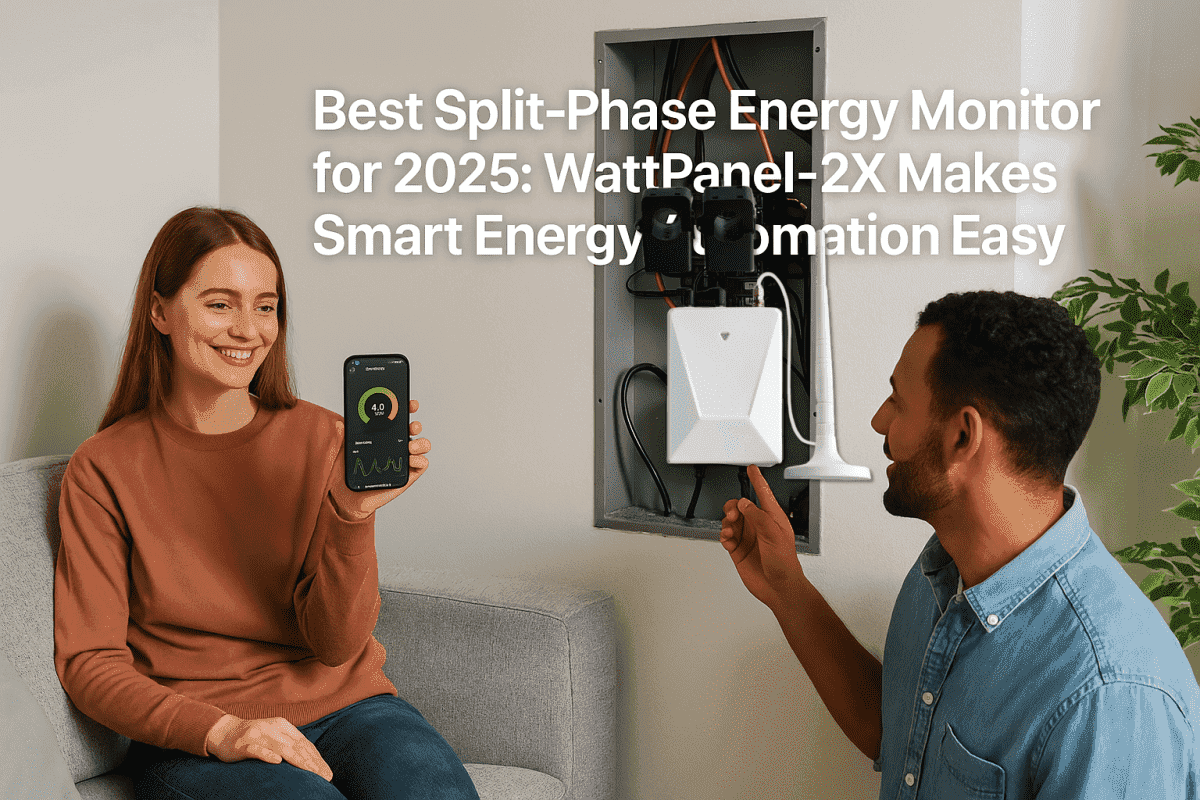

Start With the Measurement You Need
A home energy monitor can make electricity use easier to examine, but the useful detail depends on what is being measured. Begin with the utility’s usage history, then identify the question that remains unanswered.
Readings describe the circuits being measured. Compare the available history with household activity before deciding whether to change a setting.
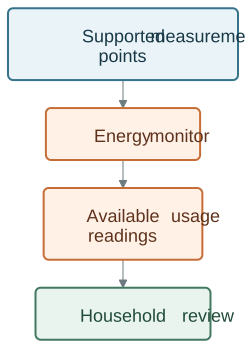
A whole-home total and a separately monitored circuit are not the same view. A reading labelled for a circuit may cover several devices. Do not assume appliance identification, solar coverage or battery status merely because an app has an energy dashboard.
Compare Like-for-Like Products
| Choice | What to compare |
|---|---|
| Whole-home total | Supported service and which measurements form the total |
| Branch-circuit detail | Included sensors, channel count and circuit labelling |
| Plug-level measurement | Socket, appliance and load compatibility |
| Solar or storage visibility | Actual system topology and supported measurement scope |
| Data history | Available units, time range and account requirements |
WattPanel-2X is a monitoring option for supported 120/240V split-phase systems. Review the current bundle and manual rather than selecting it from the house size or an unsupported brand ranking.
Check AI and Automation Claims
Ask what data a feature uses, what it displays and whether any device action requires a separate supported integration.
| Capability | Evidence to check |
|---|---|
| History | Measurements and time range available |
| Recommendation | Inputs and limitations explained |
| Device action | Named integration and supported command |
| Savings | A documented comparison, not a promise |
A changed reading can reflect weather, occupancy, timing or equipment use. It does not diagnose a clogged filter or a failing appliance. Ask how an advertised insight was evaluated and what a user is expected to do with it.
If automation matters, identify the exact platform, device command and supported integration before ordering. A monitor’s readings and another device’s controls are separate capabilities.
Match the Installation to the Device
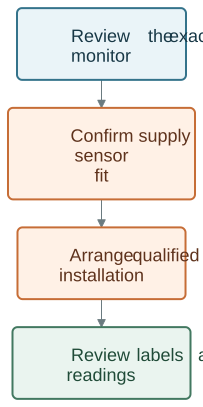
Have a qualified installer review the supply, sensors and installation requirements for the exact monitor. Review the resulting circuit labels and readings after installation.
A plug-level monitor has a different installation scope. Follow its socket, load and appliance instructions; do not adapt it for a panel or a high-load appliance outside its rating. Renters should also check the property owner’s requirements before any fixed installation.
Turn Readings Into a Useful Comparison
Record a normal period before changing a routine. Choose one supported adjustment, such as a schedule offered by the appliance itself, and review the later readings using the same units and comparable periods.
Check your tariff before assuming that moving a task to another time reduces its cost. Monitoring alone does not reduce consumption, guarantee a saving or prevent a breaker from tripping.
Before You Choose
Compare the supported supply, sensor fit, measurement coverage, installation work and data access. Use current product information for prices and available bundles rather than generic Brand X comparisons.
Review WattPanel-2X for product details or explore the monitoring approach to decide which readings would be useful.