Start With the Farm’s Heating Requirements
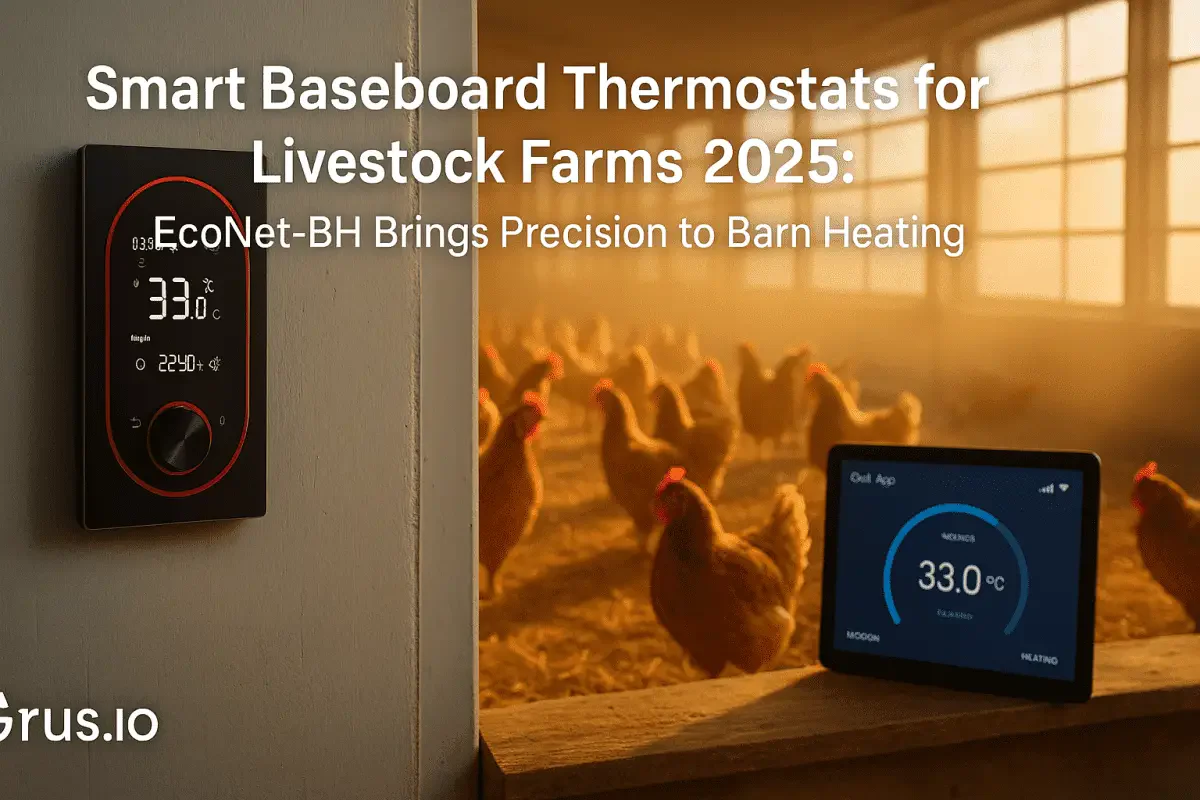
A livestock building has different environmental and supervision requirements from a living room. A thermostat intended for compatible residential heating must not be assumed suitable for dust, moisture, washdown or a critical animal-care application.
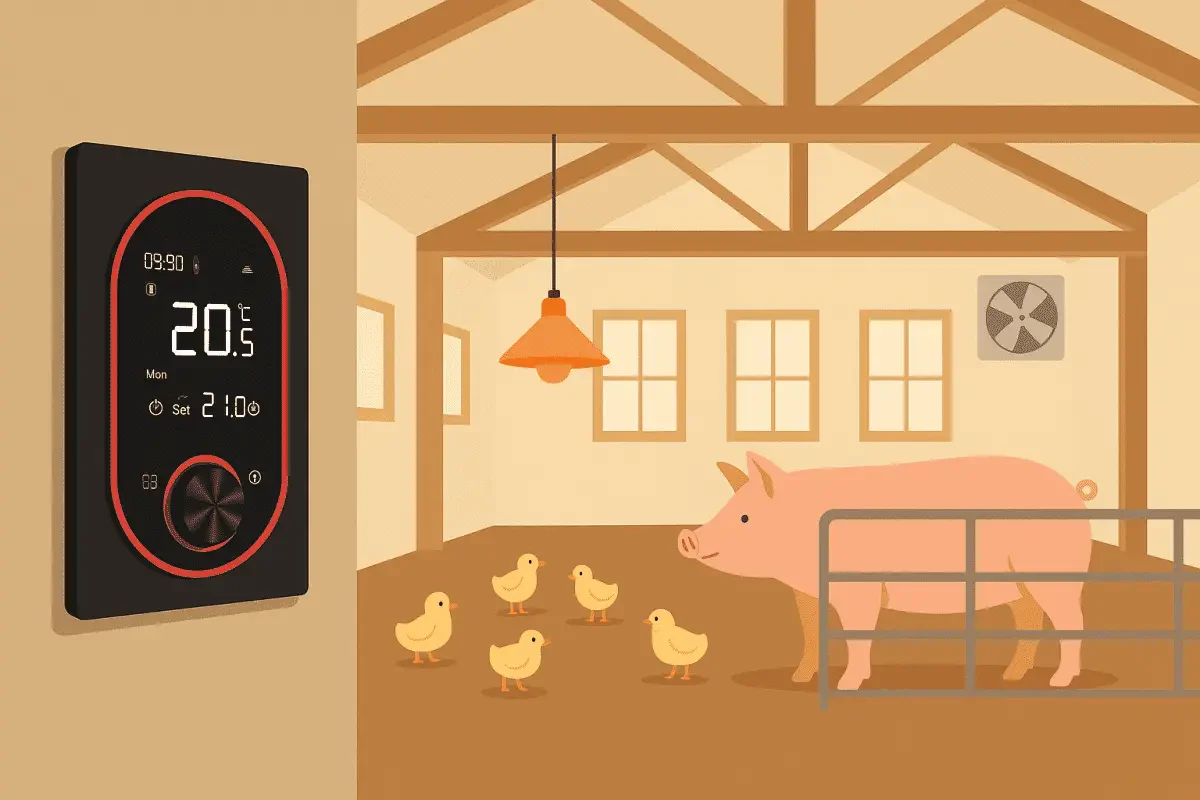
A farm heating application needs a site-specific review. Confirm the equipment’s environmental limits, supported inputs and supervision requirements before selecting controls.
| Check | Required evidence |
|---|---|
| Environment | Equipment ratings for the location |
| Sensors | Inputs supported by the exact model |
| Heating load | Installer-confirmed control suitability |
| Monitoring | What readings are available |
| Supervision | A separate animal-care and safety plan |
Have the farm’s qualified heating and animal-care advisers establish the required conditions and response arrangements. This article does not prescribe temperatures, heater sizing or ventilation thresholds for animals.
Assess the Site Before Selecting Controls
Record the heating equipment, supply, load, installation location and environmental requirements. Ask the installer to compare these with the exact control’s documented limits. An enclosure illustration or a Wi-Fi feature does not establish moisture, dust or agricultural suitability.
The EcoNet-BH product page describes its baseboard-heating role. Do not interpret that as approval for infrared brooders, arbitrary farm heaters or every barn environment.
Separate Heating, Ventilation and Monitoring
Heating control, ventilation and electricity measurement serve different purposes. Do not assume a thermostat can read external CO2 sensors, control dampers or coordinate multiple buildings unless the precise integration is documented.
An energy reading may help someone review a heater’s operation, but it does not diagnose a relay failure or replace a farm’s alarm and response system. Remote access must not be the only supervision available for a critical application.
Evaluate a Proposal With Evidence
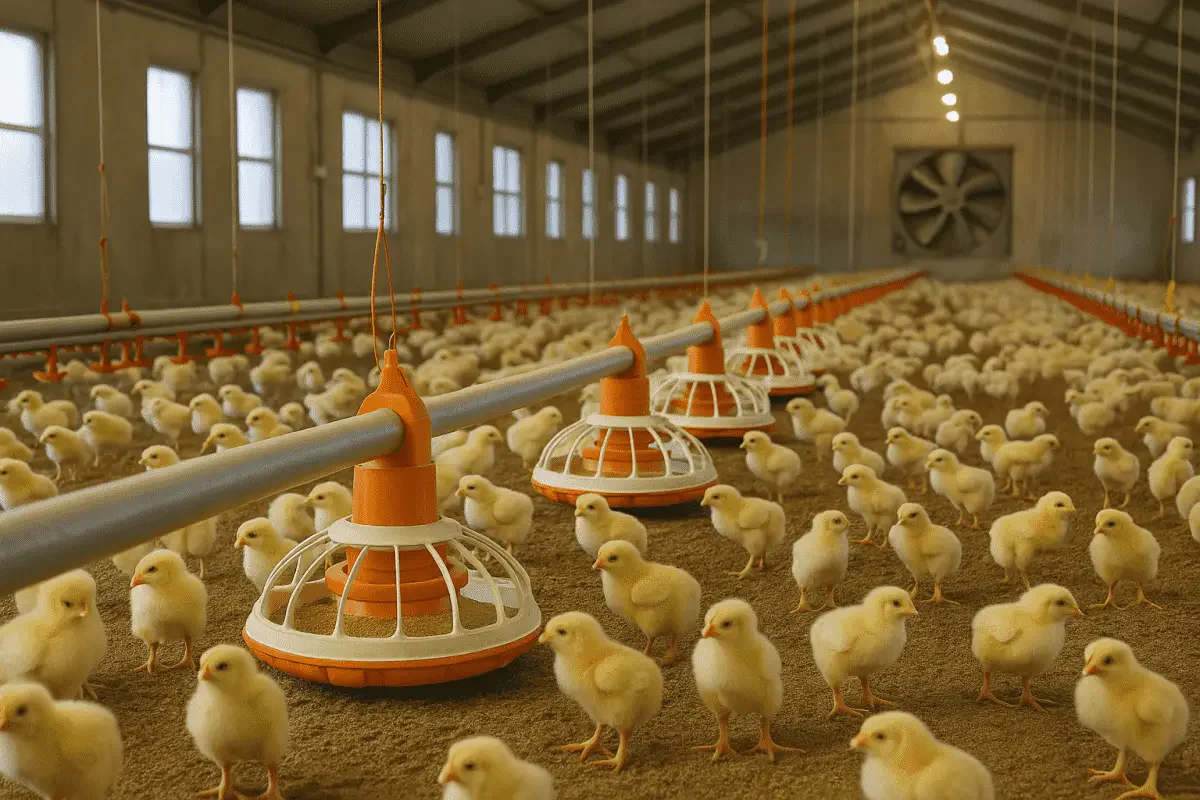
Ask for the exact equipment list, applicable environment limits, installation scope and the handling of power or network loss. Review local controls and who can respond on site if a setting or reading is unexpected.
Do not use an unsupported farm testimonial, growth-rate claim or generic percentage saving as selection evidence. Compare measured electricity use under comparable weather, stocking and operating conditions only after the installation is deemed suitable.
Plan Installation and Ongoing Review
Use qualified installers and the relevant manuals to determine mounting, protection, wiring and commissioning. Do not apply a universal mounting height or an assumed short installation time.
Keep a record of the controls, settings approved by the farm’s advisers, servicing and responsible contacts. Reassess the setup when equipment, animal groups, room use or ventilation arrangements change.
Questions to Resolve
Is a household thermostat automatically suitable for a barn?
No. Check the actual product’s environmental and electrical limits against the specific site. A connected-control feature alone does not establish suitability for a livestock building.
Does adding an energy monitor create automatic heating optimization?
No automatic relationship follows from adding a monitor. Review its measurements separately from the heating controls and any documented integration.
What should I review next?
Use the heating-control overview to distinguish product roles, then have the proposed application reviewed before selecting equipment.