Start With the Boiler’s Control Interface
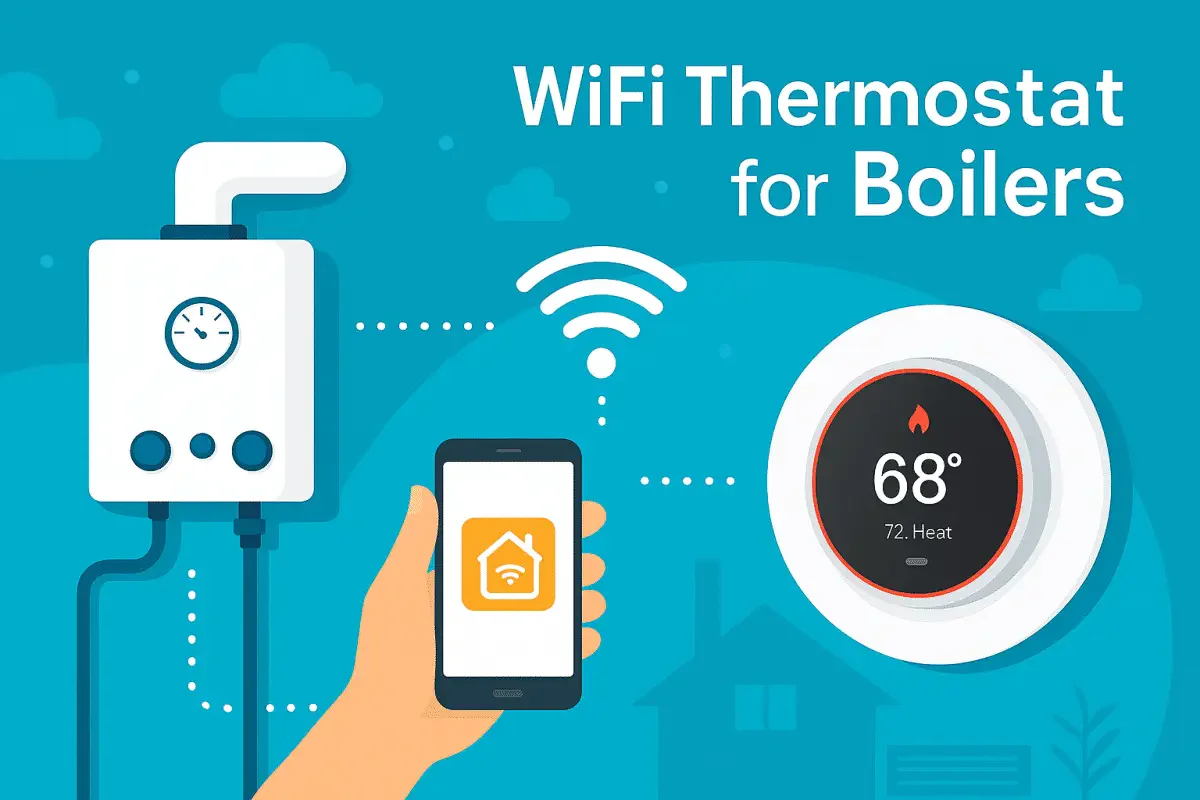
Wi-Fi describes a communication feature, not the connection required by a boiler. Before choosing a thermostat, have a qualified heating installer identify the exact boiler, existing controls, power requirements and supported control interface.
Confirm the boiler’s required control interface before choosing a thermostat. Wi-Fi or app access alone does not establish electrical compatibility.
| Check | Information needed |
|---|---|
| Boiler | Exact model and control requirements |
| Thermostat | Documented outputs and supported system |
| Connection | Installer-confirmed interface |
| App functions | Features supported for that model |
Do not assume that a baseboard thermostat can be connected to a boiler relay or that a thermostat suitable for one boiler works with another. EcoNet-BH is the baseboard-heating product; its name is not evidence of boiler compatibility.
Understand the Separate Connections
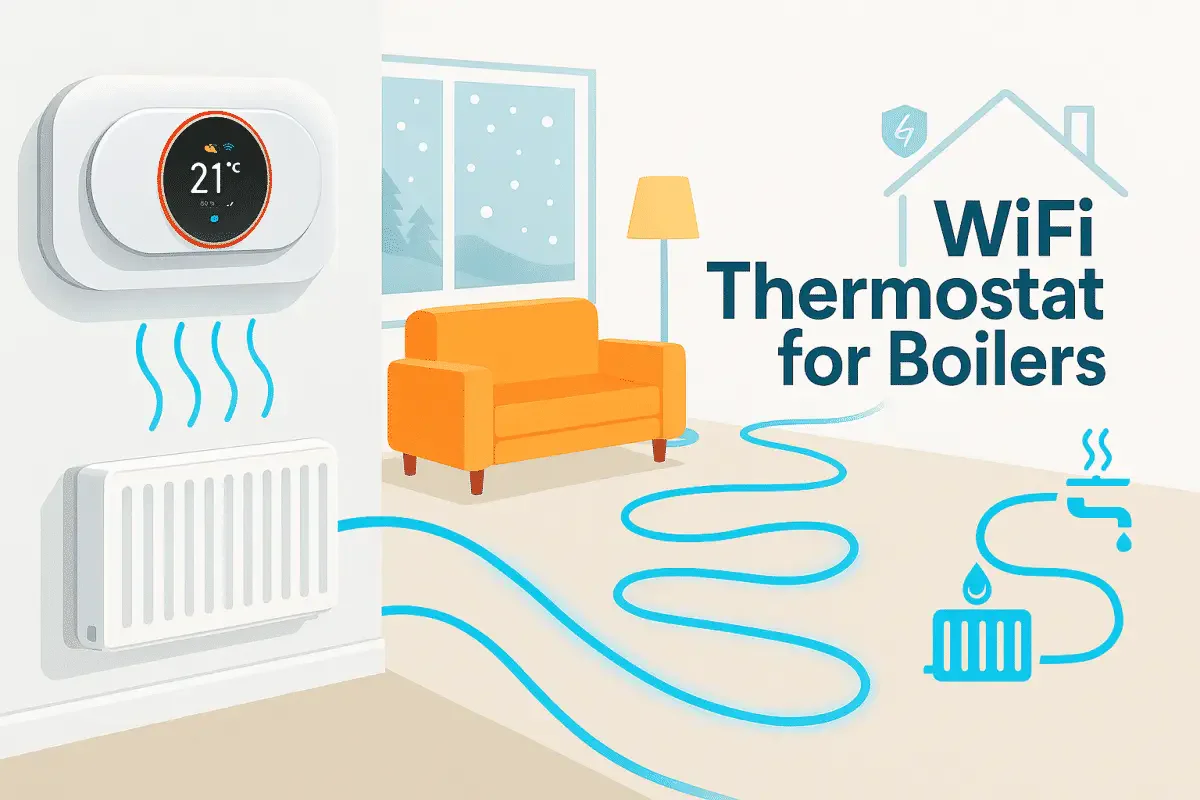
The heating control connection and the app connection perform different jobs. A phone may provide remote access to supported settings, but that does not establish how the boiler receives a demand signal.
Ask the installer to explain the actual control path, any required receiver or interface, and how existing zones are handled. Do not assume commands reach the boiler through Wi-Fi or Zigbee merely because the thermostat is connected.
Compare Functions After Fit Is Established
| Function | Question to ask |
|---|---|
| Local adjustment | Which settings can occupants change at the device? |
| Scheduling | Which schedules are supported for the installed system? |
| Remote access | Which app, account and connection are required? |
| Zones | Which equipment controls each zone? |
| Network loss | What does the exact manual say continues to operate? |
| Reports | Is the displayed information a temperature, runtime estimate or measured energy? |
Adaptive learning, occupancy sensing and weather response are individual features to verify. Do not assume them from the word smart or use a generic savings percentage to compare systems.
Prepare for Qualified Installation
Provide the boiler and current control model details, manuals and existing system records. Do not remove covers, test terminals or change wiring to follow this article.
Ask for a defined scope covering compatibility, installation, commissioning and the provider’s support terms. Follow the exact equipment instructions for placement and testing rather than a universal mounting height or calibration schedule.
Keep Water Protection Separate
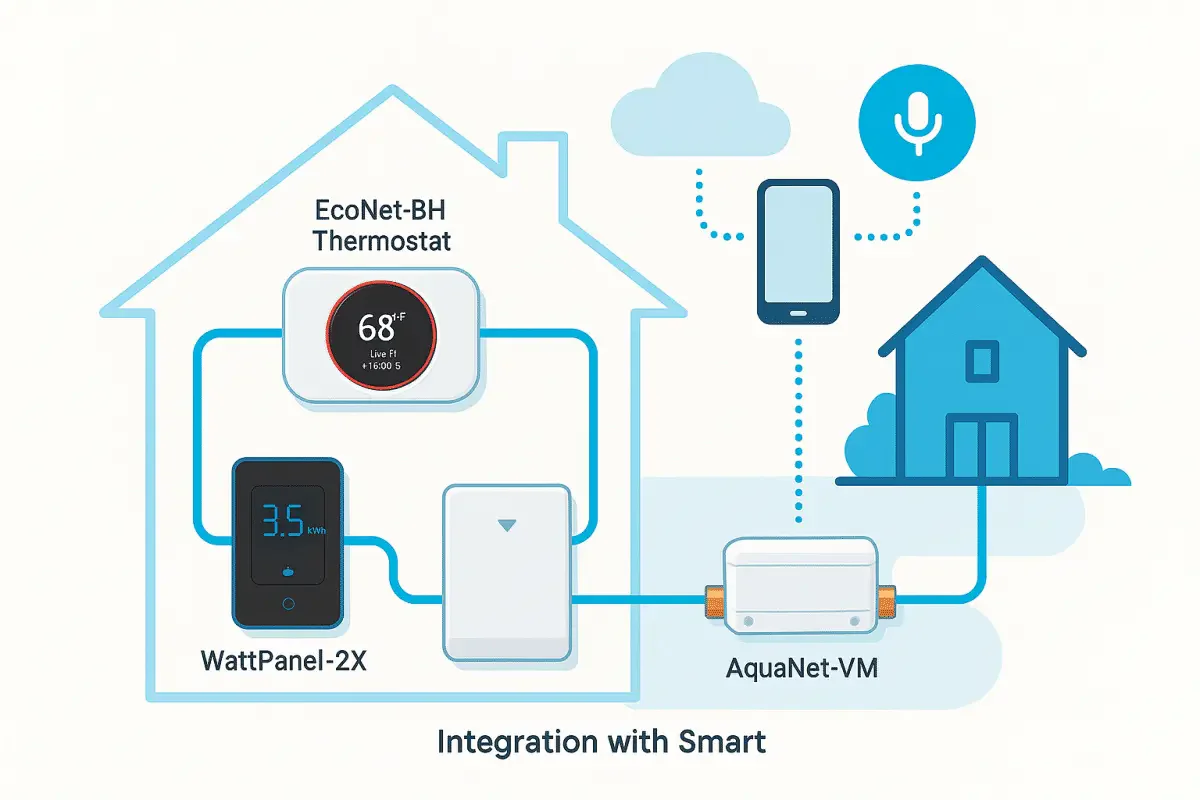
Review heating controls and water shutoff products as separate systems. Do not treat a water-valve action as a boiler safety control.
A water-valve product is not evidence of pressure monitoring or an approved boiler safety interlock. Any action that affects the heating system’s water supply needs to be reviewed as part of that system’s design.
Electricity measurements from a pump or control circuit do not by themselves represent the boiler’s total heating-energy use. Keep fuel consumption, temperature, runtime and measured electricity distinct when assessing a change.
Questions Before Changing Controls
Can an older boiler use a connected thermostat?
Its age alone does not answer this. Ask the installer to verify the documented interface and system requirements against the proposed control.
Will schedules keep working if Wi-Fi is unavailable?
Check the exact device and receiver instructions. Do not assume the same offline behavior across all products.
How much will it save?
There is no guaranteed saving. Establish a comparable baseline and account for weather, occupancy, fuel prices and the controls previously used.
Find the Right Heating Path
Read the Smart Thermostat Heating Guide to distinguish baseboard, heat-pump and other heating-control roles. Resolve the boiler’s interface before selecting a product or integration.