
Energy monitoring comparison
Panel Energy Monitor or Smart Plug: Start With Measurement Scope
Panel monitoring provides broader electrical context; a compatible smart plug focuses on one plug-connected load. The right choice depends on the question.
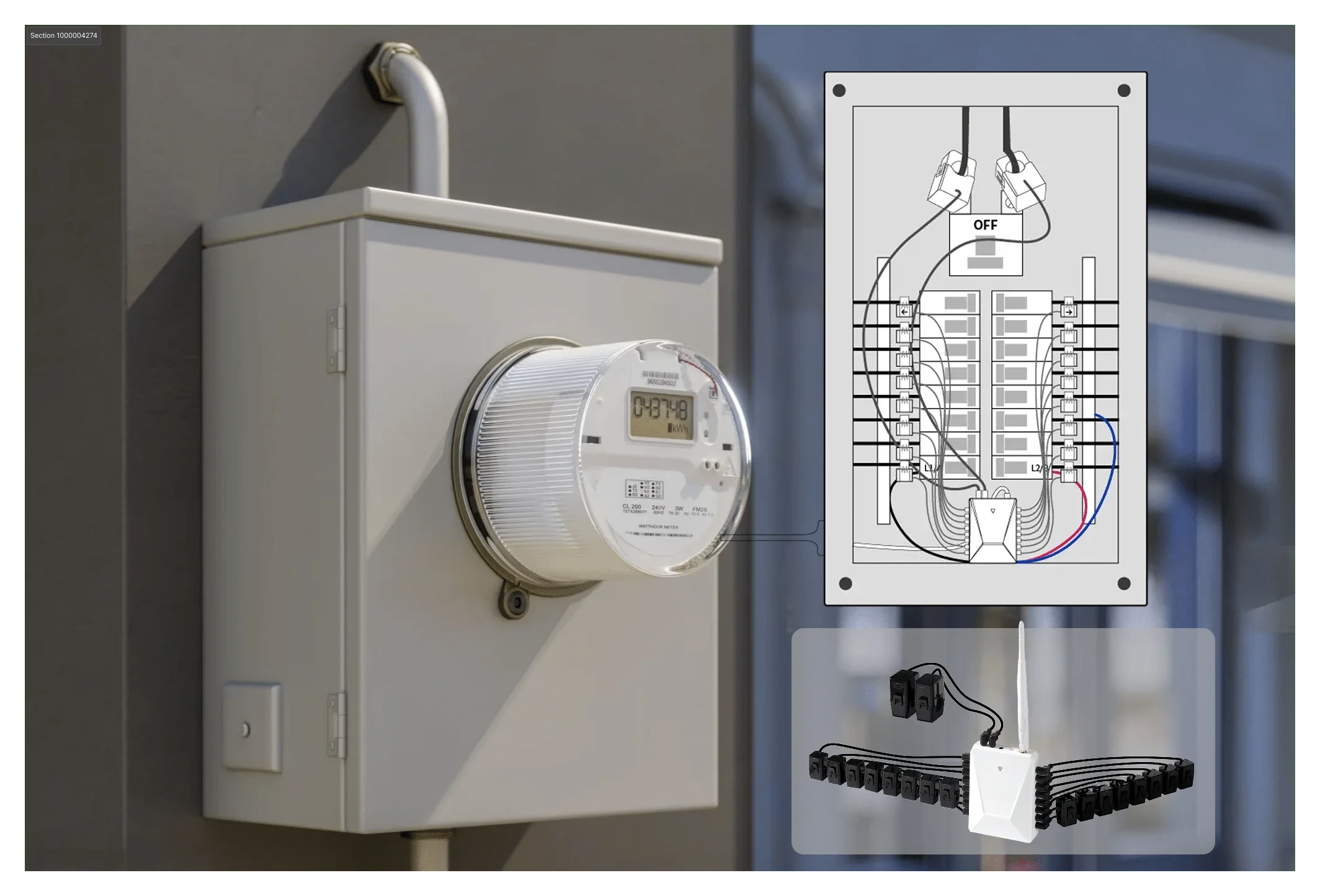
The decision in one minute
Choose a panel energy monitor when the goal is household or circuit-level visibility and the electrical installation can be reviewed. Choose an energy-monitoring smart plug when the question is limited to a compatible plug-connected appliance. Neither option replaces product fit checks, safe installation, or the product's documented measurement limits.
Check these four areas first.
Scope
Whole home or selected circuits point toward panel monitoring; one plug load points toward a compatible smart plug.
Installation
Panel products introduce electrical fit and installation questions that plug-in products generally do not.
Data context
Broad trends and focused appliance readings answer different questions.
Expansion
Consider whether the first measurement will remain useful when the next question appears.
01
Compare the job, not just the hardware.
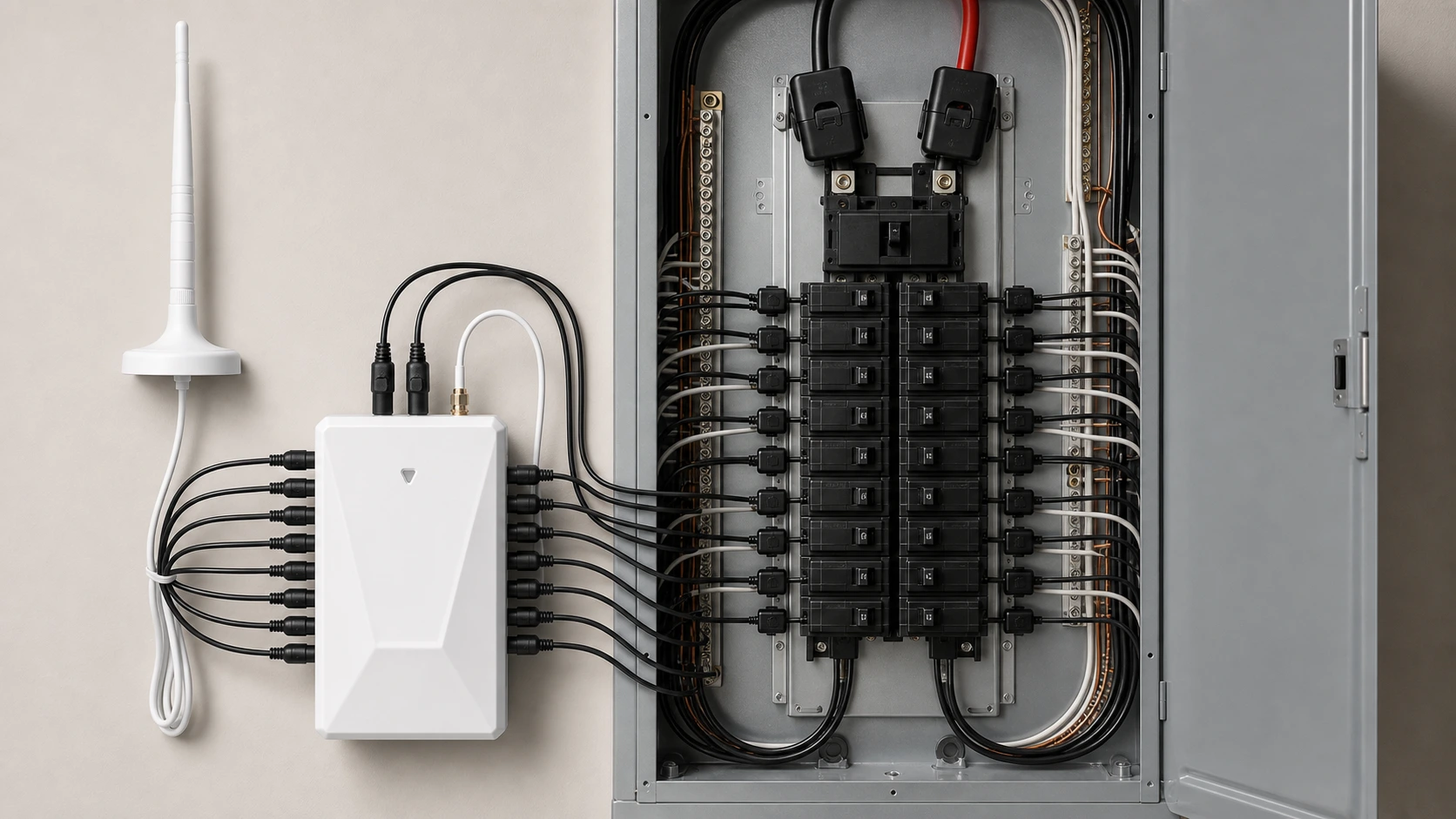
The options overlap only at a high level: both can provide electricity data. Their measurement boundaries and installation paths are different.
| Question | Panel energy monitor | Energy-monitoring smart plug |
|---|---|---|
| Typical scope | Whole-home conductors or selected circuits, depending on product and configuration | One compatible plug-connected appliance |
| Installation boundary | Panel and CT fit review; qualified installation may be required | Plug and appliance compatibility review |
| Useful for | Household demand patterns and configured circuit context | Focused use of one appliance |
| Does not prove | Automatic identification of every appliance | What is happening elsewhere in the home |
02
Use the smallest scope that answers the real question.
A smart plug can be the clearer starting point for a single plug load. A panel monitor becomes more useful when the question spans total demand, several circuits, or changes that cannot be isolated at one outlet.
Start with a smart plug
The target is one compatible plug-connected device and no broader household context is required.
Start with panel monitoring
The target is a household pattern, main conductors, or selected circuits that cannot be represented by one plug.
Pause the purchase
The measurement goal is unclear, the panel context is unknown, or installation responsibility has not been confirmed.
03
A wider measurement scope is not the same as a certain diagnosis.
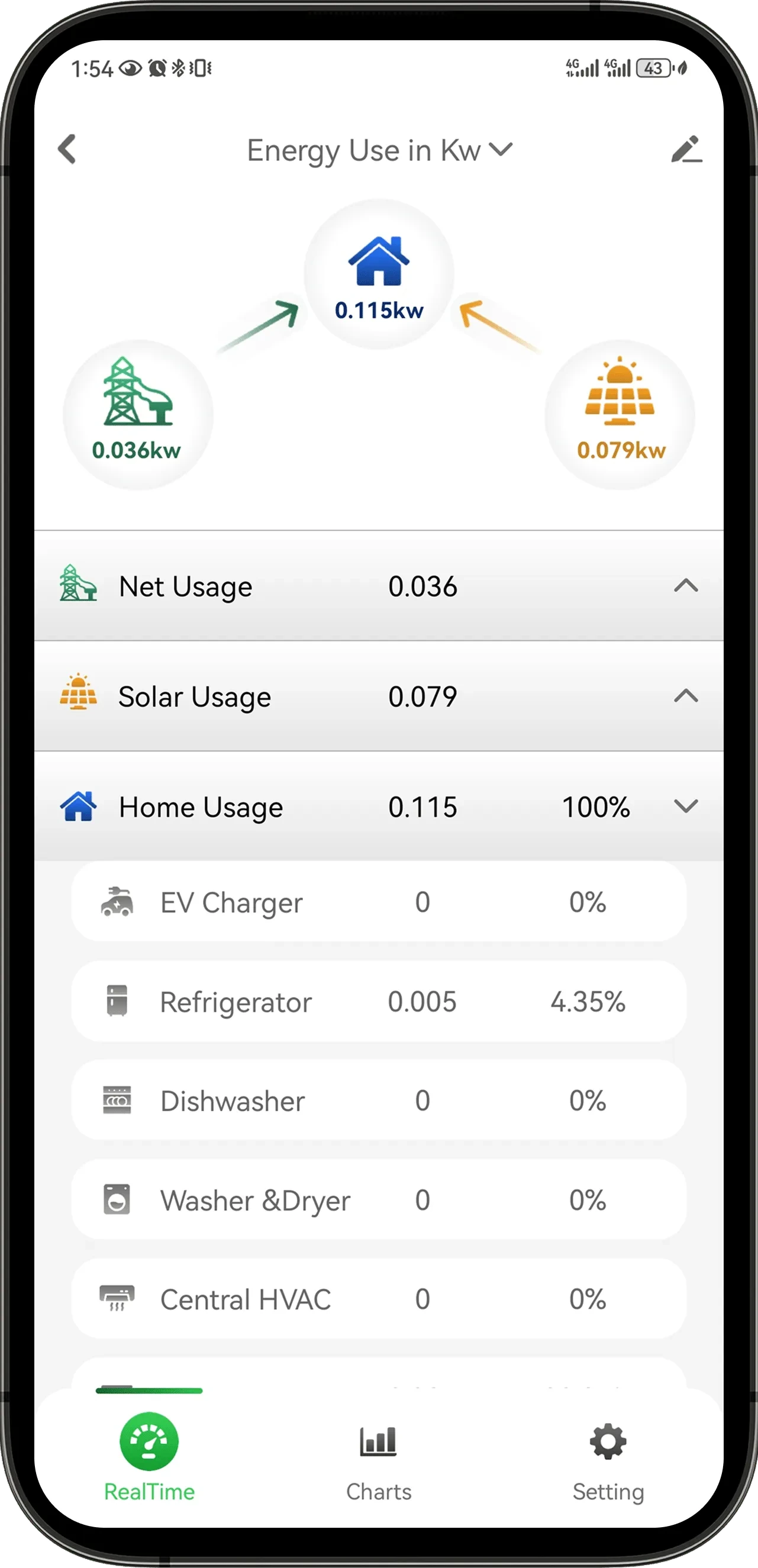
Panel data can reveal timing and configured channel patterns, but it should not be presented as guaranteed appliance identification. A plug reading is more focused, but it cannot explain unrelated loads.
Use measurements to narrow the next question, then verify likely causes with the relevant product documentation or qualified support path.
04
Choose based on scope, then confirm fit.
The final step is not a feature count. It is confirming that the selected product can be used in the intended home context and that its data view matches the original question.
-
Name one question
Write the exact household, circuit, or appliance question.
-
Choose the measurement boundary
Select panel, circuit, or plug scope without assuming one replaces another.
-
Review product fit
Check the product documentation, electrical or plug requirements, and app experience.
-
Use support for uncertainty
Confirm compatibility with the selected product documentation or support.
05
Questions people ask before the next step
Is a panel energy monitor better than a smart plug?
Not universally. A panel monitor provides broader context, while a compatible smart plug provides a focused measurement for one plug-connected load.
Can a smart plug show whole-home electricity use?
No. It measures only the compatible load connected through that plug.
Can a panel monitor identify every appliance?
Do not assume it can. Review the product's documented channels, app views, and measurement boundaries.
Which option requires more fit review?
Panel monitoring requires service, panel, CT, access, and installation review. Smart plugs still require product, outlet, and appliance compatibility checks.
Choose a product only after the fit questions are clear.
Open the relevant product page when the fit is clear, or contact support with the model and installation details that still need an answer.