
Baseboard wiring planning
Use Wiring Information to Check Fit, Not to Guess Through Installation
A baseboard thermostat replacement depends on line voltage, conductor roles, controlled load, device rating, local rules, and qualified installation.

The decision in one minute
Baseboard thermostats commonly control line-voltage heating, so a replacement must be verified against the supply, controlled load, wiring arrangement, product rating, and installation instructions. Do not rely on wire color or a generic diagram. If the circuit or conductor roles are uncertain, stop and use a qualified electrical professional.
Check these four areas first.
System category
Confirm that the thermostat controls electric baseboard or another documented line-voltage load.
Supply and load
Verify voltage, controlled load, and conductor roles through labels, manuals, and qualified review.
Wiring arrangement
The number of conductors alone does not establish their function or thermostat compatibility.
Stop condition
Stop when labeling, conductor identity, voltage, load, or local installation responsibility is unclear.
01
Wiring context narrows the product category, but it does not finish the decision.
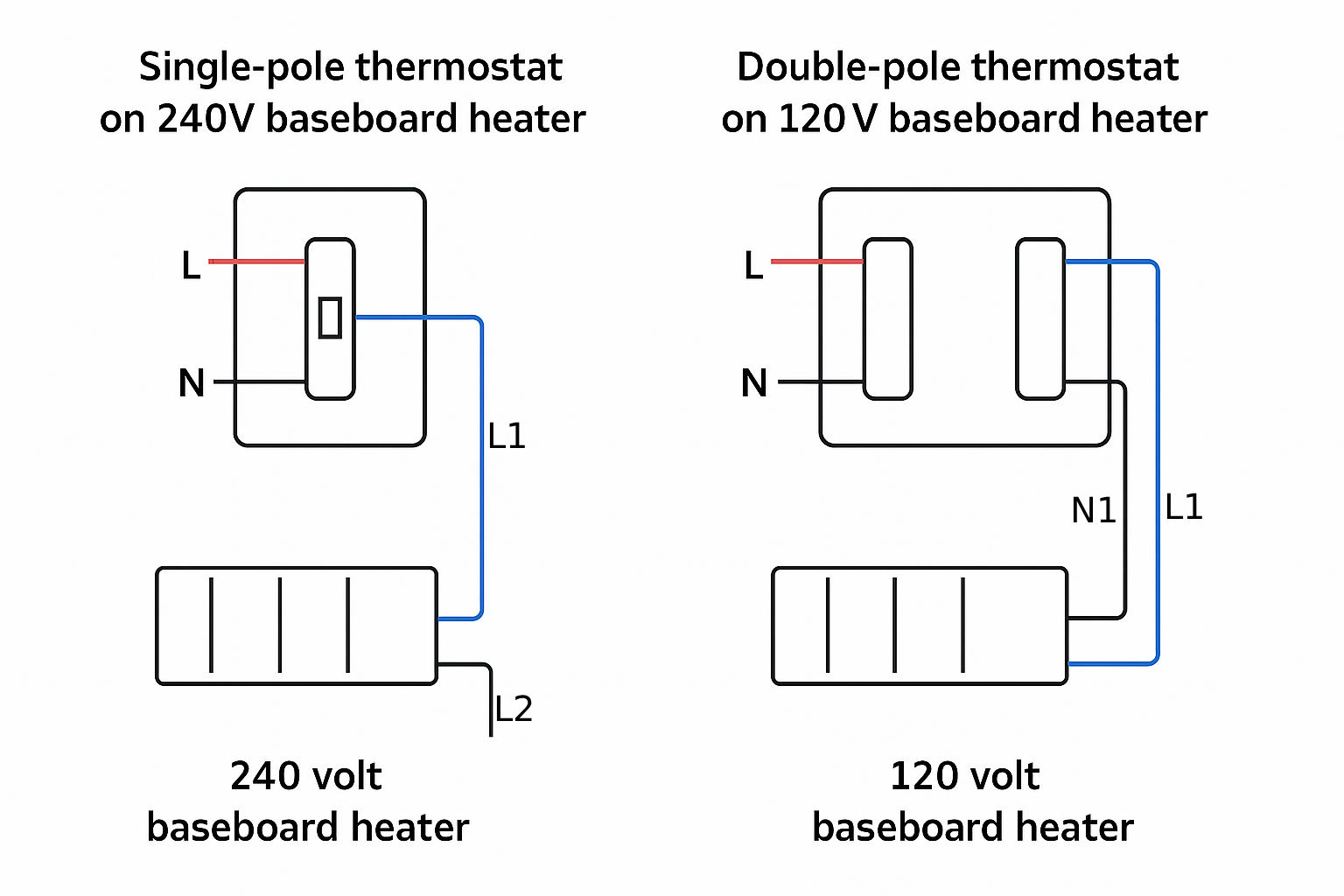
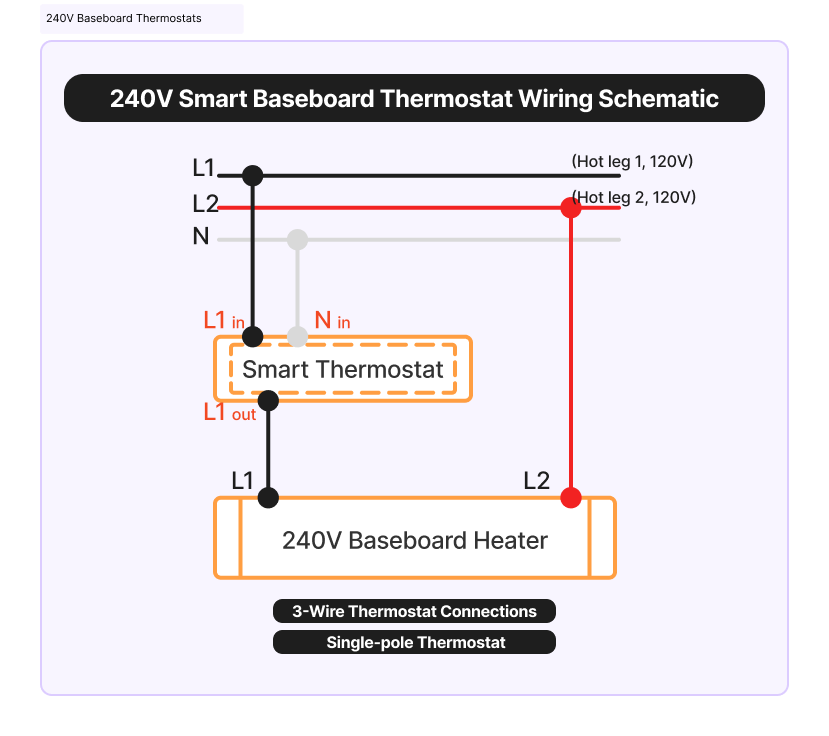
A thermostat may switch one or more conductors between supply and the controlled heater. The exact arrangement must be identified for the specific installation and compared with the candidate thermostat documentation.
Wire count and color can be misleading after previous repairs or local conventions. Treat them as observations for a qualified review, not as proof of function.
| Evidence | What it can help establish | What it cannot prove alone |
|---|---|---|
| Equipment label | Heating equipment identity and documented electrical information | That a specific thermostat is compatible |
| Existing thermostat label | Current model and stated ratings | Conductor identity or current installation quality |
| Wiring arrangement | Questions for a qualified installer | Line, load, neutral, or switched function from color alone |
| Candidate manual | Supported wiring and rating requirements | Fit without matching it to the actual circuit and load |
02
Collect facts without turning the guide into a live-wiring tutorial.
Start with accessible labels, model information, heating equipment documentation, and the candidate product manual. Electrical testing, conductor identification, and installation work belong with a qualified professional and the applicable local rules.
-
Identify the heating equipment
Record the heater type, model information, and the thermostat currently controlling it.
-
Review documentation
Compare the existing equipment information with the candidate thermostat manual and fit guidance.
-
List unresolved questions
Voltage, load, conductor roles, gang-box fit, and local requirements should be explicit.
-
Use qualified installation
Do not proceed from a generic web diagram when any electrical fact is uncertain.
03
Uncertainty is a reason to pause, not improvise.
The safest outcome of a compatibility guide can be deciding that more information or professional review is required.
Unclear conductor roles
Color, position, or wire count does not provide enough evidence.
Unknown voltage or load
The supply and controlled heating load have not been matched to product requirements.
Damaged or crowded enclosure
The installation context cannot be evaluated safely from the product page.
Conflicting documents
The existing equipment information and candidate thermostat manual do not align clearly.
04
Move to EcoNet-BH only after the baseboard path is credible.
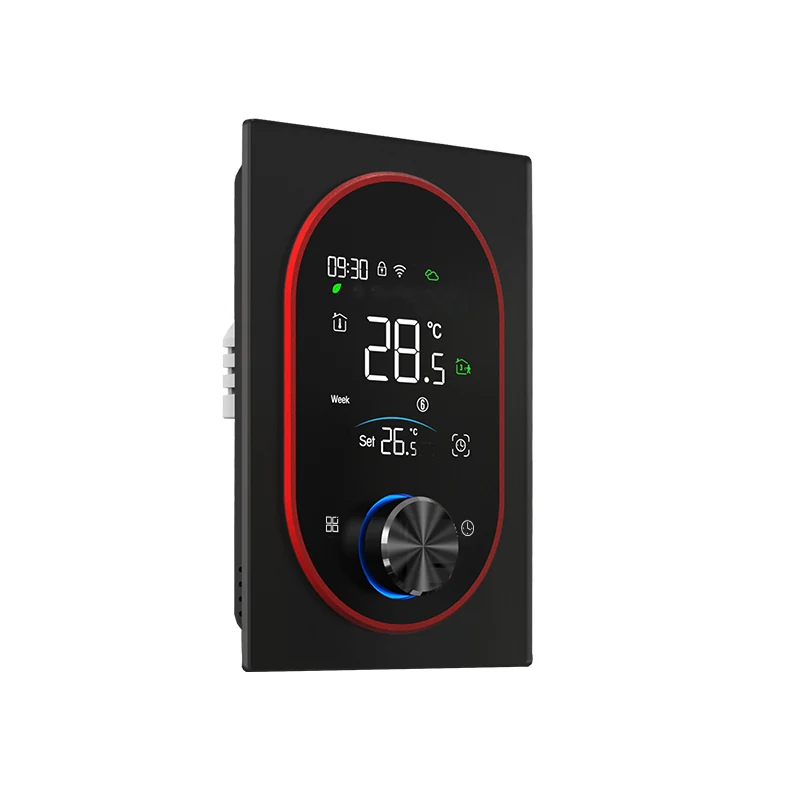
EcoNet-BH is the current direct Grus option for compatible baseboard heating. Review its product manual, supported configurations, selected variant, installation requirements, and policy status before ordering.
05
Questions people ask before the next step
Can I identify baseboard thermostat wires by color?
No. Wire color alone does not prove conductor function. Use equipment documentation and qualified identification.
Are all baseboard thermostats line voltage?
Do not assume so from appearance. Identify the heating equipment and current control system, then verify the candidate product requirements.
Can a generic wiring diagram confirm compatibility?
No. It can explain questions to review, but the actual supply, load, conductors, product manual, enclosure, and local rules must be matched.
When should installation stop?
Stop when voltage, load, conductor roles, enclosure condition, product rating, or local installation responsibility is unclear.
Choose a product only after the fit questions are clear.
Open the relevant product page when the fit is clear, or contact support with the model and installation details that still need an answer.