

Treat AI Energy Management as a Proposal to Evaluate
AI may be proposed for analysing energy records, explaining patterns or producing recommendations. This article discusses how to evaluate such a proposal; it does not establish that DeepSeek offers a deployed household controller or that Grus products include a DeepSeek integration.
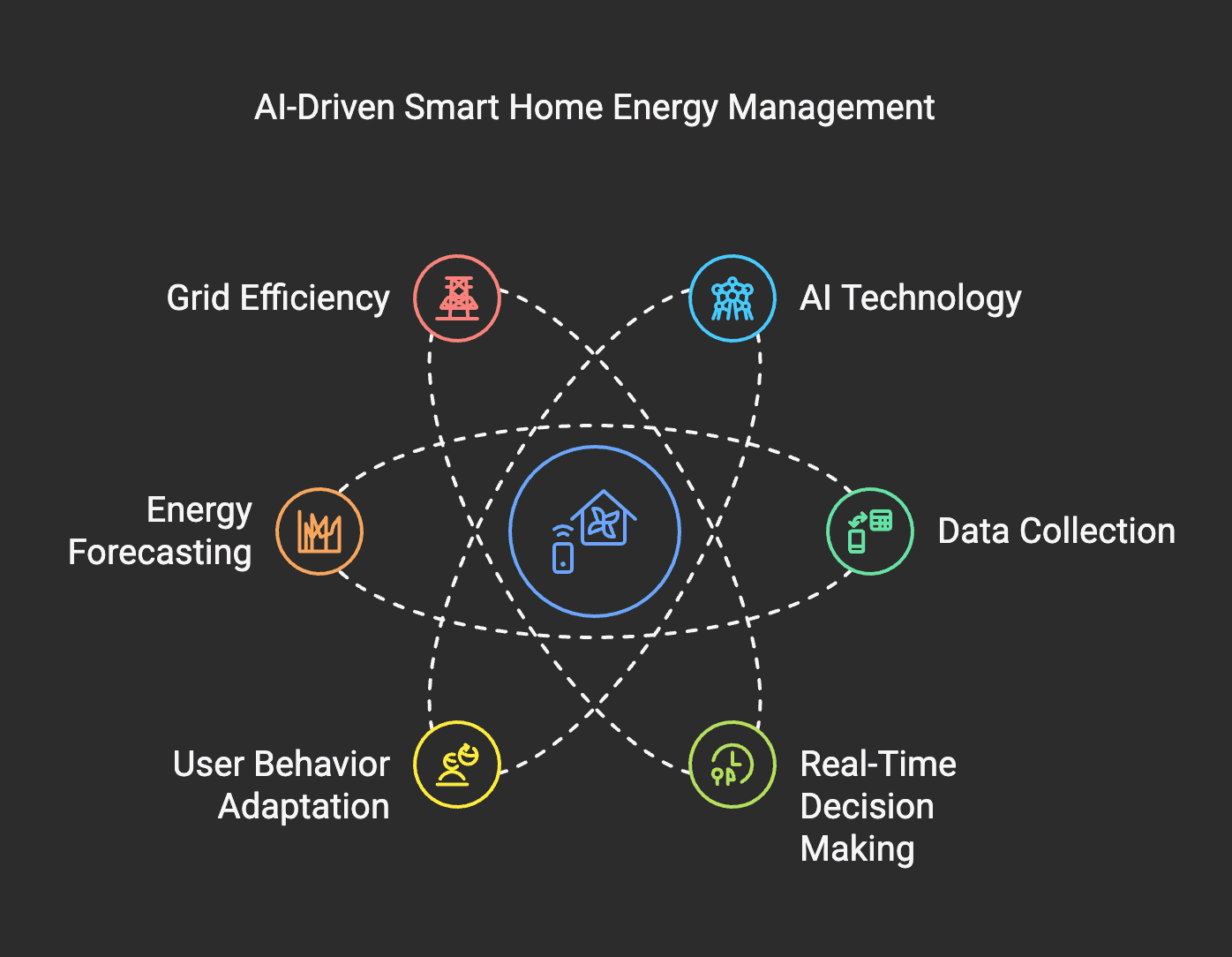
An AI analysis proposal should identify the data, intended output and limits. It is not evidence of a working home-control or utility-control integration.
| Part | Evidence to request |
|---|---|
| Input | Measured data and access permission |
| Analysis | Defined output and limitations |
| Action | Separate supported control interface |
| Results | Documented evaluation |
Start With the Input Data
Identify the origin, time range, units and measurement scope of the records supplied to the model. Distinguish measured electricity, estimated cost and manually entered information. Missing data should remain a gap rather than becoming a fabricated value.
A model’s explanation cannot establish a measurement that was never taken. If the input is a whole-home total, do not treat an appliance-level explanation as verified device identification.
Define a Useful Output
Choose one question, such as explaining a change between two comparable periods. Require the output to identify the records behind its conclusion and distinguish an observation from a hypothesis.
Evaluate the response against the source data. If a forecast is proposed, define the horizon and compare it with later observations. A plausible narrative or an AI label is not evidence of accuracy.
Keep Recommendations Separate From Commands
Treat analysis and execution as separate steps. Any action affecting equipment needs a supported interface, appropriate permission and a way to review the result.
A model response does not grant access to a thermostat, inverter, charger or utility. Any actual control requires a documented interface, an appropriate system design and explicit authorization.
Do not use an energy-language model as a substitute for electrical protection or professional diagnosis. Review proposed actions against the equipment’s own supported controls and instructions.
Consider Privacy and Operational Limits
Energy histories may reveal household routines. Review what data would leave the home, where it is processed, who has access and how access can be revoked before sharing it with an external service.
Decide how the proposal handles missing readings, stale data and contradictory inputs. Begin with read-only analysis rather than assuming automatic execution is necessary.
Ask for Evidence of an Integration
A claim about automatic household savings, grid balancing or a city deployment needs a named implementation and traceable results. A general model capability or a concept diagram is not that evidence.
Solar, storage and bidirectional charging require suitable equipment and applicable arrangements independently of the analysis software. An AI-generated plan does not give a household permission to trade energy.
A Practical First Evaluation
Use a limited, permitted dataset and a clear question. Compare the output with the original readings, record mistakes and limitations, and decide whether it assists a person better than the existing report.
Only consider a further integration after the analysis proves useful and its separate control requirements are established. No saving or deployed DeepSeek control capability is promised here.