Decide Whether the Panel Needs Work
An electrical panel distributes electricity; an energy monitor measures usage within its supported scope. Installing a monitor does not increase service capacity, repair faulty wiring or replace a panel.
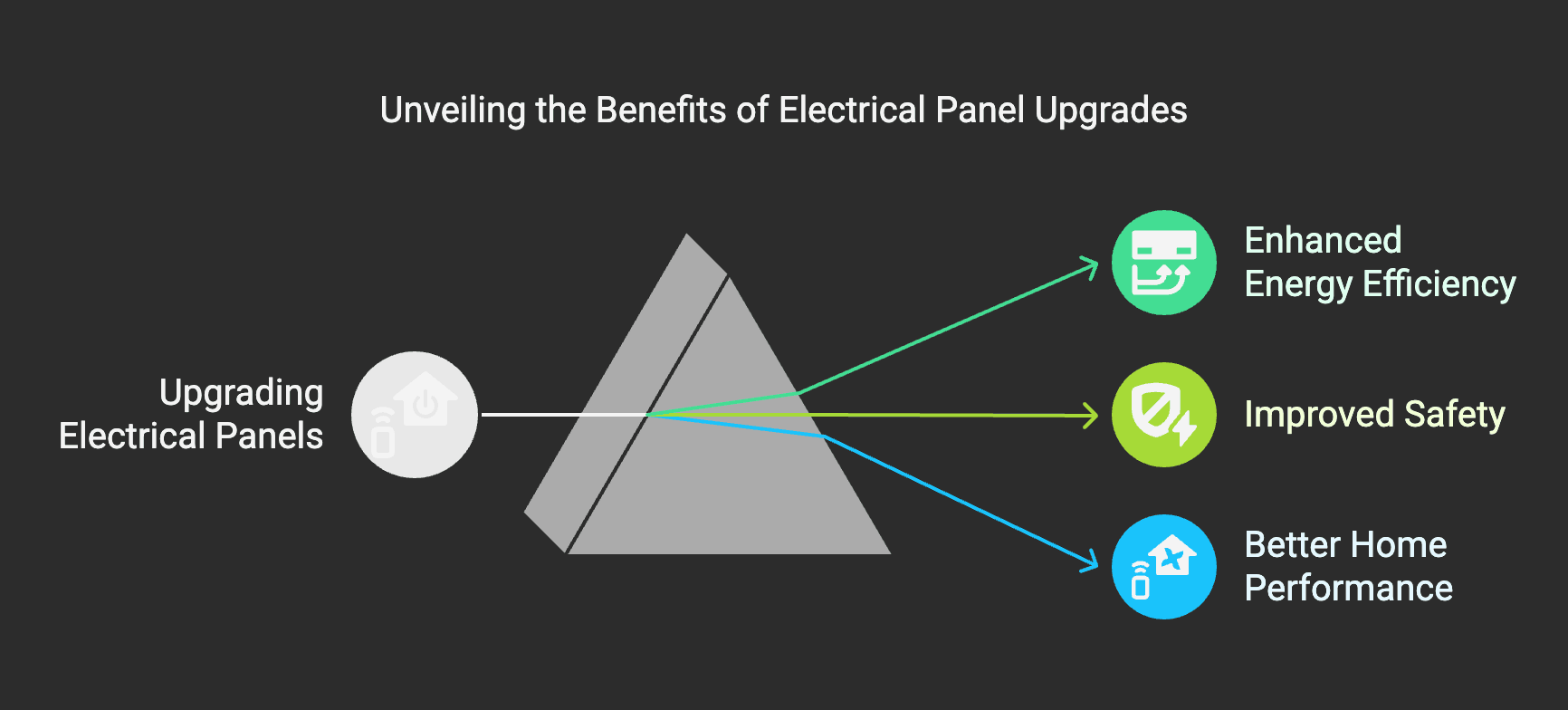
Discuss repeated breaker trips, damage or other electrical concerns with a qualified electrician. Do not assume that buying monitoring equipment resolves the underlying issue. Do not open the panel or perform electrical tests to follow this guide.
Bring the Right Information to an Assessment
Use the documented supply and equipment requirements when discussing an upgrade with an electrician. Appliance names alone do not establish a circuit’s voltage or capacity.
| Information | Why bring it |
|---|---|
| Service documentation | Establish the supply |
| Existing equipment | Review current circuit requirements |
| Planned additions | Assess future load requirements |
| Panel information | Discuss site-specific options |
Ask the electrician to evaluate existing equipment and proposed additions together. House size alone is not a load assessment, and an EV, oven or heater name does not establish its voltage or circuit requirements.
Bring existing service records, panel identification and equipment specifications. Let the professional determine what further inspection is needed; do not remove covers to obtain information.
Compare the Work Being Proposed
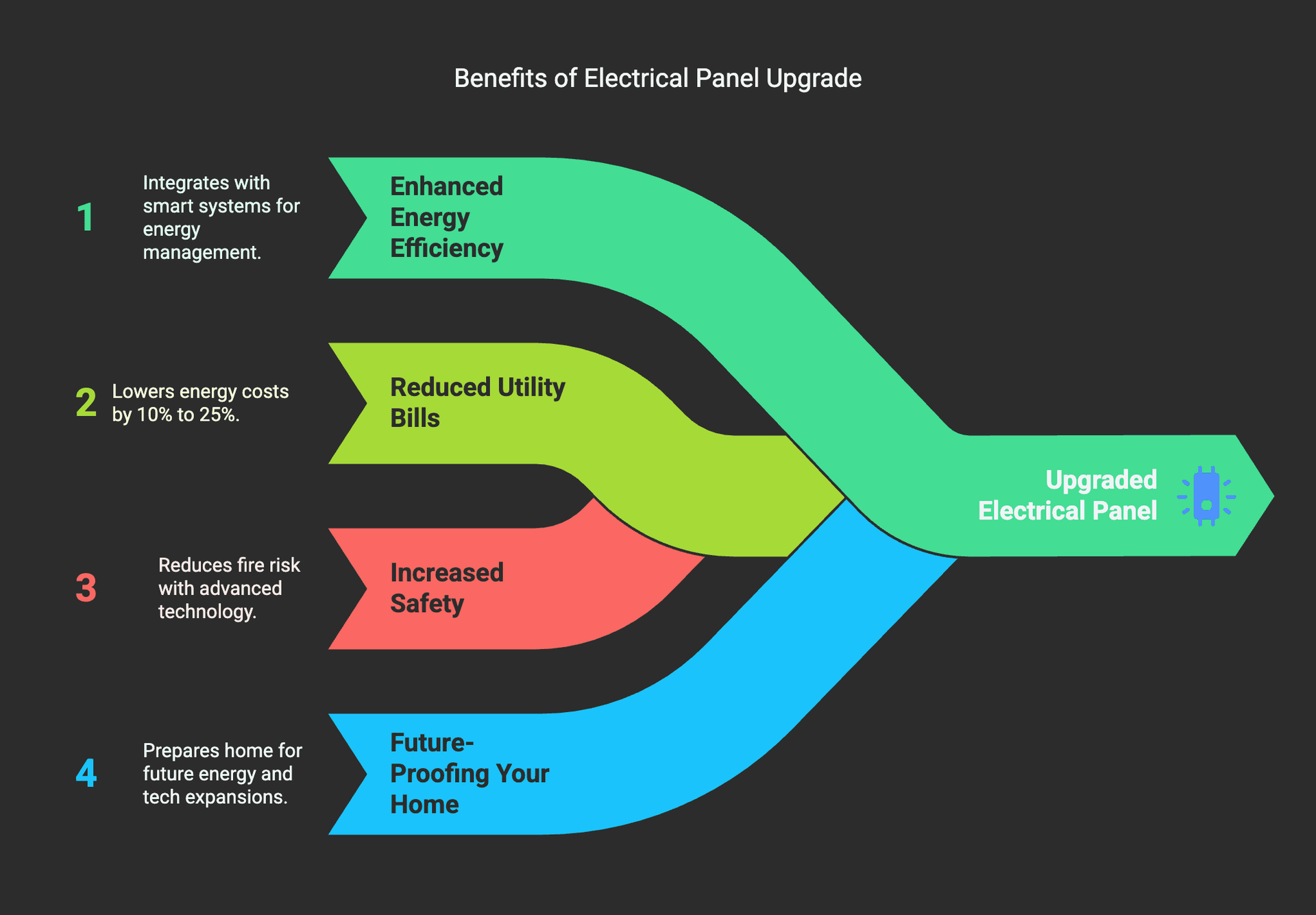
A proposal may concern service capacity, panel condition, additional circuits or visibility into electricity use. Ask which problem each part of the proposed work addresses. These are separate objectives and should not be bundled into an unsupported promise of lower bills.
WattPanel-2X is an energy monitor. Review its measurement scope separately from the electrical panel and the controls used by connected equipment.
| Part | Role |
|---|---|
| Electrical panel | Electrical distribution |
| Energy monitor | Measurements within its supported scope |
| App or display | Available readings for review |
WattPanel-2X is a private energy-monitoring product, not a smart replacement panel. Its measurements do not provide automatic circuit isolation, fault protection or control of connected loads.
Arrange Professional Installation
Confirm who will perform the assessment, coordinate any utility involvement, identify required approvals and complete the installation checks. Obtain a site-specific scope and quote; neither the time required nor the provider’s warranty should be assumed from an online article.
Keep installation records and the relevant manuals. After any monitoring installation, ask what each reading covers and how its circuit labels were established.
Evaluate Costs Without Assuming Payback
Compare the full quoted scope, not just the price of a monitor. Installation work, panel work and equipment purchases may be separate costs. Ask the relevant program administrator about current incentive terms before relying on a credit or rebate.
An upgrade can address a documented electrical need, but a new panel does not by itself establish an energy saving. To evaluate a usage change, compare consistent periods and account for tariffs, weather and household activity.
Keep Future Controls Separate
If a project needs battery, EV or utility-program control, identify the actual controller and supported interfaces separately from energy monitoring.
Solar, storage and EV projects need their own equipment and site-specific design. Do not treat a monitor as an AI control hub or assume that it makes the home independent of the grid.
Choose the Appropriate Next Step
For a panel concern, arrange an electrical assessment. For a usage question, explore home energy monitoring and compare the WattPanel-2X measurement scope with the readings you need.