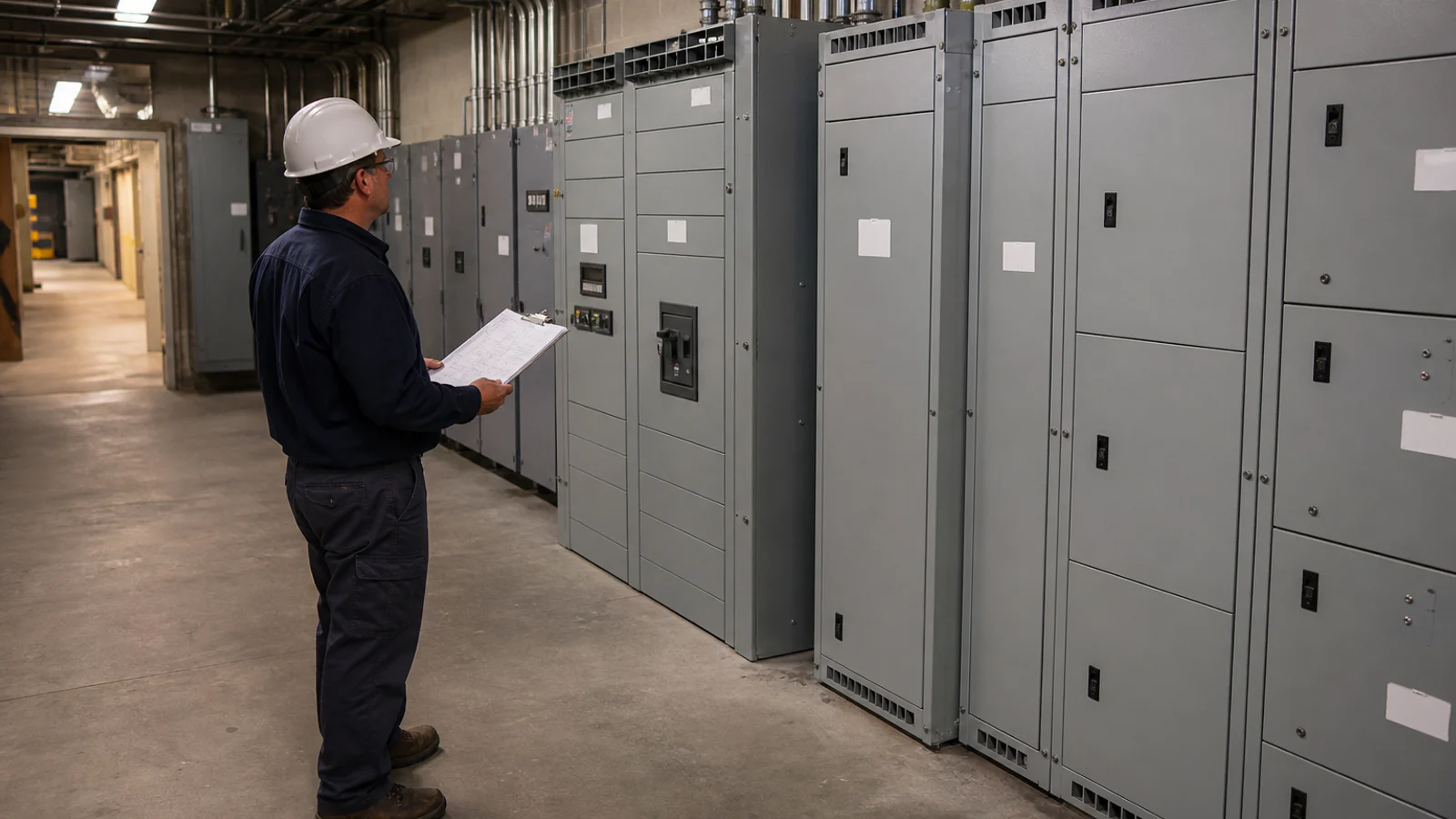
A 120/208V three-phase wye service and a 120/240V split-phase service have different voltage relationships. That distinction matters when choosing equipment or an energy monitor. A photograph alone cannot establish the service, conductor function or code compliance of an installation.
This guide explains the system relationship and the questions to take to an electrician. It does not provide a procedure for opening a panel, testing live conductors or making connections.
1. Understanding the Panel
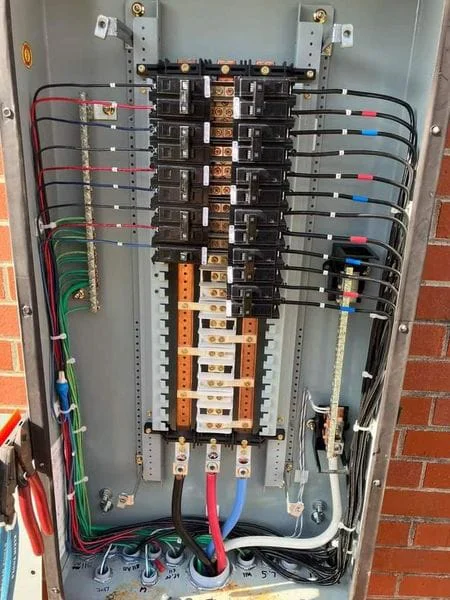
The photo illustrates a panel interior, with breakers and conductors visible. Do not use the colors, breaker count or apparent cable positions to identify your own supply. Ask a qualified electrician to verify the actual service and equipment documentation.
For the specific 120/208V four-wire wye system discussed here, each phase is nominally 120V to neutral, while any two phases are nominally 208V apart. Eaton explains this phase-to-neutral and phase-to-phase relationship.
2. The 120/208V Relationship
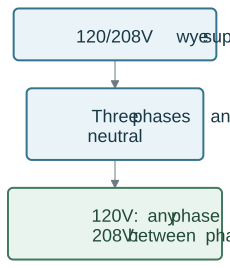
These labels describe pairs of conductors, not successive voltage changes through equipment. They do not prescribe which circuit belongs on which phase. Load allocation, protection and equipment ratings need a design appropriate to the actual installation.
A 208V relationship is not interchangeable with 240V merely because both involve two conductors. Have the equipment’s documented ratings checked against the verified supply.
3. Planning Three-Phase Monitoring
Start by stating the measurement goal: the whole supply, selected circuits, or both. Then review the exact monitor and CT bundle with your electrician.
| Check | Information to confirm |
|---|---|
| Supply | Actual service configuration and voltage |
| Monitor | Supported configurations in the current model manual |
| CTs | Rating, opening size, sensor count and intended measurement points |
| Space and access | Enclosure requirements and suitable installation conditions |
| Handover | Channel labels, coverage and an explanation of the readings |
WattNet-3 and WattPanel-3X have separate product details. A three-phase product name alone does not establish compatibility with every three-phase service. Check the model manual before choosing either.
Professional Installation and Verification
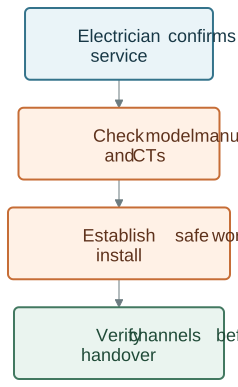
Panel work must be handled by qualified personnel. Switching a main breaker off does not establish that all exposed parts are safe to touch. OSHA’s electrical work practices require appropriate de-energization and verification; the electrician must apply the procedures relevant to the site.
Use the current model manual for the approved installation requirements. This overview deliberately supplies no wire-color mapping, terminal assignments or testing instructions.
4. Interpreting the Measurements
Once installed and verified, monitoring can help you compare recorded use across time and covered channels. Document what each channel represents before drawing conclusions.
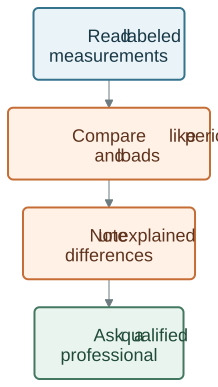
A change in use is a reason to investigate, not proof of a fault. The monitor is not a substitute for protective devices or professional assessment, and this article does not promise automated load balancing or a lower electricity bill.
5. Choose the Next Step
For a broader comparison, see energy monitoring products. To discuss a three-phase installation, contact support with the model you are considering and information your electrician has already verified.
Keep three decisions distinct: which supply you have, which product supports it, and which measurements you need. Resolving those before installation makes the resulting data easier to understand.