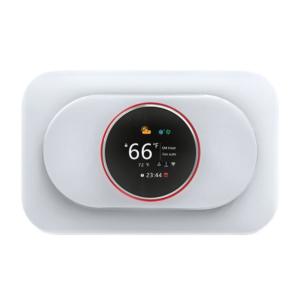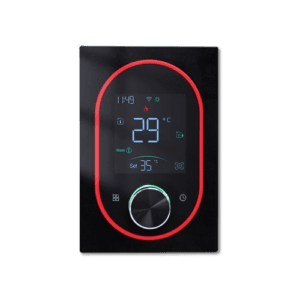
La calefacción invernal exige un termostato muy diferente a la refrigeración de verano. En climas fríos, un termostato incorrecto puede provocar calefacción desigual, facturas de energía elevadas o incluso tuberías congeladas cuando las temperaturas bajan durante la noche.
La clave no es solo elegir un termostato "inteligente", sino elegir uno que seaConstruido para tu sistema de calefacción específicoy funciona de forma fiable durante las condiciones invernales.
Esta guía desglosa elLos mejores termostatos inteligentes para calefacción invernalBasado en sistemas reales de calefacción para casa, así puedes tomar la decisión correcta antes de que llegue el frío.

¿Qué hace que un termostato inteligente esté listo para el invierno?
No todos los termostatos inteligentes están diseñados pensando en el invierno. Para un rendimiento en clima frío, un termostato debería ofrecer:
- Control preciso de la temperaturapara evitar ciclismo frecuente
- Compatibilidad con tu sistema de calefacción(voltaje de línea vs bajo voltaje)
- Horario nocturno establedurante largas horas de calefacción
- Acceso remotopara ajustar los ajustes durante oleadas de frío
- Apoyo para la prevención de congelacionesCuando estás lejos de casa
Un termostato que destaca en verano pero tiene dificultades en invierno puede convertirse rápidamente en una carga.
Identifica primero tu sistema de calefacción (paso crítico)
Antes de comparar marcas, necesitas identificarCómo se calienta tu casa. Este único paso elimina la mayoría de las compras de "termostatos equivocados".
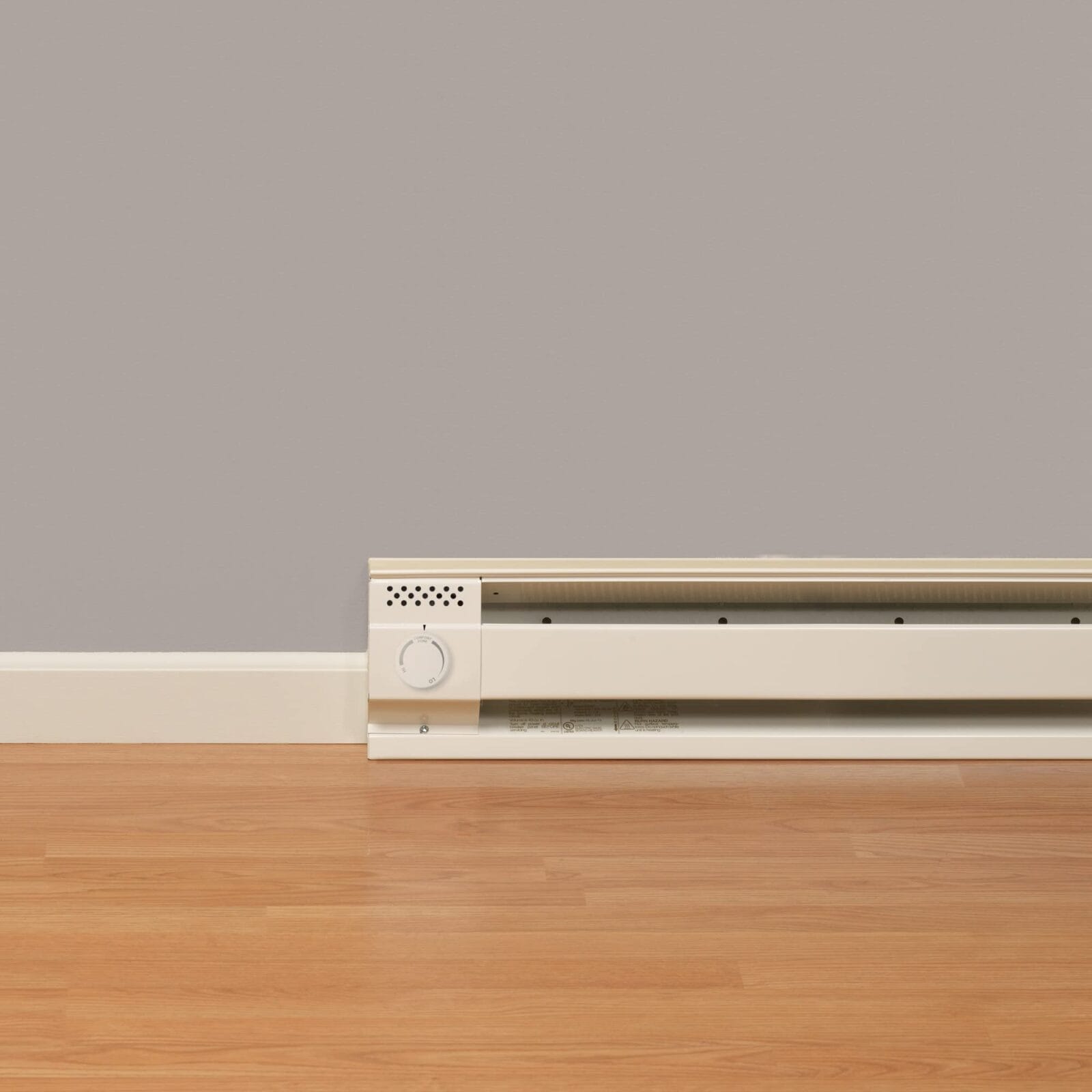
Calefacción eléctrica por rodapié (120V / 240V)
Comunes en:
- Apartamentos y pisos
- Viviendas antiguas en los estados del norte
- Viviendas con calefactores eléctricos montados en la pared
Requisito clave:
- Solo termostato inteligente de tensión de línea
⚠️ Termostatos populares de bajo voltaje como Nest o Ecobeeno funcionancon sistemas eléctricos de rodapié.
Sistemas de bomba de calor, caldera o sistemas centrales de climatización
Comunes en:
- Viviendas unifamiliares
- Construcciones más recientes
- Viviendas que usan conductos o manipuladores de aire
Requisito clave:
- Termostato de baja tensión con lógica de bomba de calor
- Control adecuado del calor auxiliar durante el frío
Los mejores termostatos inteligentes para calefacción eléctrica de zócalo
EcoNet-BH — Lo mejor para calefacción de rodapié en invierno
Las casas con radiadores eléctricos de rodapié necesitan termostatos diseñados específicamente paraCargas de calentamiento de alta tensión. Un termostato inteligente de tensión de línea garantiza una producción de calor estable sin dañar el cableado ni los calefactores.
Por qué funciona bien en invierno:
- Diseñado paraSistemas eléctricos de zócalo de 120V / 240V
- Mantiene un calentamiento constante durante noches largas y frías
- El control remoto ayuda a evitar que las tuberías se congelen al viajar
- Una programación sencilla evita un desperdicio innecesario de energía
Ideal para:
- Apartamentos y casas adosadas
- Casas antiguas con calefacción eléctrica
- Regiones de clima frío donde los rodapiés funcionan durante horas diarias

Mejores termostatos inteligentes para calefacción de bomba de calor y climatización
Los sistemas de bomba de calor se comportan de forma muy diferente en invierno que en las estaciones suaves. Un termostato debe gestionar cuidadosamente los ciclos de descongelación y el calor auxiliar para evitar picos repentinos de energía.
Termostatos inteligentes para sistemas de bomba de calor
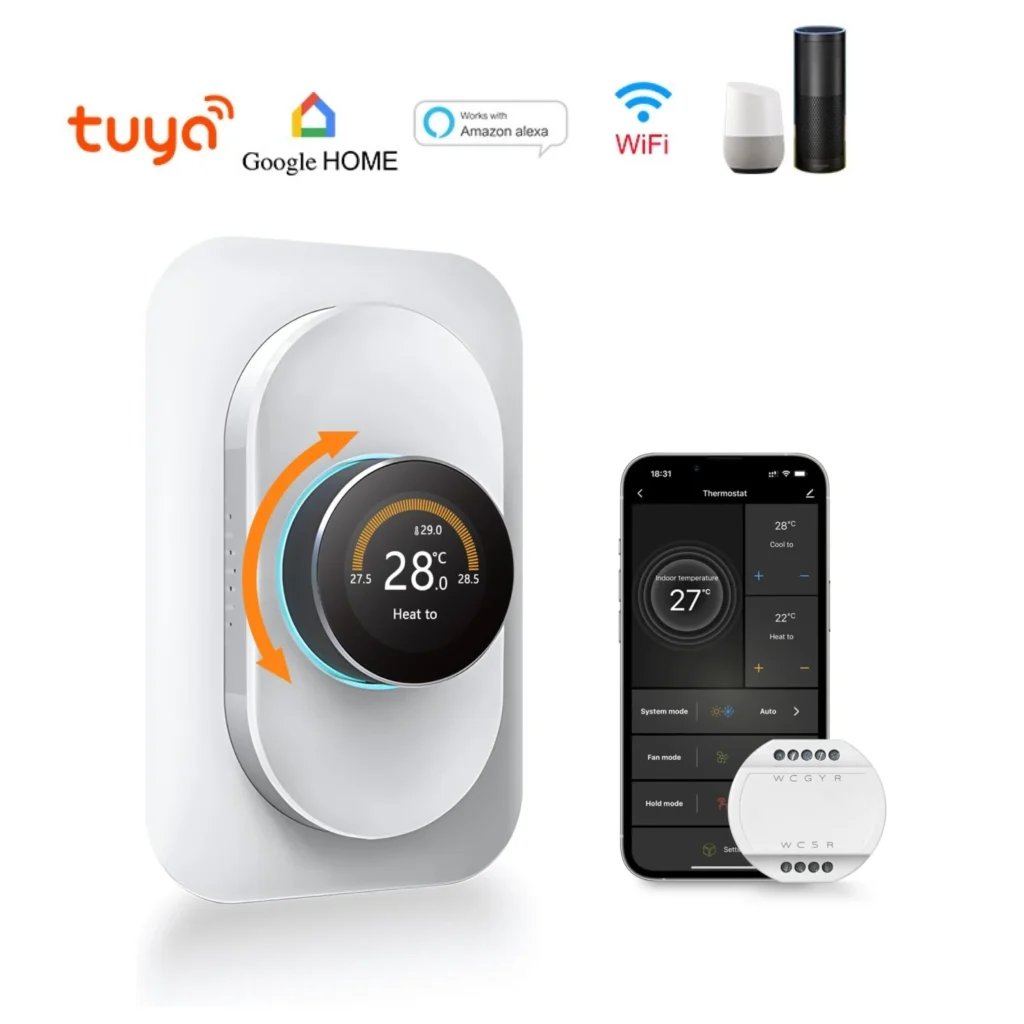
Marcas conocidas como Ecobee y Nest soportan bombas de calor, pero el rendimiento en invierno depende mucho de la configuración correcta y la compatibilidad.
Los termostatos diseñados específicamente para la lógica de bombas de calor ofrecen:
- Mejor control del calor auxiliar
- Transiciones de temperatura más suaves
- Reducción del desperdicio de energía durante las olas de frío
Opciones como laEcoNet-HPLa serie se centra en la eficiencia invernal y el control remoto sin añadir una complejidad innecesaria.
¿Qué termostato inteligente es el adecuado para ti este invierno?
Utiliza estas reglas rápidas para reducir tu elección:
- Calefacción eléctrica por rodapié→ Termostato inteligente de tensión de línea
- Bomba de calor o sistema HVAC→ Termostato inteligente de bajo voltaje con soporte para bomba de calor
- Viajes frecuentes en invierno→ Control remoto + funciones de prevención de congelamientos
- Facturas energéticas elevadas en invierno→ Programación inteligente y control estable de la temperatura
Si no tienes claro la compatibilidad del sistema o el cableado, entender cómo funcionan los diferentes termostatos con los sistemas de calefacción de invierno puede evitar errores costosos.
👉Para un desglose completo de sistemas de calefacción, tipos de cableado y compatibilidad con termostatos inteligentes, consulta nuestra guía completa:
Guía de calefacción de termostatos inteligentes (Sistemas de rodapié y bomba de calor)→
Consideraciones finales:
El mejor termostato inteligente para calefacción en invierno no se trata de la popularidad de la marca, sino de la popularidadAdaptar el termostato a tu sistema de calefacción y necesidades invernales.
Elegir correctamente significa:
- Mejor comodidad
- Facturas de energía más bajas
- Menos emergencias invernales
Y, lo más importante, un hogar que se mantenga cálido y protegido cuando bajan las temperaturas.
¿Cuál es el mejor termostato inteligente para calefacción en invierno?
El mejor termostato inteligente para calefacción en invierno depende de tu sistema de calefacción. Las viviendas con radiadores eléctricos de rodapié necesitan un termostato inteligente de voltaje de línea, mientras que los sistemas de bomba de calor o climatización requieren un termostato de baja tensión diseñado para el funcionamiento invernal.
¿Por qué mi casa parece fría incluso cuando el termostato está bien ajustado?
Esto suele ocurrir cuando el termostato no es compatible con el sistema de calefacción o se cicla con demasiada frecuencia en clima frío. Un termostato inteligente preparado para el invierno proporciona un control de temperatura más estable durante largos periodos de calefacción.
¿Puede un termostato inteligente ayudar a evitar tuberías congeladas en invierno?
Sí. Los termostatos inteligentes con control remoto y funciones de programación permiten a los propietarios mantener temperaturas mínimas cuando están fuera, reduciendo el riesgo de tuberías congeladas durante el frío extremo.
¿Son fiables los termostatos inteligentes durante el frío extremo?
Los termostatos inteligentes diseñados para calefacción invernal son fiables en climas fríos, siempre que coincidan con el tipo de sistema de calefacción y estén instalados correctamente. Los termostatos incompatibles son una causa común de problemas de calefacción en invierno.
¿Merecen la pena los termostatos inteligentes para calefacción en invierno?
Sí. En invierno, los termostatos inteligentes pueden reducir el desperdicio de energía, mejorar el confort y ayudar a gestionar los costes de calefacción manteniendo temperaturas estables y evitando sobrecalentamientos innecesarios.
¿Se pueden usar Nest o Ecobee con calefacción eléctrica por rodapié?
No. Nest y Ecobee son termostatos de bajo voltaje y no son compatibles con sistemas eléctricos de calefacción de rodapié de 120V o 240V.
¿Qué tipo de termostato inteligente se requiere para los calentadores eléctricos de rodapié?
Los radiadores eléctricos de zócalo requieren untermostato inteligente de voltaje de líneadiseñado específicamente para sistemas de calefacción de 120V o 240V.
¿Qué termostato inteligente funciona mejor con bombas de calor en invierno?
Un termostato inteligente de bajo voltaje diseñado para sistemas de bomba de calor es el que mejor funciona, especialmente uno que gestiona el calor auxiliar de forma eficiente durante el frío.
¿Cómo sé si mi casa usa tensión de línea o calefacción de baja tensión?
Las viviendas con radiadores eléctricos de zócalo suelen usar voltaje de línea, mientras que los sistemas de bomba de calor y climatización central usan baja tensión. Revisar el cableado o el equipo de calefacción de tu termostato actual puede confirmarlo.