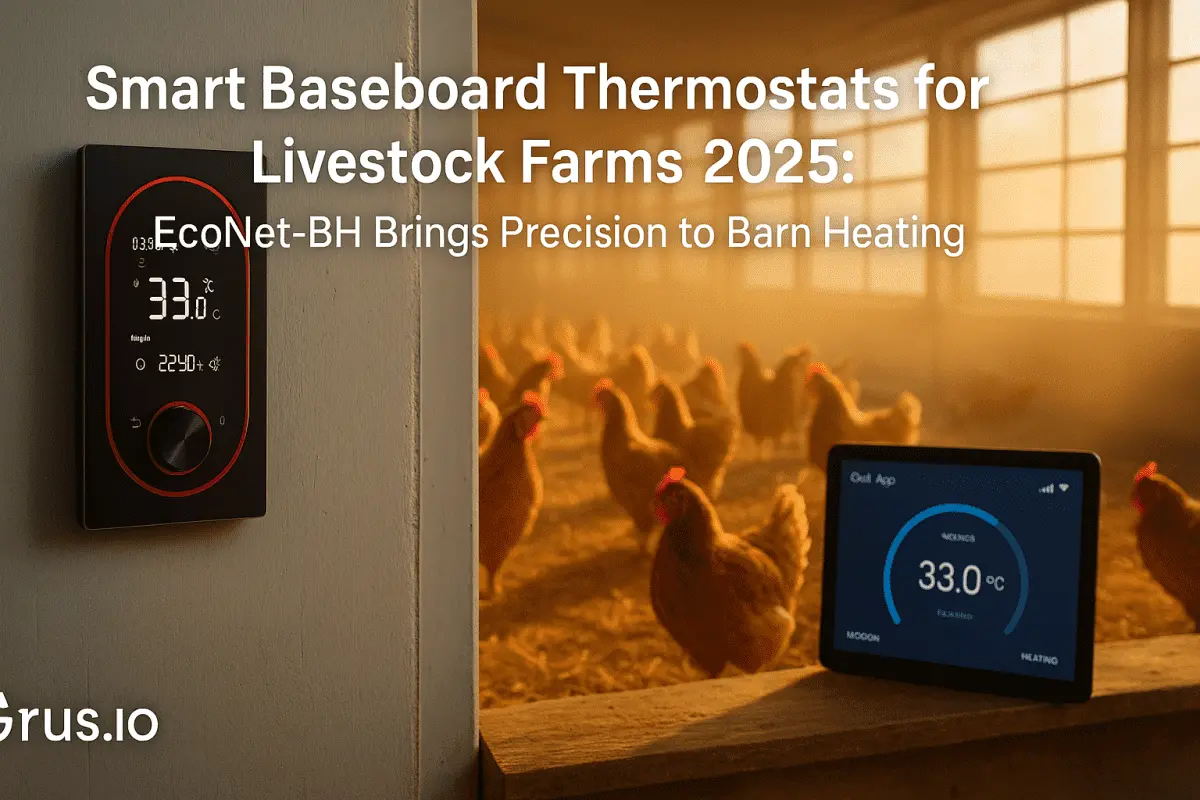
安装一个智能踢脚线恒温器,例如EcoNet-BHallows farmers to maintain optimal barn temperatures automatically, reducing energy costs and improving animal health all year round.
- Smart thermostats provide precise heating for poultry and swine barns, using digital sensors and automated control to balance comfort with efficiency.
- 它们最多可以减少电力消耗。25%稳定环境,并让农民通过 WiFi 远程监控他们的谷仓。
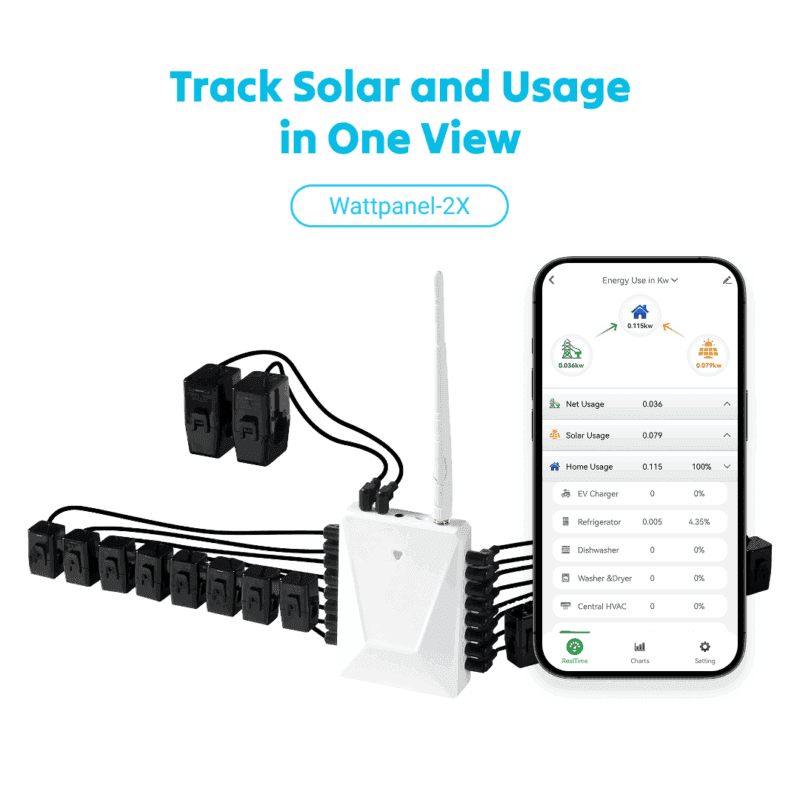
- 当与WattPanel-2X, energy data becomes visible, measurable, and actionable — turning every barn into a smart, data-driven zone.
现代畜牧场的能源现状
Across North America and Europe, livestock operations are facing rising energy costs and growing climate challenges.
一个面积为 2,000 平方英尺的家禽舍,如果采用踢脚线式或辐射式加热器,可能会消耗超过每月 12,000 千瓦时冬季期间。
Inconsistent thermostat performance often leads to over-heating or under-heating, which not only wastes energy but also stresses the animals.
鸡和猪对微温度变化尤其敏感:
- A下降 1 °C低于舒适水平会降低饲料转化效率。3%至5%.
- 过热会增加家禽的死亡率高达8%尤其是在孵化初期。
- Poor airflow and temperature imbalance may lead to condensation, respiratory issues, and ammonia buildup.
资料来源:明尼苏达大学推广部,2024 年。
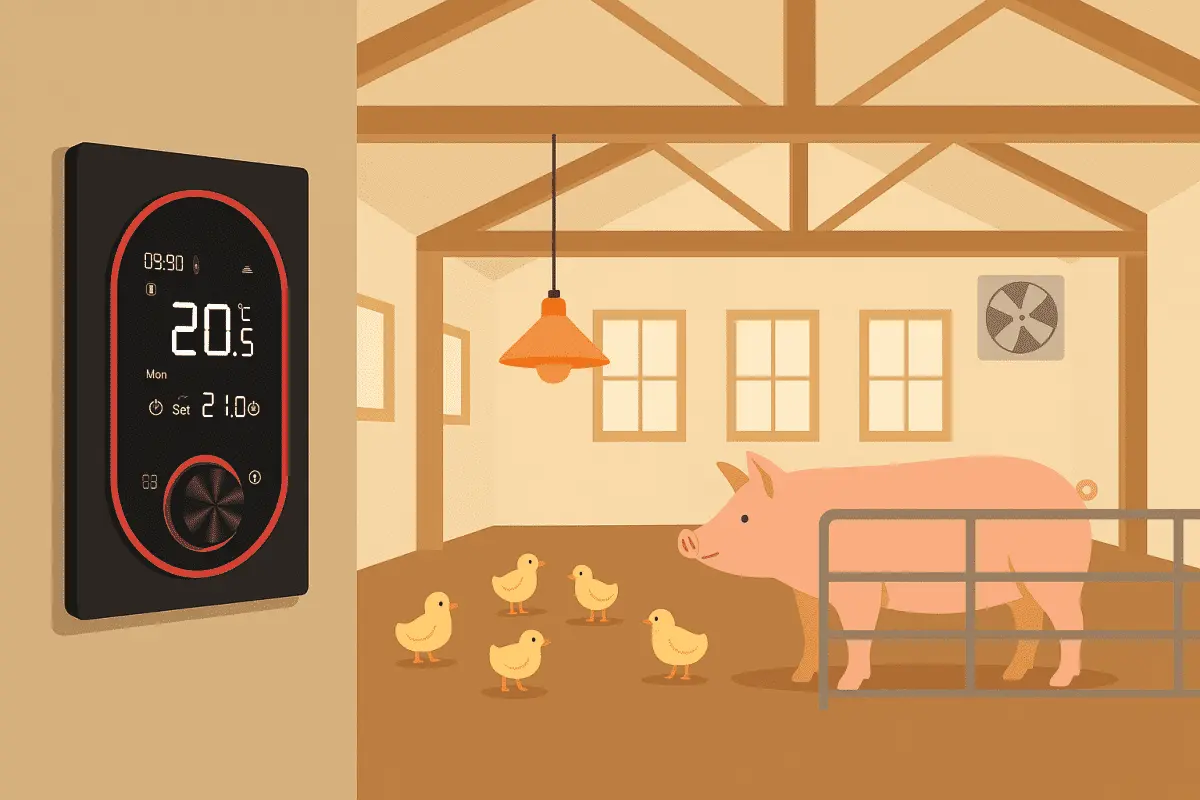
Traditional thermostats in barns rely on bimetallic sensors or mechanical relays that react slowly to changes in air temperature.
他们无法预测气流的影响,也无法纠正各区域间加热不均的问题。
This often forces farmers to set higher target temperatures as a safety margin — wasting energy and creating inconsistent growth conditions.
为什么智能踢脚线式温控器是新标准
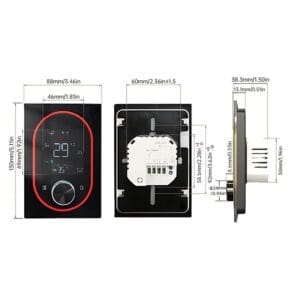
智能踢脚线式恒温器EcoNet-BH专为精密环境而设计,在这些环境中,稳定的热量意味着更高的生产效率。
该设备并非采用简单的开/关控制,而是使用脉冲宽度调制(PWM)提供短时、自适应的电流脉冲。
This keeps temperature oscillation within ± 0.3 °C, far tighter than analog thermostats that fluctuate by up to 2 °C.
每个单元每两秒钟测量一次空气温度,并学习其所在房间的热惯性。
That means it can “predict” how much heat is needed before the temperature drops too low — similar to how smart home thermostats optimize comfort in houses, but engineered for barn conditions.
The device is line-voltage compatible (120 V / 240 V), waterproof-sealed, and designed to operate under high humidity.
它可以控制两者电阻式踢脚线电暖器and红外加热板常见于现代畜舍中。
“When we switched to EcoNet-BH, we stopped playing the guessing game. The temperature graphs finally looked smooth,” says M. Delgado, a broiler producer in Iowa.
畜舍温度控制面临的挑战
在不同的牲畜活动区域保持舒适区是一项技术挑战。
让我们来看三个典型例子:
| 动物组 | 最佳范围(摄氏度) | 典型加热器负荷 | 供暖挑战 |
|---|---|---|---|
| 肉鸡雏鸡(1-14日龄) | 32 – 35 °C | 2-3千瓦/100平方英尺 | 通风循环后温度骤降 |
| 仔猪(1-4周龄) | 27 – 30 °C | 1.5–2 千瓦/笔 | 供暖不均匀,有冷角 |
| 奶牛犊饲养 | 10 – 18 °C | 4–5 千瓦/堵转 | 保持半开放式谷仓的温度 |
EcoNet-BH通过以下方式帮助解决所有这些问题:
- 自适应控制它能同时感知电流消耗和空气温度。
- 区域分组允许多个恒温器在连接的谷仓之间同步读数。
- 历史数据日志这有助于识别热量损失区域或故障加热器。
智能分区和能源优化
In large operations, different barns or rooms demand different temperature profiles — breeding, nursery, farrowing, and grow-out.
EcoNet-BH 支持多区域管理通过Grus 智能应用农民可以自行设定温度范围和时间表。
例如:
- 区域 1(“育雏 A”)可在早上 6 点至晚上 10 点之间设置为 34°C,夜间设置为 32°C。
- Zone 2 (“Grow-Out B”) runs at 29 °C day and night, with a 1 °C buffer for ventilation recovery.
- 为防止管道冻结,3 区(“存储区”)的温度限制在 18°C。
When outdoor temperature sensors show a cold front approaching, the system automatically pre-heats critical zones, preventing the thermal dip that usually happens at dawn.
这种程度的控制以前需要复杂的PLC——现在可以通过手机或平板电脑完成。
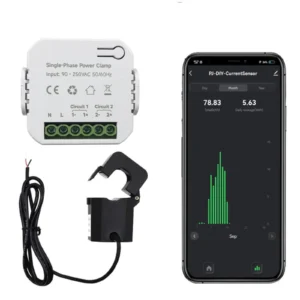
农民使用WattPanel-2X结合 EcoNet-BH 可以查看实时电路负载。
If a heater draws less power than expected, the system can flag possible relay or wiring issues before animals are affected.
graph TD
A[Outdoor Temperature Sensor] --> B[EcoNet-BH Smart Thermostat]
B --> C[Baseboard Heater Output]
B --> D[Grus App Dashboard]
D --> E[WattPanel-2X Energy Monitor]
E --> F[Farm Manager Adjustments & Reports]
量化能量增益
一项针对加拿大五个家禽养殖场的为期三个月的研究(2024 年)显示:
| 农场 | 尺寸 | 控制类型 | 能源消耗量(千瓦时/月) | 智能升级后 | 储蓄 | 平均温度稳定性 |
|---|---|---|---|---|---|---|
| A | 1500平方英尺 | 模拟 | 10,900 | 8,450 | 22.5% | ± 0.4 °C |
| B | 2000平方英尺 | 手动继电器 | 12,300 | 9,880 | 19.7% | ± 0.5 °C |
| C | 1800平方英尺 | 杂交种 | 11,200 | 8,750 | 21.9% | ± 0.3 °C |
The reduction in heating variation translated directly into better flock uniformity and feed conversion.
农场方面也反映,由于气流平衡,湿度水平有所降低。
来源:Grus 现场数据报告,2024 年。
案例研究:安大略省家禽农场
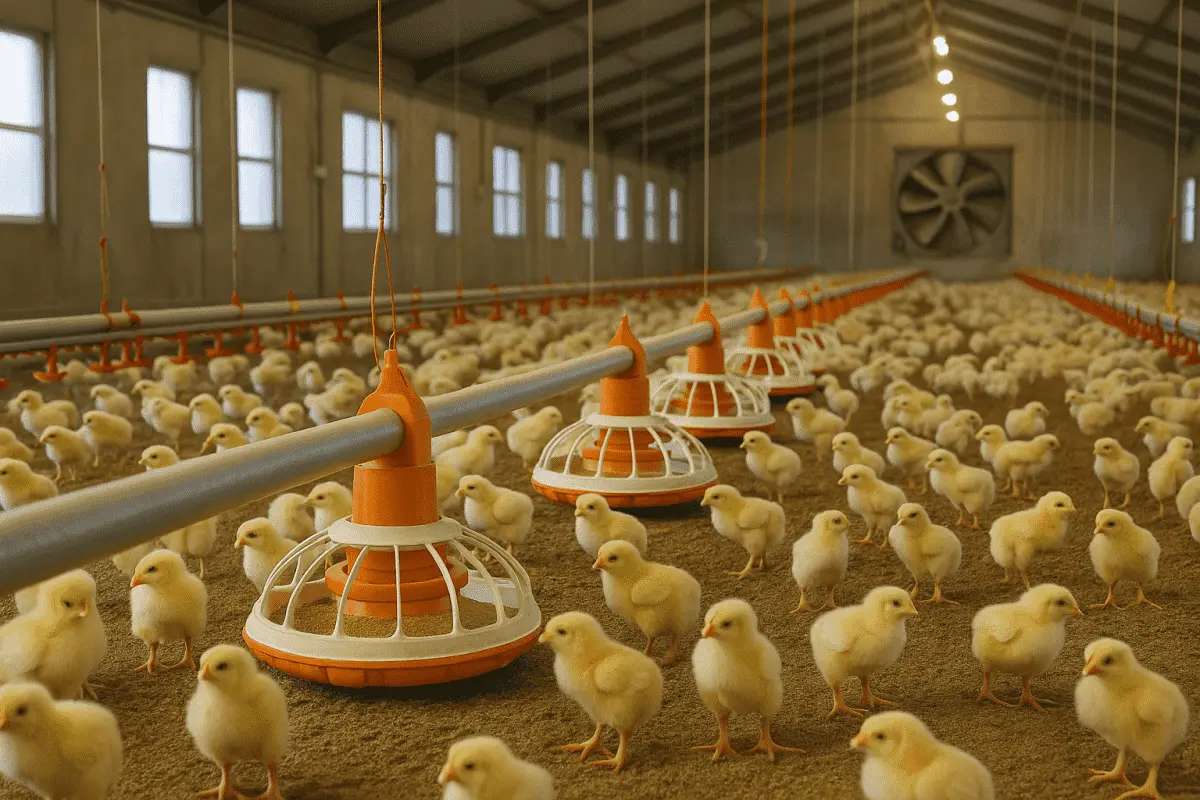
安大略省一家拥有8个谷仓和24个加热器的农场,其所有者安装了EcoNet-BH通过 WiFi 连接到中央控制面板的各个单元。
这一变化立即暴露了多年来一直未被注意到的效率低下问题:
- 由于恒温器安装位置不当,两台加热器的运行周期延长了 30%。
- 由于旧传感器滞后,谷仓末端部分过热 3°C。
- 每月总用电量从 31 兆瓦时下降到24.6兆瓦时六周内。
更重要的是,该农场实现了增长速度加快15%由于肉鸡分批饲养能保持稳定的热舒适度。
“We used to adjust thermostats by walking to each barn — now we do it from the truck. It’s made management more data-driven and less guesswork.” — J. McLaren, Ontario Poultry Owner
与农场自动化系统的集成
EcoNet-BH 与包括以下在内的主要自动化平台兼容家庭助手,Google Home, 和Grus 云 API.
通过自动化脚本,农民可以触发跨系统操作:
- 如果 CO₂ > 1,200 ppm → 打开通风风门 + 将加热器输出降低 10%。
- 如果电费(分时电价)飙升 → 将预热时间转移到用电低谷时段。
- 如果室外温度低于 -10 °C → 自动启用“防冻模式”。
这种灵活性将智能家居技术与精准农业联系起来——这是一个被称为……的关键趋势。“智能谷仓集成。”
实用安装指南
- 位置– 将恒温器安装在动物所在的高度(小鸡 1 米,猪 1.5 米)。
- 防潮保护– 使用密封导管和防水接线盒(IP65 等级)。
- 校准– 安装后,运行 24 小时稳定期以微调热响应。
- 应用程序设置– 将每个区域明确命名(例如“育雏区 1”、“母猪栏 2”),以便于管理。
- 数据审查– 每周检查Grus应用程序,查看电路异常或温度漂移情况。
安装通常每台设备耗时不到 20 分钟,无需中央控制中心。
如需了解完整的设置详情,请访问了解 EcoNet-BH 智能恒温器 →
常见问题
Q1. EcoNet-BH 能否应对牲畜棚舍的灰尘和潮湿环境?
A1.Yes. The enclosure uses moisture-resistant materials and an internal temperature-compensated sensor for accuracy.
Q2. 它是否适用于其他Grus系统?
A2.它与……无缝集成WattPanel-2X用于能量跟踪和AquaNet用于水安全监测。
Q3. 没有WiFi可以管理吗?
A3.即使离线,本地控制功能也能正常工作;连接恢复后,设置会自动同步。
Learn how baseboard, heat pump, and HVAC smart thermostats work — plus setup tips and energy-saving strategies.
阅读智能恒温器供暖指南→畜牧业供暖的未来始于智能控制
农业部门正在快速向数据驱动的环境控制.
Energy is no longer just an expense — it’s a variable that can be optimized, measured, and automated.
智能恒温器EcoNet-BH以及诸如监控系统之类的WattPanel-2X让农民能够全面了解以前隐藏在模拟刻度盘后面的信息。
By merging precision heating with real-time analytics, farmers can achieve higher productivity, lower emissions, and better animal welfare — all without sacrificing simplicity.
AtGrus.io任务很明确:
to empower farmers with tools that transform barns into intelligent, responsive environments where comfort, sustainability, and efficiency work together.
From poultry houses in Ontario to pig nurseries in Iowa, the future of livestock heating has already begun — and it’s smart, connected, and powered by Grus.