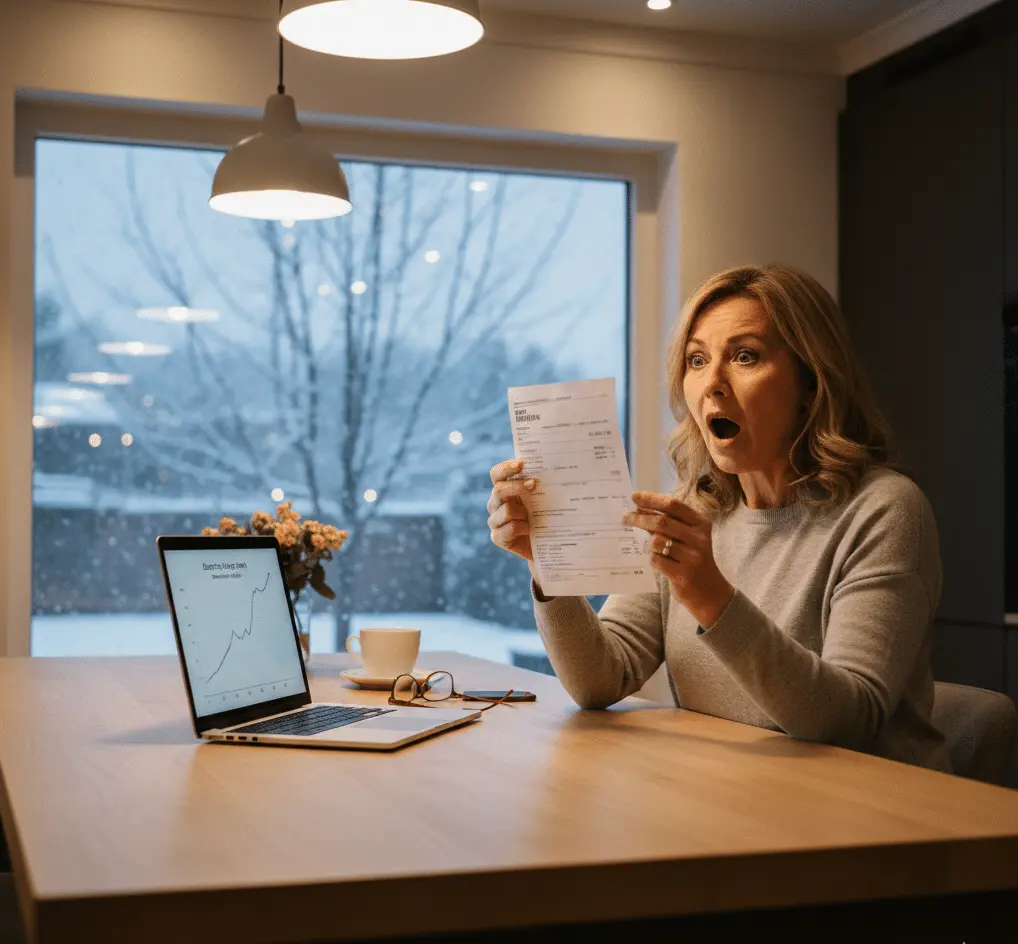
Å åpne strømregningen og se den dobles er et sjokk.
Hvis du tenker,"Strømregningen min doblet seg på én måned og ingenting endret seg,"Du er ikke alene. Dette er en av de vanligste klagene på huseiere – og i mange tilfeller er årsaken ikke åpenbar.
Før du antar at strømselskapet har gjort en feil, eller at noe hemmelig "stjeler" strøm, må du ha en strukturert måte å diagnostisere problemet på.
Denne guiden tar deg gjennom:
- Hvordan raskt verifisere om lovforslaget er feil
- Topp 80/20-årsakene ligger bak plutselige topper
- En praktisk sjekkliste for å isolere gjerningspersonen
- Hvorfor gjetting ikke fungerer — og hvordan overvåking gjør det
Rask triage: Er regningen feil, eller er bruken faktisk høyere?
Før du ser på hvitevarer, start med det grunnleggende. Mange doble regninger er reelle — men noen er fakturerings- eller prisproblemer.
1. Sammenlign kWh, ikke bare dollarbeløp
Se på:
- Total kWh denne måneden
- Total kWh forrige måned
- Samme måned i fjor
Hvis kWh doblet seg, økte forbruket.
Hvis kWh forble likt, men kostnaden økte, er problemet sannsynligvis prisendringer.
2. Sjekk typen måleravlesning
På regningen din, bekreft om det står:
- "Faktisk lesing"
- "Estimert lesning"
Estimerte målinger kan føre til plutselige korrigeringer måneden etter.
3. Endringer i gjennomgangsrate
Strøm justeres:
- Sesongpriser (sommer-/vinterpriser)
- Tidsbruk (TOU) satser
- Nivådelte bruksterskler
Å krysse inn i et høyere nivå alene kan øke regningen din betydelig.
Hvis alt ser ut som det skal og kWh virkelig hoppet, vet du nå at problemet er reelt forbruk.
Toppsaker (80/20-listen)
I de fleste tilfeller skyldes en doblet strømregning en av noen få belastninger med høy belastning.
1. Nytt høyytelsesutstyr
Vanlige syndere:
- Elektrisk varmeovn eller panelovner
- Varmepumper som går kontinuerlig
- Elektriske varmtvannsberedere
- EV-ladere
- Elektriske tørketromler eller ovner
Selv én ny 240V belastning kan legge til hundrevis av kWh hver måned.
2. Vær og årstidsendringer
Vinter:
- Elektrisk oppvarming kan doble forbruket.
- Varmepumper kan gå inn i hjelpemotstandsoppvarming.
Sommer:
- AC-systemer som kjører lengre sykluser.
Sjekk lokale temperaturforskjeller sammenlignet med forrige måned.
3. Endringer i prisplanen
Hvis du nylig har byttet til TOU (time-of-use) pris:
- Kostnader for natt versus rushtid kan variere dramatisk.
- Å lade en elbil i rushtiden kan øke kostnaden.
4. Utstyrsfeil
Mindre åpenbare, men alvorlige problemer inkluderer:
- Varmtvannsberederen sitter fast i konstant oppvarmingsmodus
- HVAC hjelpevarme alltid på
- Brønnpumpe eller sumppumpe som går kontinuerlig
- Defekt kjøleskapskompressor
- Lofts- eller krypkjellervifte festet på
Disse feilene går ofte ubemerket hen.
En trinnvis sjekkliste for å finne synderen
Å gjette er ineffektivt. Bruk en strukturert tilnærming.
Trinn 1: Reverse-engineer nylige endringer
Spør:
- Hva har endret seg de siste 30 dagene?
- Nytt apparat?
- Gjester som overnatter?
- Termostatjustering?
- Ladefrekvensen for elbil økt?
Dokumenter alle mulige endringer før du går videre.
Trinn 2: Observer tidspunkt-på-dagen-mønstre
Sjekk dagens forbruksdata for nettselskapet ditt (hvis tilgjengelig).
Se etter:
- Nattlige pigger
- Topper midt på dagen
- Konstant, flat høy bruk
Hvis forbruket forblir høyt over natten, mistenk:
- Varmtvannsbereder
- HVAC-hjelpevarme
- Pumper
Hvis det oppstår topper i bestemte vinduer, mistenk planlagte lastinger.
Trinn 3: Kretsnivåisolasjon (kun observasjon)
Uten å utføre elektrisk arbeid:
- Slå av mistenkte sikringer midlertidig.
- Observer oppførselen på hovedmåleren din.
- Følg daglige endringer.
Viktig: Dette er kun for observasjon og opptak. Ikke utfør elektriske modifikasjoner med mindre du er kvalifisert.
Å manuelt slå på sikringer gjentatte ganger er ikke bærekraftig — men det hjelper å begrense mistenkte.
Trinn 4: Når du ikke klarer å sette fingeren på det — Slutt å gjette
Hvis du etter flere dagers observasjon fortsatt ikke vet:
Du trenger data.
Ikke gjennomsnitt.
Ikke gjetninger.
Data på kretsnivå.
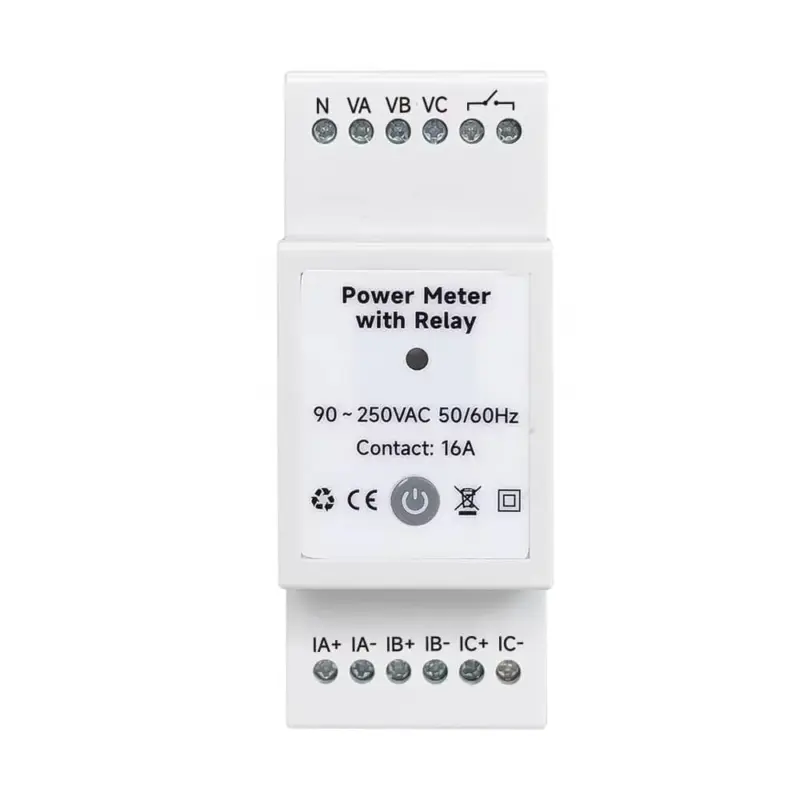
Det er her et energiovervåkingssystem i hjemmet blir essensielt.
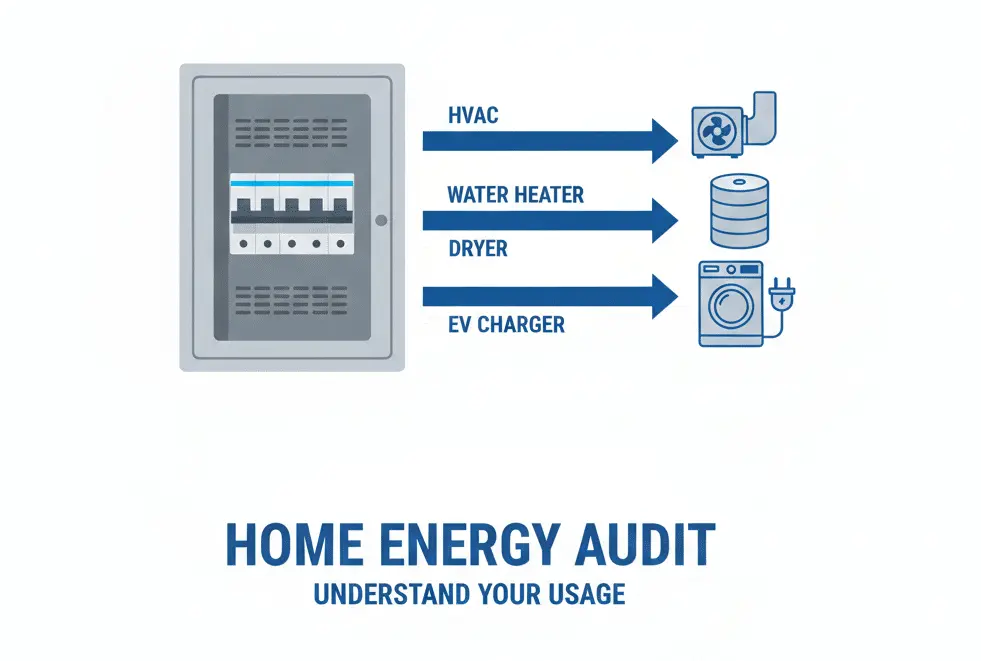
Hvordan energimåling hjelper (uten å gjette)
Et energiovervåkingssystem lar deg se nøyaktig hvor strømmen går.
I stedet for «total husbruk» kan du spore individuelle kurser.
Overvåking av hele hjemmet vs flerkrets
Det finnes to hovedtilnærminger:
- Overvåking av hele hjemmet (delt fase)
- Flerkretsovervåking
For boligsystemer med delt fase, vurder:
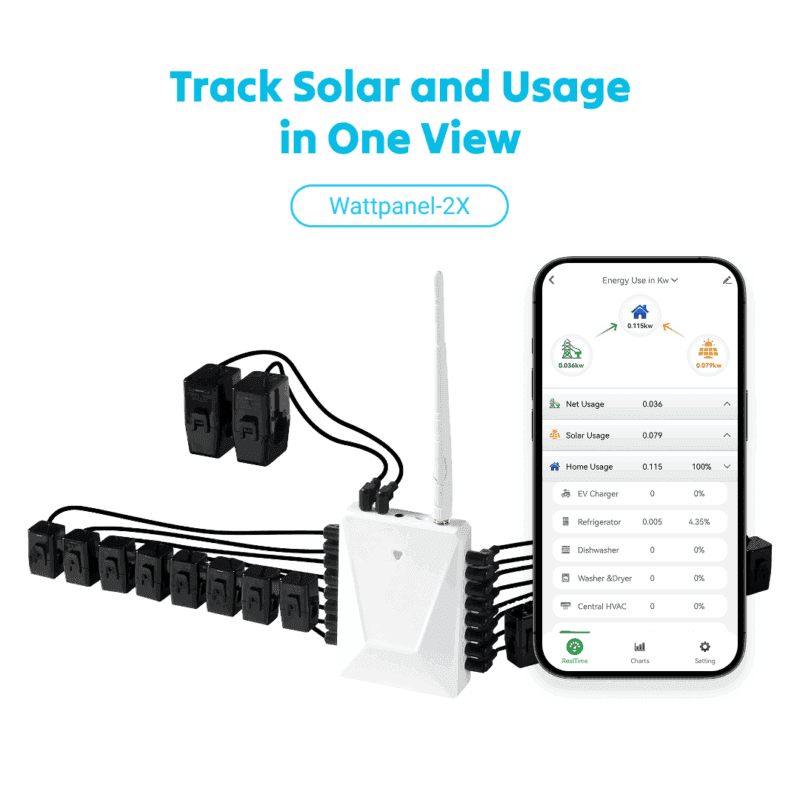
Split-fase energiovervåking hjemme (se WattPanel-2X)
Dette lar deg overvåke 120/240V-forbruket i hele hjemmet ditt.
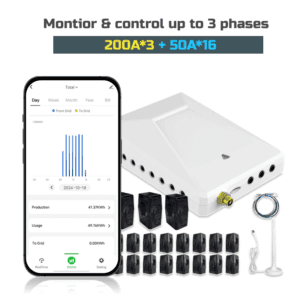
Hvis du trenger å isolere flere kurser individuelt, som HVAC, varmtvannsbereder, tørketrommel og elbillader, kan du trenge:
Flerkrets energiovervåking (se WattPanel-3X)
Dette gjør det mulig å spore flere sikringer samtidig.
Hvilke data får du faktisk
Med kretsovervåking kan du se:
- Sanntids strømforbruk
- Daglig og månedlig kWh per krets
- Toppetterspørselstider
- Historiske trender
I stedet for å spørre «hvorfor doblet strømregningen min», vil du se:
- Hvilken sikring bruker mest
- Hvilken last kjører over natten
- Hvilket system topper i rushtiden
Å ta beslutninger med data
Når du har identifisert den største energiforbrukeren:
- Reparere defekt utstyr
- Juster termostatstrategien
- Endre ladeplan for elbiler
- Bytt ut ineffektive apparater
Energieffektivitet blir målbar — ikke spekulativ.
Hva bør du følge med på først (høypåvirkningskretser)
Hvis regningen din doblet seg, start med de mest belastede kretsene.
HVAC / varmepumpe / gulvlistvarmere
Varmesystemer er den vanligste årsaken til vintertopper.
Sjekk for:
- Aktivering av hjelpevarme
- Termostatprogrammeringsfeil
- Konstant sykling
Varmtvannsbereder
En elektrisk varmtvannsbereder som går kontinuerlig kan doble bruken lydløst.
Vanlig feil:
- Defekt termostat
- Sedimentoppbygging
- Lekkende tank utløser konstant oppvarming
Tørketrommel / ovn / elbillader (240V belastning)
Disse 240V-apparatene trekker stor strøm på kort tid.
Hvis forbruksøkninger korrelerer med:
- Vaskedager
- Kokemønstre
- Ladeøkter for elbiler
Du har funnet din sannsynlige bidragsyter.
FAQ
Kan et defekt apparat doble regningen?
Ja. En defekt elektrisk varmtvannsbereder eller ekstra varmestripe kan gå kontinuerlig og legge til hundrevis av kWh per måned.
Er det normalt at regningene dobles om vinteren?
Hvis du bruker elektrisk oppvarming, ja — spesielt under ekstrem kulde. Likevel krever dobling fortsatt verifisering.
Viser smartmålere bruk på apparatnivå?
Nei. Strømnettets smartmålere viser kun totalt forbruk. De fordeler ikke bruken per apparat eller krets.
For å se kretsnivådata trenger du et dedikert energiovervåkingssystem.
Siste steg: Slutt å gjette. Mål det.
Hvis strømregningen din doblet seg på én måned, er det virkelige spørsmålet:
Kommer du til å fortsette å gjette neste måned?
Med overvåking på kretsnivå kan du identifisere den eksakte kilden, prioritere løsninger og forhindre fremtidige overraskelser.
Utforsk tilgjengelige alternativer her:
→Se alternativer for energiovervåking
Du kan også gjennomgå bredere læringsressurser:
→Veiledninger for energiovervåking