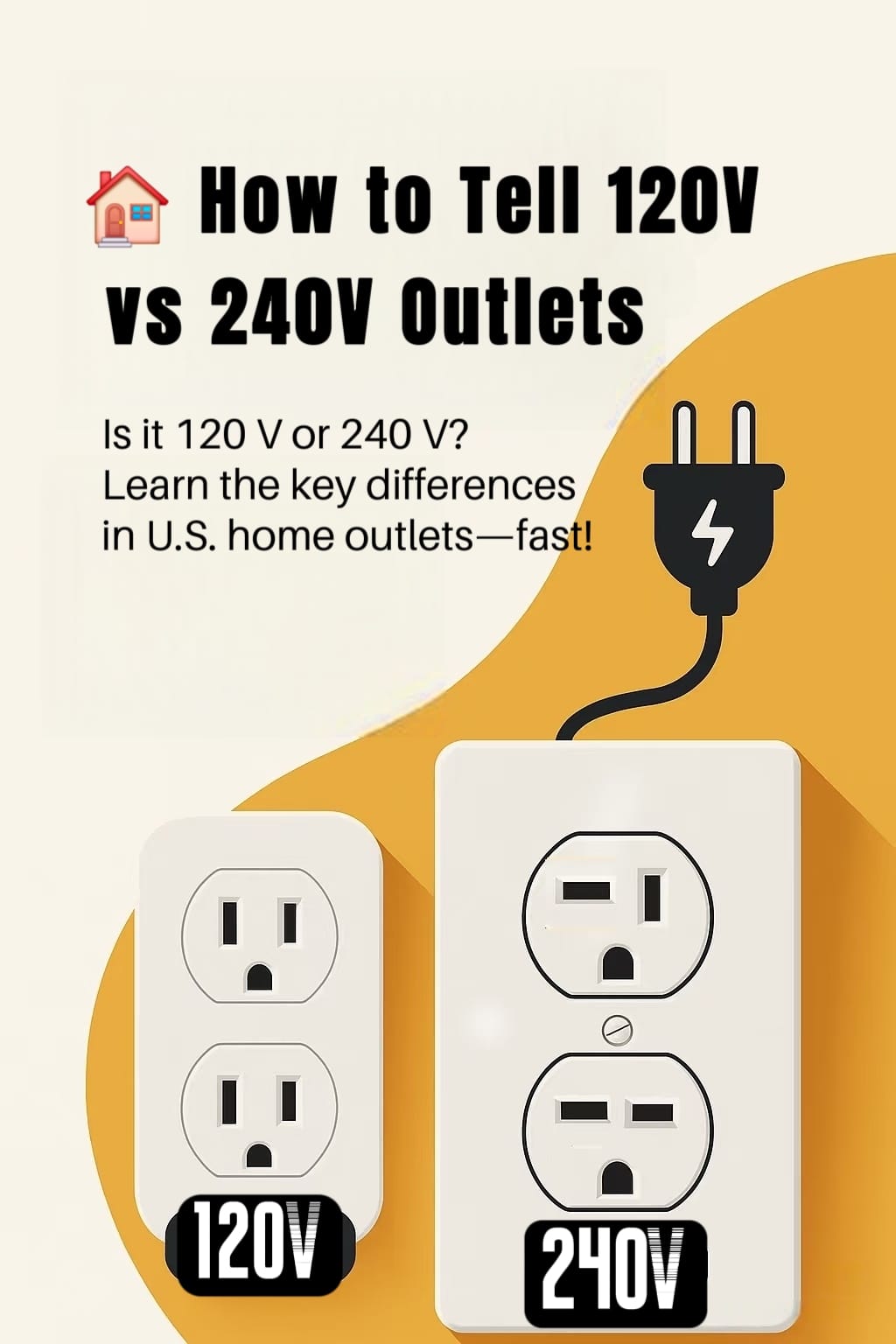
In U.S. homes, most outlets provide120 volt, while high-power appliances use240 volt.
The fastest way to tell the difference is to checkthe outlet shape, the appliance plug, or the breaker panel.
Quick ways to identify outlet voltage
| Controllo | 120V Outlet | 240V Outlet |
|---|---|---|
| Outlet shape | Two vertical slots + ground | Larger outlet with different slot patterns |
| Plug type | Thin two-prong or three-prong plug | Thick 3- or 4-prong plug |
| Breaker | Interruttore unipolare | Interruttore bipolare |
| Typical use | Lamps, TVs, kitchen appliances | Dryers, ovens, EV chargers |
Most homes have dozens of 120V outlets but only a few 240V outlets for heavy-duty equipment.
The sections below explain how to confirm the voltage safely before installing an appliance.
Modi rapidi per sapere se una presa è a 120 V o 240 V
The easiest way to identify outlet voltage is bylooking at the outlet design and the appliance plug.
Here are the four most reliable checks homeowners use.
1. Osserva la forma della presa
A standardpresa da 120 Vis the familiar wall outlet found throughout bedrooms, living rooms, and kitchens.
It usually has:
• two vertical slots
• one round grounding hole

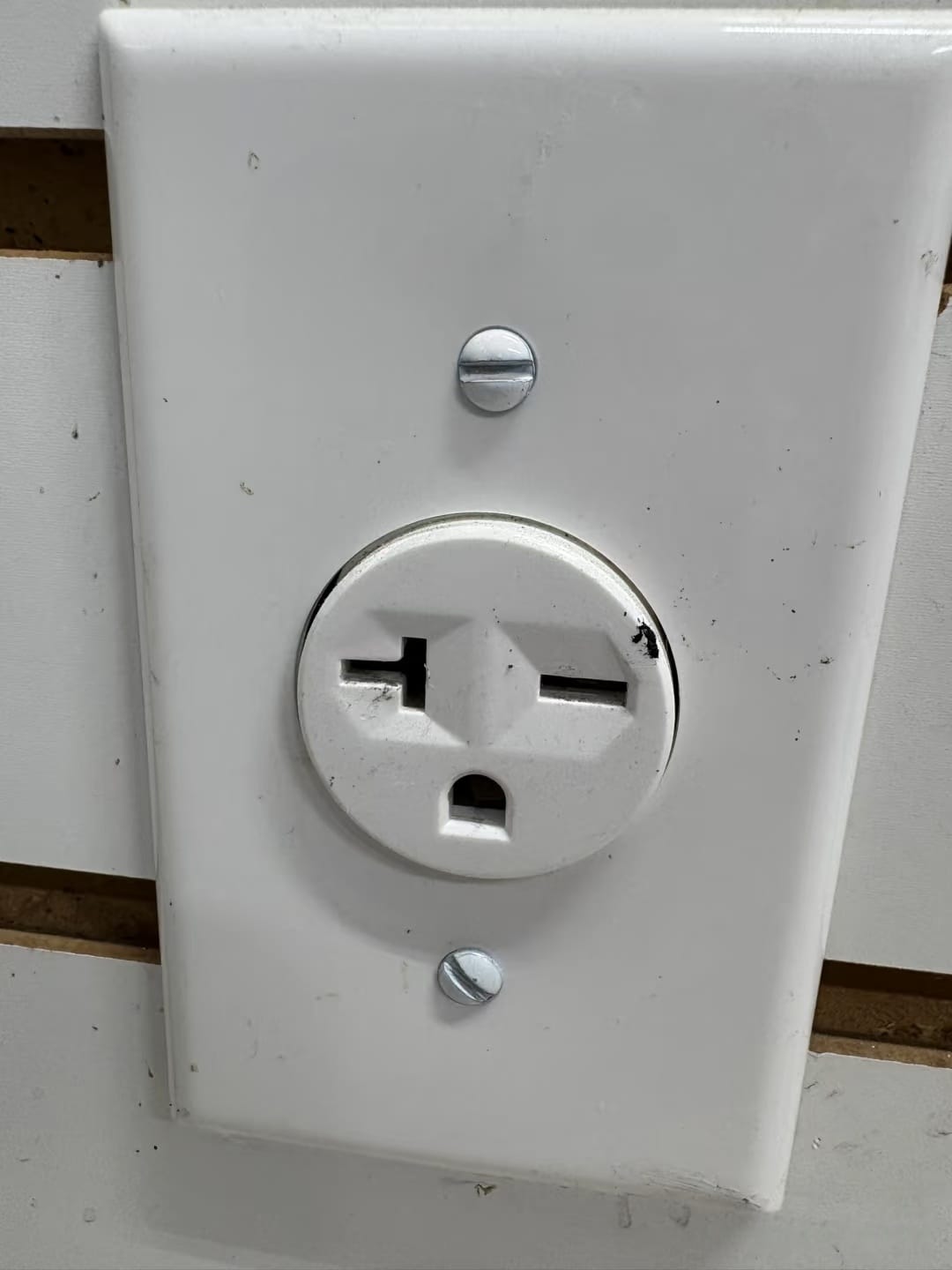
Apresa da 240 Vis usually larger and shaped differently.
Depending on the appliance, it may have:
• aT-shaped slot
•L-shaped openings
•three or four prongs
These outlets are commonly found in laundry rooms, garages, kitchens, or near large appliances.
2. Check the Appliance Plug
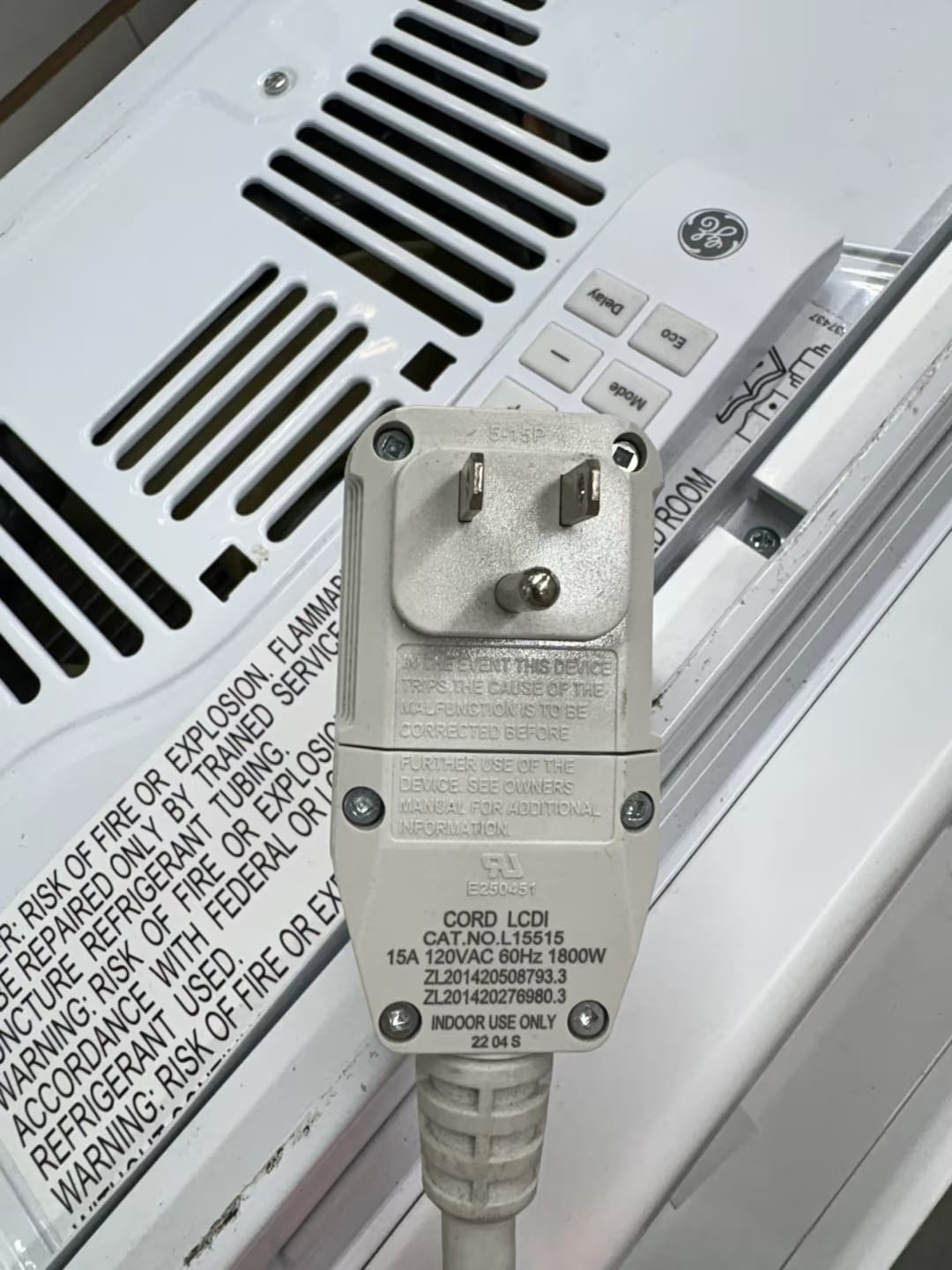
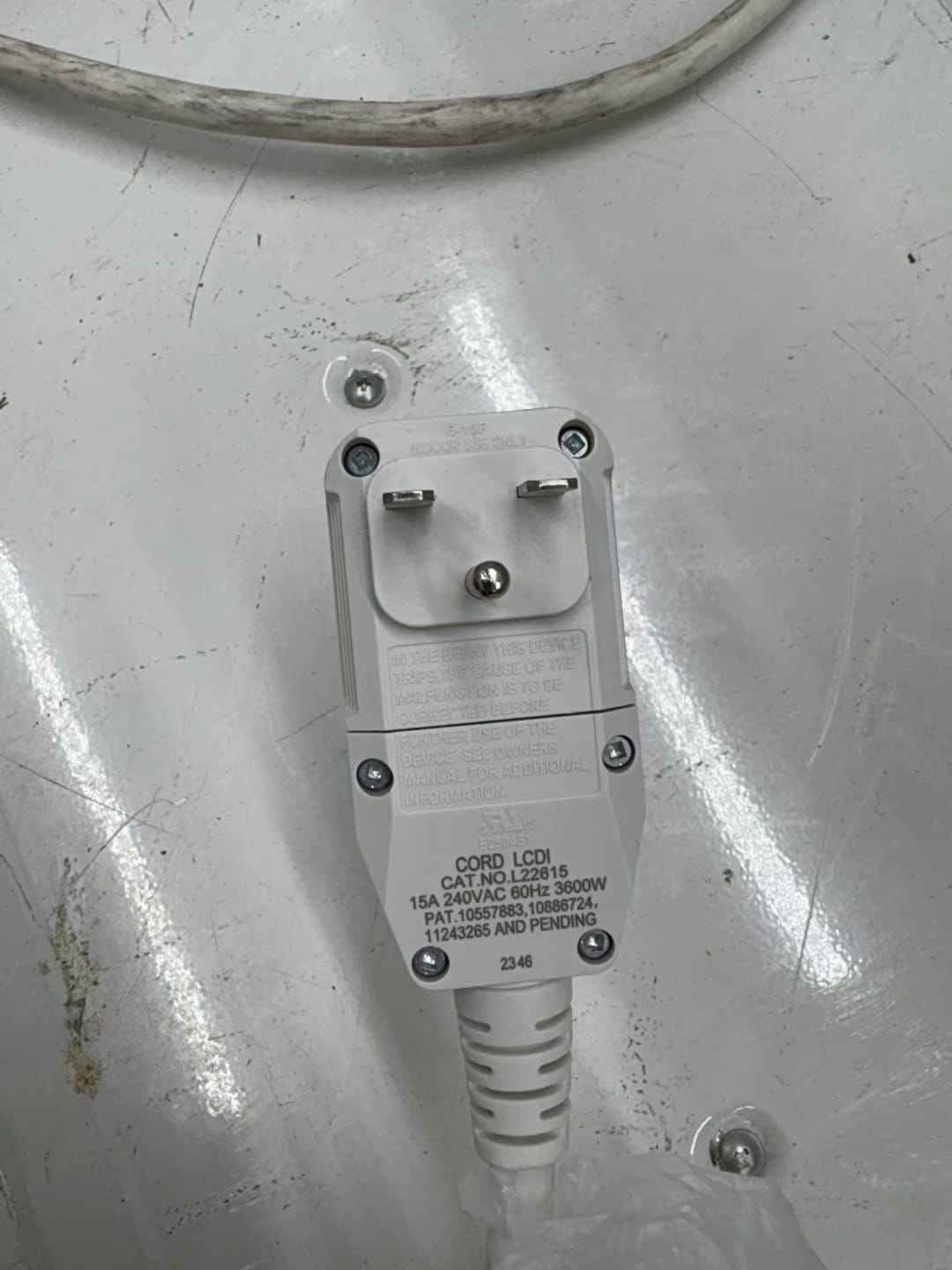
Another quick clue is the plug attached to the appliance.
Small household devices like lamps, TVs, or coffee makers usethin plugs designed for 120V outlets.
High-power appliances such as dryers, ranges, and EV chargers usethicker plugs with three or four prongs.
These plugs are intentionally designed so theycannot fit into a standard 120V outlet, preventing dangerous voltage mismatches.
3. Check the Breaker Panel
If you're still unsure, the breaker panel provides another useful clue.
•Single-pole breaker → 120V circuit
•Double-pole breaker → 240V circuit
Double-pole breakers connect to both hot wires in the home’s split-phase system, allowing the circuit to deliver 240 volts.
These breakers are commonly labeled for appliances like dryers, ranges, or air conditioners.
Safety note:
You can open the panel door and look, but donot remove panel covers or touch wiringunless you are qualified.
4. Test with a Voltage Tester or Multimeter
For a definitive answer, electricians use amultimeter or voltage tester.
A voltage reading of:
•around 120 volts → standard outlet
•around 240 volts → high-voltage outlet
Homeowners who are not comfortable using electrical testers should ask a licensed electrician to confirm the voltage.
Nozioni di base: 120 V vs. 240 V nelle case degli Stati Uniti
Before checking outlet shapes or labels, it helps to understandwhy both voltages exist.
Most U.S. homes use asplit-phase 120/240V electrical system.
That means your house receives two “hot” wires and one neutral from the utility.
Depending on how a circuit is wired, it can deliver either 120 volts or 240 volts.
120V Circuits
- Use one hot wire and one neutral
- Supply standard wall outlets
- Power everyday devices and small appliances
240V Circuits
- Use both hot wires together
- Deliver higher power
- Serve heavy-duty equipment
Quick reference:
| Voltaggio | Elettrodomestici tipici |
|---|---|
| 120 V | Lampade, TV, computer portatili, forni a microonde, macchine per il caffè |
| 240 V | Asciugatrici elettriche, forni, scaldabagni, aria condizionata centralizzata, caricabatterie per veicoli elettrici |
Un punto comune di confusione è la differenza traprese da 110 V e 120 V. In practice, they’re the same thing. People often use the terms interchangeably, but modern household wiring in the U.S. is standardized at 120V. When you see an appliance label that says “110V,” it’s simply designed to work with today’s 120V supply.
Quindi, pensatela in questo modo:
- 120V = vita quotidiana
- 240 V = potenza elevata
Understanding this split is the foundation for recognizing which outlets you’re dealing with in your own home.
Quando vedrai in genere le prese da 240 V
Se cammini in una tipica casa americana, vedrai dozzine di prese da 120 V, ma solo pocheprese da 240 V. That’s because they’re reserved for appliances that need a lot more power than a standard plug can provide.
Ecco i luoghi più comuni in cui li incontrerai:
- Lavanderie– Le asciugatrici elettriche necessitano quasi sempre di 240 V. Se ti stai chiedendo,“La mia asciugatrice ha bisogno di 240 V?”la risposta è probabilmente sì, a meno che non si tratti di un modello compatto o alimentato a benzina.
- Cucine– I forni di grandi dimensioni, i piani cottura e alcuni forni a microonde da incasso necessitano di 240 V per gestire gli elementi riscaldanti.
- Garage– I caricabatterie per veicoli elettrici stanno diventando sempre più diffusi e quasi tutti i caricabatterie di livello 2 richiedono un circuito da 240 V.
- Aree esterne/di servizio– I compressori dell'aria condizionata centralizzata, le pompe di calore e le pompe di pozzo funzionano in genere a 240 V.
Consiglio: guarda il pannello degli interruttori
If you want further confirmation, your breaker panel can provide clues:
- Interruttore unipolare→ 120V circuit
- Interruttore bipolare→ 240V circuit
Double-pole breakers connect to both hot wires in the split-phase system and are commonly labeled for appliances like dryers, ranges, or A/C units.
Safety reminder:
It’s okay to open the panel door and look—but do not remove covers or touch wiring unless you’re qualified.
When in doubt, take a photo and consult a licensed electrician.
È possibile convertire una presa da 120 V in una da 240 V?
I proprietari di casa spesso si chiedono:puoi convertire 120V in 240Vif you don’t already have the right outlet? The short answer is yes—but it’s not as simple as swapping out the receptacle.
Perché non è un lavoro fai da te
Un circuito da 240 V richiede:
- Due fili caldiinvece di uno
- Ainterruttore bipolarenel tuo pannello
- Diametro del filo corretto per gestire il carico aumentato
That means converting an outlet involves rewiring from the breaker panel and ensuring everything meets code. Attempting this on your own without proper training can result in fire hazards, code violations, or damaged appliances.
Costi tipici
Thecosto per installare una presa da 240 Vvaries depending on how far the outlet is from the electrical panel, whether your panel has room for another breaker, and whether permits are required. On average, homeowners spend:
- $250–$400per una semplice installazione vicino al pannello
- $500–$1,000+se è necessario installare nuovi cavi in più stanze o in un garage separato
If you’re planning for a future EV charger, heat pump, or large appliance upgrade, it’s wise to install the 240V outlet sooner rather than later.
Migliori pratiche
Assumi sempre unelettricista autorizzato. Not only will the work be safer, but it also ensures your installation passes inspection and complies with theCodice elettrico nazionale (NEC).
Why Confirming Voltage Matters Before Installation
Knowing whether an outlet is 120V or 240V isn’t just a technical detail.
It directly affects:
- Appliance compatibility
- Installation safety
- Upgrade planning (EV chargers, heat pumps, electric heating)
- Whether professional work is required
Many installation problems happennot because the appliance is faulty—but because the electrical setup was misunderstood.
Not Sure What Your Setup Supports?
If you’re planning to install or upgrade high-power equipment and aren’t fully confident in your home’s electrical capacity, the next step isn’t buying hardware—it’s understanding your system as a whole.
👉Learn how homeowners plan electrical capacity and appliance upgrades safely:
→ Home Electrical & Energy Planning Guide
Conclusion: Quick Takeaways
120V outlets power everyday devices such as lamps, TVs, and kitchen appliances.
240V outlets are designed for heavy-duty equipment like electric dryers, ovens, EV chargers, and large HVAC systems.
You can usually identify the voltage by checking:
• the outlet shape
• the appliance plug
• the breaker panel
If you're unsure, using a voltage tester or consulting a licensed electrician is the safest way to confirm the circuit.
Taking a few minutes to verify outlet voltage can prevent appliance damage and installation mistakes.
FAQ
Una presa standard può essere sia da 120 V che da 240 V?
No. They are wired differently and designed with distinct outlet shapes to prevent accidents. A receptacle is always one or the other.
È sicuro effettuare test con un multimetro?
Sì, ma solo se hai esperienza. Un sistema senza contattotester di tensione per prese domesticheè più sicuro per i principianti. In caso di dubbio, affidatevi a un elettricista.
Le prese intelligenti indicano la tensione?
Most smart plugs don’t measure voltage directly. They can show energy usage for 120V devices, but for full-circuit monitoring—includingelettrodomestici da 240 V—avrai bisogno di un monitor intelligente dell'energia.
Cosa succede se si collega la presa da 120 V a quella da 240 V?
Può distruggere il dispositivo all'istante. Ecco perchéSicurezza presa 120V 240Vè molto importante: le spine e le prese degli elettrodomestici sono progettate appositamente per non adattarsi l'una all'altra.
La mia asciugatrice ha bisogno di 240 V?
Most full-size electric dryers in the U.S. do require 240V. Compact dryers and gas dryers may only use 120V, so always check the label before buying or installing.