
Si notas un fuerteHuevo podrido o olor a azufre dentro de tu casa, esto no es algo que deba ignorar.
En entornos residenciales, este tipo de olora menudo apunta a una fuga de gas natural, que se considera unSituación de seguridad de alto riesgo. Aunque el olor sea tenue, intermitente o parezca desaparecer, merece atención inmediata.
Este artículo está escrito para ayudarteJuzga rápidamente si la situación puede ser peligrosay entiendoqué hacer ahora mismo, sin pánico ni conjeturas.
Si no tienes claro cómo responder de forma segura o quieres una lista más amplia de diferentes olores relacionados con el gas, puedes seguir nuestraGuía de seguridad contra el olor a gasPara acciones paso a paso y conciencia sobre riesgos.

Por qué un olor a huevo podrido en interiores suele señalar una fuga de gas natural
El gas natural esinodoro por naturaleza. Para que las fugas sean detectables, las compañías de gas añaden intencionadamente un odorante de advertencia que la mayoría reconoce como unhuevo podrido o olor a azufre.
Eso significa:
- El olor esintencional, no accidental
- Existe para que se puedan detectar fugasantes de que el gas se acumule hasta niveles peligrosos
- El olor puede variar en intensidad según el flujo de aire, el tamaño de la habitación y la gravedad de la fuga
No necesitas conocimientos técnicos para responder de forma segura. Si hueles huevos podridos dentro de casa, el olor en sí está pensado para alertarte de que algo puede ir mal.
¿Qué tan peligroso es el olor a huevo podrido? Guía rápida de riesgos
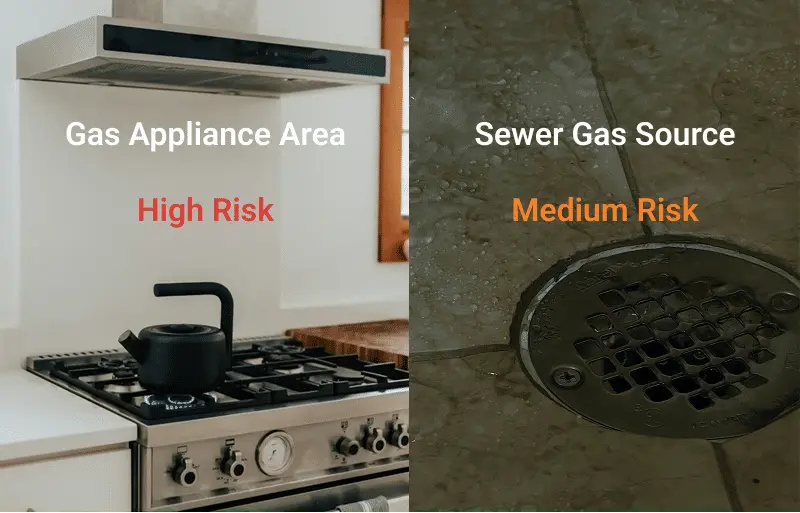
No todos los olores parecidos a azufre tienen la misma causa o nivel de riesgo. La tabla siguiente ayuda a distinguir escenarios comunes.
| Situación | Causa posible | Nivel de riesgo | Qué hacer |
|---|---|---|---|
| Fuerte olor a huevo podrido en todas las zonas habitables | Fuga de gas natural | 🔴 Alto | Sal inmediatamente y contacta con profesionales |
| Huele más fuerte cerca de una caldera, cocina o electrodoméstico de gas | Fuga en el electrodoméstico o problema de conexión | 🔴 Alto | Evita el uso y busca ayuda inmediata |
| Olor a huevo podrido cerca de desagües o baños | Gas de alcantarillado | 🟠 Medio | Ventila y revisa la fontanería |
| Olor tenue solo al aire libre | Ventilación de alcantarillado o trabajos de servicios públicos | 🟡 Bajo | Monitorizar y observar |
Importante:
Un olor a huevo podridoInterior del espacio habitable ocupado, especialmente cerca de equipos de gasolina, siempre debe tratarse comopotencialmente peligrosohasta que los profesionales lo descartan.
Qué hacer inmediatamente si hueles huevos podridos dentro de casa
Si sospechas que hay una fuga de gas, sigue estos pasos con calma y rapidez:
- No operar interruptores ni dispositivos eléctricos
Evita encender o apagar las luces o usar aparatos electrónicos en interiores. - Sal de casa lo antes posible
Asegúrate de que todos, incluidas las mascotas, salgan al aire libre. - Ventila solo si se puede hacer de forma segura
Si las puertas o ventanas ya están abiertas, déjalas abiertas. No vuelvas a entrar solo para ventilar. - Corta el suministro de gas si sabes cómo hacerlo y puedes hacerlo de forma segura
Solo intenta esto si la válvula de cierre es fácilmente accesible y ya te vas. - Contacta con profesionales cualificados de fuera del hogar
Contacta con tu compañía de gas o con los servicios de emergencia.
Estos pasos son sobreReducción del riesgo inmediato, sin identificar la fuente exacta tú mismo.
¿Puede el gas de alcantarillado oler a huevos podridos?
Sí,Los gases de alcantarillado a veces pueden producir un olor similar al azufre, especialmente cerca:
- Fregaderos o bañeras de baño
- Desagües de suelo
- Fontanería del sótano
- Baños de invitados que se usan poco
Una diferencia común es que los olores a gas de alcantarillado suelen ser frecuentesLocalizados cerca de drenajes, en lugar de distribuirse uniformemente por la casa.
Una comprobación sencilla que muchos propietarios prueban:
Si el olor es más fuerte cerca de un desagüe poco utilizado, deja correr el agua durante aproximadamente un minuto. Esto puede rellenar un secadoTrampa en P, que normalmente bloquea los gases de alcantarillado.
- Si el olor desaparece después, el problema puede estar relacionado con la fontanería
- Si el olorpersiste, se extiende o es visible cerca de los aparatos de gas, no debe asumirse que es gas de alcantarillado
En caso de duda, los olores a huevo podrido en interiores deben tratarse siempre con precaución.
¿Y los dispositivos de detección?
Algunos hogares usanDetectores de gas naturalcomo una capa adicional de conciencia de seguridad. Estos dispositivos están destinados aIdentificación temprana de la presencia de gas, especialmente cuando una fuga es pequeña o no se nota inmediatamente por el olor.
Es importante entender sus límites:
- Lo hacennotreemplazar la respuesta de emergencia
- Están diseñados paragas natural, no los vapores de gasolina ni los olores químicos generales
- Los olores a gasolina y otros COV requieren métodos de detección diferentes
Las herramientas de detección pueden apoyar la concienciación, peroLas decisiones inmediatas de seguridad nunca deben depender únicamente de ellos.
Preguntas frecuentes
¿Siempre huele a huevos podridos una fuga de gas?
No siempre. Fugas muy pequeñas o espacios bien ventilados pueden reducir la intensidad del olor, por eso la atención y la respuesta adecuada son importantes.
¿Puede el gas de alcantarillado oler a huevos podridos?
Sí. El gas de alcantarillado puede oler de forma similar, pero suele ser más fuerte cerca de los desagües y suele presentar un riesgo menor que una fuga de gas natural.
¿Por qué mi caldera huele a huevos podridos?
Los hornos utilizan gas natural. Un olor similar al azufre cerca de una caldera puede indicar una fuga o problema de combustión y debe tratarse comoAlto riesgo.
¿Es peligroso el olor a huevo podrido fuera?
A menudo es menos peligroso, especialmente si está relacionado con la ventilación de alcantarillado o trabajos de servicios cercanos. Aún así deben reportarse olores persistentes en exteriores cerca de las tuberías de gas.
Una última nota de seguridad
Señal de diferentes olores domésticosDiferentes niveles de riesgo. Los olores a huevo podrido son una de las señales de advertencia más claras que se utilizan en los sistemas de gas residenciales, por lo que requieren atención inmediata.
Si no tienes claro si un olor en tu casa está relacionado con el gas u otra cosa, entender cómo los diferentes olores se relacionan con distintos riesgos puede ayudarte a tomar decisiones más seguras.