
If your house suddenly smells like gasoline, the odor usually comes fromfuel vapors, stored chemicals, garage fumes, or nearby equipment.
In many homes, the smell is not caused by gasoline inside the house itself. Instead, vapors often enter fromattached garages, basements, or nearby storage areas.
However, a gasoline-like smell indoors shouldnever be ignored. Gasoline vapors aretoxic and highly flammable, and in some cases the smell may be confused witha natural gas leak, which requires immediate attention.
Before worrying about the worst-case scenario, the most important step is to understand:
• how strong the smell is
• where it might be coming from
• whether it resembles gasoline or natural gas
When the smell may be minor
• faint smell near a garage or storage area
• recent use of lawn equipment or fuel-powered tools
• open or poorly sealed fuel containers
When it may indicate a safety risk
• strong chemical smell spreading through multiple rooms
• dizziness, headaches, or nausea
• the odor becomes stronger or lasts for hours
If the smell isstrong, persistent, or causing symptoms, ventilate the area immediately and leave the house until the source is identified.
Gasoline Smell or Natural Gas Leak? Quick Difference
Many homeowners search for aCheiro de gasolina, but sometimes the odor is actuallygás natural.
The two smells are often confused, yet they indicate very different problems.
| Tipo | Typical Smell | Common Source |
|---|---|---|
| Gasolina | Sweet, sharp, chemical-like | Fuel cans, generators, lawn equipment |
| Gás natural | Rotten egg / sulfur smell | Gas stove, furnace, gas pipeline |
| Sewer Gas | Musty sewage odor | Plumbing vents or drains |
Natural gas itself is odorless, but utilities add a sulfur compound calledmercaptanoto make leaks easier to detect.
If thesmell resemblesovos podres, treat it as a possiblevazamento de gásand leave the house immediately before contacting your gas utility provider.
Understanding the difference between these odors is often the first step toward determining how serious the situation might be.
What To Do Immediately If Your House Smells Like Gasoline
If you notice a gasoline-like odor indoors, take a few basic precautions before trying to identify the source.
1. Ventilate the area
Open windows and doors to allow fresh air to circulate and reduce vapor concentration.
2. Avoid sparks or flames
Do not turn on light switches, appliances, or anything that could create a spark until the source is understood.
3. Check common fuel sources
Inspect garages, basements, and storage areas for:
• gasoline containers
• lawn equipment
• generators
• paint thinners or solvents
4. Determine the smell type
Confirm whether the odor resembles gasoline, natural gas, or another chemical smell.
5. Contact professionals if the smell persists
If the odor is strong, unexplained, or accompanied by symptoms such as dizziness or headaches, contact your local gas utility, fire department, or a qualified technician.
Taking simple precautions first helps reduce risk while you determine whether the situation requires professional attention.
Por que estou sentindo cheiro de gasolina na minha casa?
Even if you don’t store fuel indoors, gasoline-like odors can originate from several hidden or unexpected sources.
A maioria dos casos se divide em três grandes categorias:produtos químicos armazenados, vapores relacionados a equipamentos ou vapores migrando de espaços próximos.
Fontes comuns incluem:
- Gasolina armazenada ou solventes químicos
Gasoline cans, paint thinners, or solvents stored in garages or basements can release fumes—especially if containers aren’t sealed properly. - Geradores ou equipamentos de aquecimento com vazamento
Alguns geradores portáteis ou aquecedores movidos a combustível podem emitir vapores mesmo quando não estão em uso. - Fumaça da garagem ou do porão vazando para dentro
In attached garages or shared foundations, fuel vapors can travel through cracks, door gaps, or ventilation systems. - Tanques de combustível subterrâneos ou oleodutos enterrados
Older homes may still have abandoned tanks that slowly release vapors into surrounding soil and foundations. - Gás de esgoto é confundido com gasolina
Certain sewer odors can resemble fuel smells. While different in origin, they still signal a ventilation or plumbing issue that shouldn’t be ignored.
O cheiro de gasolina em casa é perigoso?
Potencialmente—sim.Gasoline vapors are toxic and highly flammable, especially with prolonged exposure or high concentrations.
De acordo com oCDC, gasoline exposure may cause headaches, dizziness, respiratory irritation, and nervous system effects.
TheNFPAalso warns that gasoline vapors can ignite from everyday household sources, including electrical switches or appliances.
No entanto,O nível de perigo depende de três fatores-chave:
- Fonte(combustível armazenado vs. equipamentos vazando vs. migração externa)
- Concentraçãode vapores
- Duraçãode exposição
Sintomas de curto prazo podem incluir irritação ocular, náusea ou tontura.
A exposição a longo prazo — especialmente para crianças, idosos ou animais de estimação — pode ser mais séria.

If the smell is strong, persistent, or accompanied by physical symptoms, treat it as a potential emergency.
Ventile a área, evite faíscas e procure ajuda profissional.
In short, risk depends less on the smell itself and more on where it comes from, how strong it is, and how long it lasts.
Why Does My House Smell Like Gasoline But I Have No Gas Appliances?
Even homes withall-electric appliancescan experience gasoline-like odors.
In many cases, the smell originates fromvolatile organic compounds (VOCs)released by certain materials or stored chemicals.
Common examples include:
• old paint cans or cleaning chemicals
• solvents such as paint thinner or adhesive remover
• fuel containers stored in garages or sheds
• gasoline residue from vehicles or equipment
Because garages and basements often share ventilation paths with the main living space, vapors can travel indoors through:
• door gaps
• ventilation ducts
• cracks in the foundation
• shared wall cavities
In these situations, the challenge is not only identifying the smell but also determining whether it isa one-time odor or a recurring indoor air issue.
Quão séria é a situação?
Uma forma simples de pensar nisso
A maioria dos casos de cheiro semelhante a gasolina se enquadra em uma destas categorias:
- Temporário e identificável
Um derramamento recente ou recipiente aberto que se resolve após ventilação. - Recorrente, mas inexplicável
Odores que retornam periodicamente sem uma fonte clara. - Forte, persistente ou sintomático
Cheiros acompanhados de tontura, dores de cabeça ou desconforto físico.
If your situation falls into the second or third category, ongoing monitoring and professional evaluation become more important than one-time ventilation.
Saber qual categoria se aplica ajuda a determinarse ventilação básica é suficiente — ou se uma avaliação adicional é necessária.
Não sabe qual deve ser o próximo passo?
Se você conseguir identificar e remover claramente a fonte, o problema pode ser temporário.
If the smell persists, returns, or can’t be explained, the next step is understanding how different gas-related odors translate into different risk levels — not just one-time fixes.
To see how homeowners evaluate gas smell warning signs and decide what actions to take, refer to ourGuia de Segurança contra Cheiro de Gás.
Perguntas frequentes: Cheiro de gasolina em casa
Por que minha casa cheira a gasolina?
A gasoline smell in your home can come from spilled fuel, leaky tools or equipment, exhaust fumes from an attached garage, or stored chemicals like paint thinners and solvents that release vapors. Even if you don’t store fuel inside, fumes can drift in through vents or cracks in the foundation.
O cheiro de gasolina na casa é perigoso?
Yes. Gasoline vapors are highly flammable and can ignite from a spark or light switch. Breathing these fumes can also cause headaches, dizziness, and nausea. If you notice a strong smell, ventilate the house right away, avoid using electrical devices, and call a professional if the odor doesn’t fade quickly.
Por que minha casa cheira a gasolina se eu tenho eletrodomésticos?
Mesmo residências totalmente elétricas podem desenvolver odores semelhantes a gasolina. As fontes comuns incluem:
-Produtos químicos armazenados:Diluentes de tinta, adesivos ou solventes na garagem ou no porão.
-Resíduos do carro:gasolina em sapatos ou roupas trazidas da garagem.
-Fumaça do vizinho:Gases de escape escapando por paredes ou aberturas de ventilação compartilhadas.
-COVs (Compostos Orgânicos Voláteis):Móveis, pisos ou materiais de construção novos que liberam odores químicos.
-Entrada de ar do sistema HVAC:Captar ar externo próximo a um posto de gasolina ou estrada movimentada.
Check and seal all storage containers, ventilate regularly, and keep the garage door slightly open when running vehicles or power tools.
O que devo fazer se minha casa estiver com cheiro de gasolina?
Aja rápido:
1. Abra as janelas e portas para deixar entrar ar fresco.
2. Evite acender luzes, fogões ou interruptores elétricos.
3. Inspecione sua garagem, porão e áreas de armazenamento em busca de vazamentos ou latas de combustível abertas.
4. Se o cheiro persistir, evacue o local e ligue para os serviços de emergência ou de serviços públicos locais.
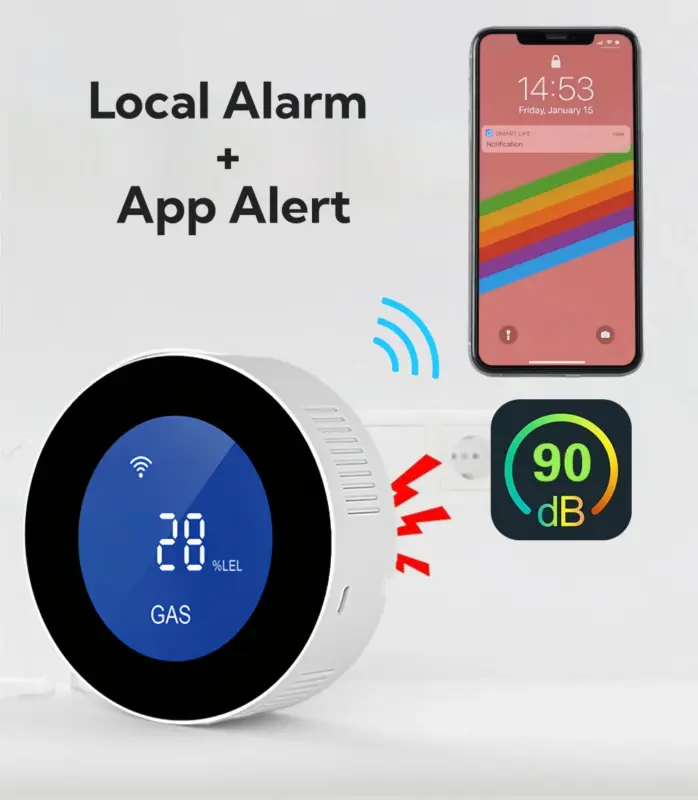
Some homeowners also choose to use gas monitoring devices to receive early alerts if unusual vapors return, especially in garages or basements.
Como posso evitar cheiros de gasolina no futuro?
- Armazene combustível, tinta e produtos de limpeza em recipientes hermeticamente fechados.
Mantenha garagens e porões bem ventilados.
- Evite ligar motores ou ferramentas elétricas em espaços fechados.
- Instale um detector de gás com Wi-Fi na garagem ou no porão para monitoramento contínuo.
Tomar pequenas medidas agora pode proteger sua casa tanto dos riscos de incêndio quanto dos efeitos na saúde a longo prazo.

Conclusão: Não ignore o cheiro
Se você já se perguntou,“Por que minha casa cheira a gasolina?”, não ignore.
Odores semelhantes a gasolina podem sinalizar desde pequenos problemas de armazenamento até sérios riscos à segurança.
O segredo é a compreensãoQue tipo de situação você está — e o quão urgente ela realmente é.
Estar informado é o primeiro passo para proteger sua casa e todos que nela moram.